The Murph Workout: Standards, Scaling and an 8-Week Plan
The Murph workout explained: the full Hero WOD, its Navy SEAL history, how to partition and scale it, realistic finish times and an 8-week plan to finish your first Murph.

Now on iPhone
Military Calisthenics Coach
Train military-style, one guided workout a day
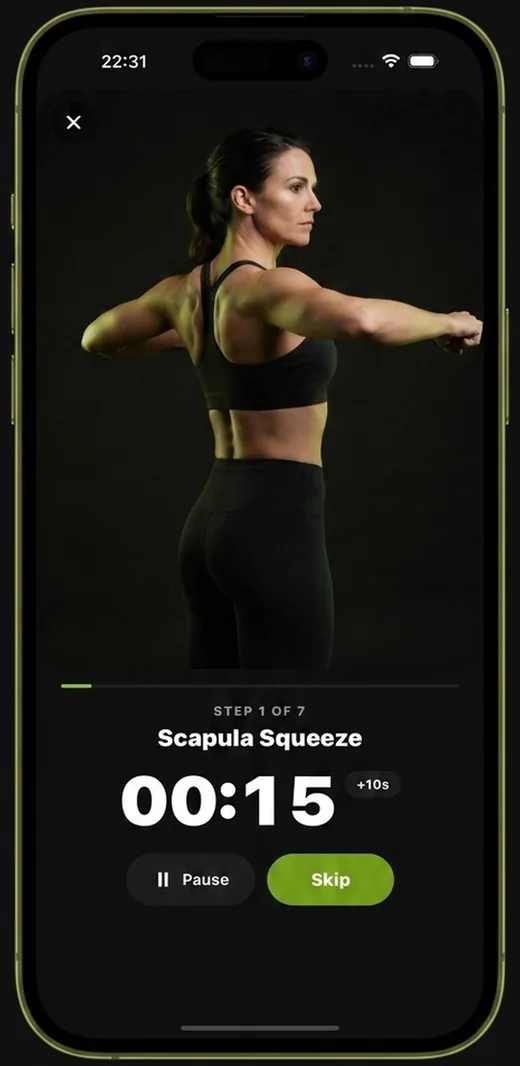
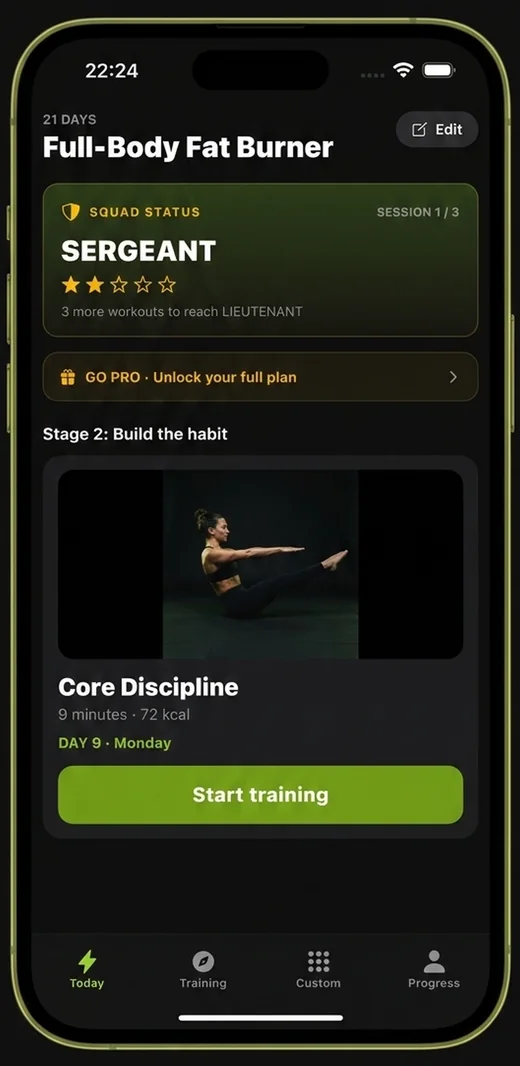
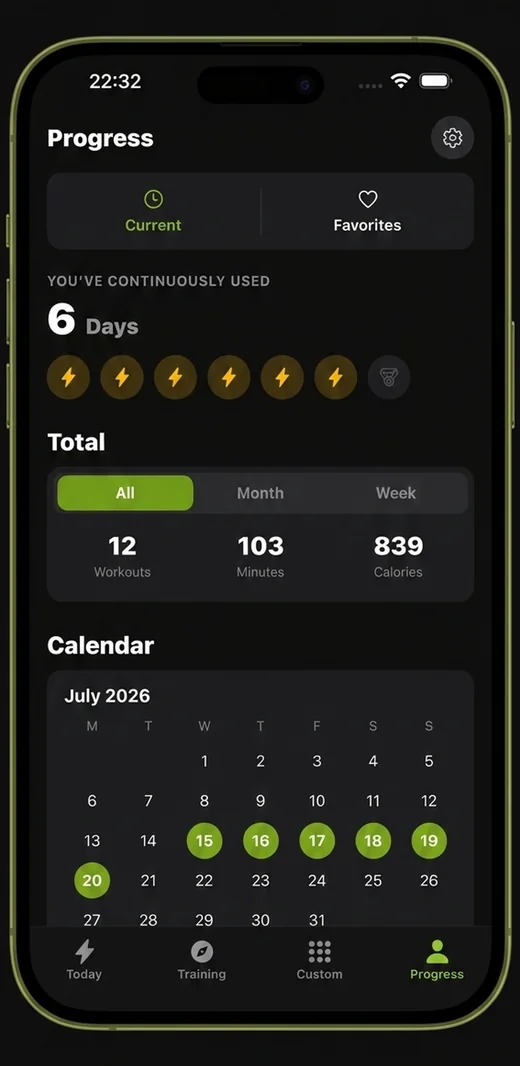
Military Calisthenics Coach builds you a personalized military-style calisthenics plan for iPhone: guided 5–30 minute bodyweight sessions you can run in a barracks, a garage or a hotel room, with timed sets and rests, ranks and streaks.
- A personalized plan that steps up after every 4-week PT test
- Guided timed sessions — no counting, no guessing
- Build your own sessions by time, body zone or focus
 Noted — thanks. We build Android once enough readers ask.
The Murph workout is the most famous bodyweight test in the world: a mile run, 100 pull-ups, 200 push-ups, 300 squats and another mile, done for time. It started as one Navy SEAL’s favourite training session. Today, thousands of people do it every Memorial Day in his memory.
This guide covers the official standard, where the workout came from, how to partition and scale it, what finish time to expect, and an 8-week plan that gets you from “can’t do 100 pull-ups” to finishing your first Murph without wrecking your elbows. It’s written for people who train with bodyweight, not just CrossFit regulars. Murph is a calisthenics workout at heart. For the wider idea behind that, see what military calisthenics is.
The Murph workout at a glance
| Segment | Prescribed (Rx) | Notes |
|---|---|---|
| Run | 1 mile (1.6 km) | Must come first |
| Pull-ups | 100 | Partition freely |
| Push-ups | 200 | Partition freely |
| Air squats | 300 | Partition freely |
| Run | 1 mile (1.6 km) | Must come last |
| Load | 20 lb (9 kg) vest or body armor | Worn for the entire workout |
The whole thing is scored as one time, from the start of the first run to the end of the second. The only rule about order is that the runs bookend the bodyweight work. Everything in the middle can be split up however you like, which is where strategy comes in (more on that below).
Total volume: 600 reps plus two miles. For comparison, that is roughly three to four times the work of a hard full-body session. That is why Murph needs its own preparation instead of being dropped into a normal training week.
Who Murph is named after
Lt. Michael P. Murphy was a Navy SEAL officer from Long Island, New York. On June 28, 2005, he was leading a four-man reconnaissance team during Operation Red Wings in Kunar Province, Afghanistan, when a much larger enemy force surrounded them. Murphy deliberately moved into the open to get a signal and radio for help, and was killed in the fight that followed. He was 29.
In 2007, he was posthumously awarded the Medal of Honor, the first for actions in Afghanistan and the first given to a Navy service member since Vietnam.
The workout itself was one of Murphy’s regular training sessions. He called it “Body Armor” because he did it wearing his own. CrossFit published it as a Hero WOD under the name “Murph” on August 18, 2005, less than two months after his death, and that’s the version almost everyone does today.
The Murph Challenge
Since 2014, The Murph Challenge has turned the workout into a Memorial Day fundraiser for the LT. Michael P. Murphy Memorial Scholarship Foundation. Participants register, do Murph on or around Memorial Day (at a gym, a park or at home) and submit their time. The campaign has raised more than $2 million. It also helped fund the LT Michael P. Murphy Navy SEAL Museum in his hometown, which hosts its own Murph event each year. If you’re going to do Murph once a year, doing it this way means the reps go to something bigger than your own fitness.
Movement standards: what counts as a rep
Murph is 600 reps long, and sloppy reps are where both the injuries and the “I did Murph in 38 minutes” stories come from. Hold these standards:
- Pull-ups: start from a full dead hang with straight arms; finish with the chin clearly above the bar. Kipping is allowed under CrossFit rules, but strict reps are safer for anyone who isn’t already used to kipping volume. Butterfly kipping in a vest is a common way to tear up a shoulder. If strict pull-ups are still your limiter, start with the pull-up progression.
- Push-ups: chest touches the floor, elbows lock out at the top, body stays in one rigid line from heels to head. No sagging hips, no half reps. The push-up progression shows the scaled versions if your form falls apart before rep 50.
- Air squats: hip crease below the top of the knee at the bottom, full hip and knee extension at the top. Heels stay down.
- Runs: the full mile, both times. A 400 m track (four laps) or a measured road loop keeps it honest.
How to partition Murph
Doing all 100 pull-ups, then all 200 push-ups, then all 300 squats (“straight through”) is allowed. It’s also the hardest way to do it. Your pulling muscles fail long before the push-ups start, and the push-up section becomes a nightmare of singles. Most people partition instead.
Option 1: 20 rounds of “Cindy” (most popular)
20 rounds of 5 pull-ups, 10 push-ups, 15 squats.
This is the classic split. Each movement gets a rest while you do the other two, the rep counts per round are small, and you always know where you are (just count rounds). If you’re new to Murph, start here.
Option 2: split push-ups (5-5-15-5)
20 rounds of 5 pull-ups, 5 push-ups, 15 squats, 5 push-ups.
It’s the same 5-10-15 per round as Cindy, just reordered. Splitting the push-ups around the squats gives your chest and triceps a break in the middle of each round. For most people push-ups, not pull-ups, are where Murph falls apart, so this split often finishes faster than plain Cindy.
Option 3: 10 rounds of 10-20-30
Bigger sets and fewer transitions. This suits strong athletes chasing a time, but sets of 10 pull-ups and 20 push-ups in a vest go to failure quickly. Don’t use it for your first Murph.
Which to choose: if your strict pull-up max is under 15, use Option 1 or 2. Above that, 10-20-30 becomes realistic.
How to scale Murph
Scaling isn’t a lesser version of Murph. Doing a scaled Murph with clean reps is better training, and more respectful, than grinding out a broken “Rx” one. Pick the level that matches where you are now:
| Version | Runs | Pull-ups | Push-ups | Squats | Vest |
|---|---|---|---|---|---|
| Quarter Murph | 400 m each | 25 | 50 | 75 | No |
| Half Murph | 800 m each | 50 | 100 | 150 | No |
| Full Murph, unweighted | 1 mile each | 100 | 200 | 300 | No |
| Full Murph, Rx | 1 mile each | 100 | 200 | 300 | 20 lb |
Movement substitutions if you can’t do the full movement for the full volume yet:
- Pull-ups → band-assisted pull-ups, jumping pull-ups with slow lowering, or ring/table rows. If you don’t have a bar at all, see these pull-up alternatives.
- Push-ups → incline push-ups on a bench or box. Use knee push-ups only as a last resort, since inclines carry over better.
- Running → 2,000 m row or 4 km bike per “mile” if you have an injury that rules out running. Note it in your score.
A good rule: choose the scaled version where your last round looks like your first one. If rep quality falls apart past round 10, you scaled too lightly.
What’s a good Murph time?
These are rough bands from what’s commonly reported by gyms and Murph Challenge participants, not official standards:
| Level | Typical finish time |
|---|---|
| First Murph, scaled or partitioned | 60–90 minutes |
| Trained, unweighted | 45–60 minutes |
| Trained, Rx with vest | 40–60 minutes |
| Elite, Rx with vest | under 35–40 minutes |
Your first Murph has one goal: finish with clean reps. Write down your time. Next year you get to beat it.
How to pace it
- First mile: run it at an easy, conversational pace, 60–90 seconds slower per mile than you’d like. Going out hard on the first run costs you far more time later in the bodyweight rounds.
- Rounds 1–10: settle into a steady rhythm and break sets before you need to. Splitting 10 push-ups into 5+5 from round one is faster than needing 3+3+2+2 by round twelve.
- Rounds 11–20: this is where the time goes. Short, planned breaks (a few breaths after every set) beat long, unplanned ones.
- Last mile: run whatever you have left. Your legs will feel dead from the 300 squats for the first few hundred metres, and then they loosen up.
8-week plan to finish your first Murph
This plan assumes you can currently do at least 3 strict pull-ups, 15 good push-ups and run a mile without stopping. If you can’t yet, spend a month on the calisthenics for beginners program first. Train three days per week, for example Monday, Wednesday and Friday, with easy runs or rest days in between. Start every session with a proper warm-up routine.
| Week | Day 1: Murph practice | Day 2: Strength | Day 3: Engine |
|---|---|---|---|
| 1 | Quarter Murph, Cindy split | Pull-ups 5×max−2, push-ups 5×max−3 | 2 mile easy run |
| 2 | Quarter Murph, aim 10% faster | Same as week 1, +1 rep per set | 6×400 m, 90 s rest |
| 3 | Half Murph, Cindy split | Pull-ups 6×max−2, push-ups 6×max−3 | 2.5 mile easy run |
| 4 | Deload: Quarter Murph, easy | Half the strength volume | 2 mile easy run |
| 5 | Half Murph, 5-5-15-5 split | Pull-ups EMOM 10 min × 3, push-ups EMOM 10 min × 6 | 8×400 m, 75 s rest |
| 6 | ¾ Murph (75/150/225, 1,200 m runs) | Pull-ups EMOM 12 min × 3, push-ups EMOM 12 min × 6 | 3 mile easy run |
| 7 | Half Murph at race pace | Light: 3 easy sets of each | 2 mile easy run |
| 8 | Taper Mon/Wed, full Murph Saturday | — | — |
Max−2 means two reps short of your current max per set. You finish every set with reps left, which builds volume without the joint wear that comes from grinding to failure. EMOM means every minute on the minute: do the reps at the top of each minute and rest for whatever time is left.
After week 8, do your first full Murph unweighted. Only add the vest once you can finish unweighted in under about an hour with clean reps. Then build up through a weighted vest or a loaded ruck on your normal training days first. Our guide to weighted calisthenics covers how to add load safely.
Safety: rhabdo is the real risk
Every year some people go from no training to a full Murph on Memorial Day and end up in hospital with exertional rhabdomyolysis. That’s a condition where damaged muscle releases its contents into the bloodstream faster than the kidneys can clear them. High-rep pulling done for the first time is the classic trigger, and Murph puts 100 pull-ups in a single session.
To stay on the right side of it:
- Don’t do your first Murph cold. Build up through the quarter and half versions above.
- Scale the pull-ups first. They’re the movement most likely to cause trouble.
- Drink water before and during the workout, especially in late-May heat or in a vest.
- Know the warning signs: dark, cola-coloured urine, severe muscle pain or swelling far beyond normal soreness, or arms you can’t straighten one to three days later. Any of these means you should get medical care that day, not “sleep it off.”
As with any hard workout, check with a physician first if you have a heart, kidney or joint condition.
How Murph fits into the rest of your training
Murph is a test and a tribute, not a weekly workout. Done once or twice a year, it shows how well your pulling, pushing, legs and engine hold up together under fatigue. Done every week, it’s a recipe for elbow tendinitis and stalled progress.
The training that actually raises your Murph score is the same training on the rest of this site: steady push-up and pull-up progressions, regular running, and a higher-volume circuit like the Navy SEAL calisthenics workout once you have the base. If you also want to know where you stand against official numbers, the military fitness test standards are a useful benchmark between Murphs.
Frequently asked questions
What is the Murph workout?
Murph is a bodyweight “Hero WOD” performed for time: a 1-mile run, 100 pull-ups, 200 push-ups, 300 air squats and a second 1-mile run, traditionally while wearing a 20 lb weighted vest or body armor. It honors Navy SEAL Lt. Michael P. Murphy, who was killed in action in Afghanistan on June 28, 2005, and is performed by thousands of people every Memorial Day.
Can you split up the reps in Murph?
Yes. Only the two runs must be done in order, as the first and last movements. The 100 pull-ups, 200 push-ups and 300 squats can be partitioned any way you like. The most common split is 20 rounds of 5 pull-ups, 10 push-ups and 15 squats, which keeps any single muscle group from failing early.
How long does the Murph workout take?
Most first-timers who scale sensibly finish in 60 to 90 minutes. Well-trained athletes wearing the vest commonly land between 40 and 60 minutes, and elite competitors go well under 40. Your first goal should be finishing with clean reps, not a time.
Do I have to wear a vest for Murph?
The prescribed (Rx) version uses a 20 lb vest or body armor, but nobody should wear one for their first Murph. Finish the full volume unweighted first; add the vest only once you can complete Murph without it in under about an hour with no form breakdown.
How many pull-ups do I need to do Murph?
As a rough guide, you want a strict max of about 8 to 10 pull-ups before attempting the full 100 unassisted, so that sets of 5 stay well short of failure across 20 rounds. If your max is under 5, scale with band-assisted pull-ups or ring rows, or do a half Murph.
Is Murph dangerous?
It can be for people who jump straight into it untrained. The sudden high volume — especially 100 pull-ups — can cause exertional rhabdomyolysis, a serious muscle-breakdown condition. Build up over several weeks, scale the volume, hydrate, and seek medical care if you notice dark, cola-coloured urine or severe, swollen muscle pain in the days after.