Mastering the Navy SEAL Calisthenics Workout Routine
Improve your endurance with a Navy SEAL calisthenics workout. Follow this no-nonsense guide to bodyweight training designed for high-volume results.

Military Calisthenics Coach
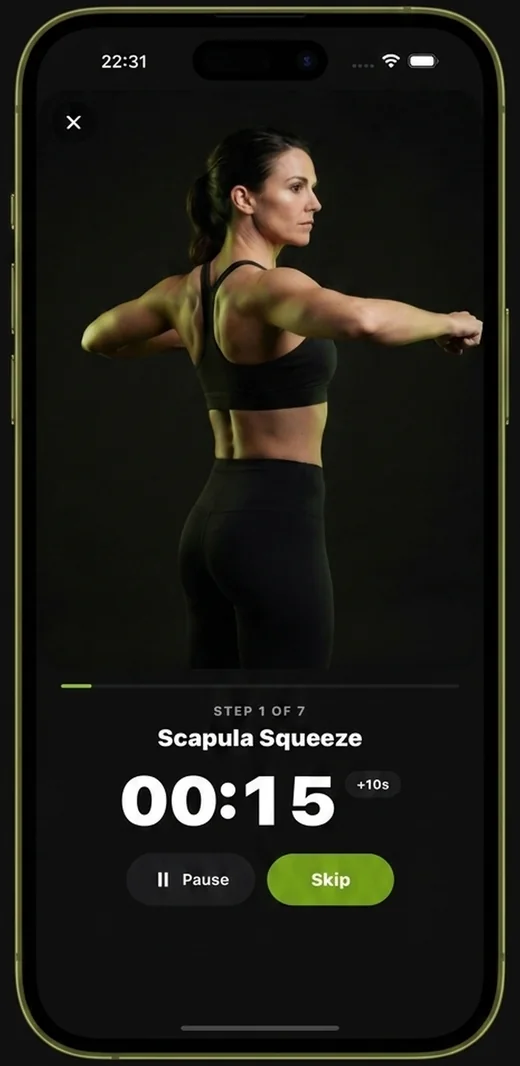
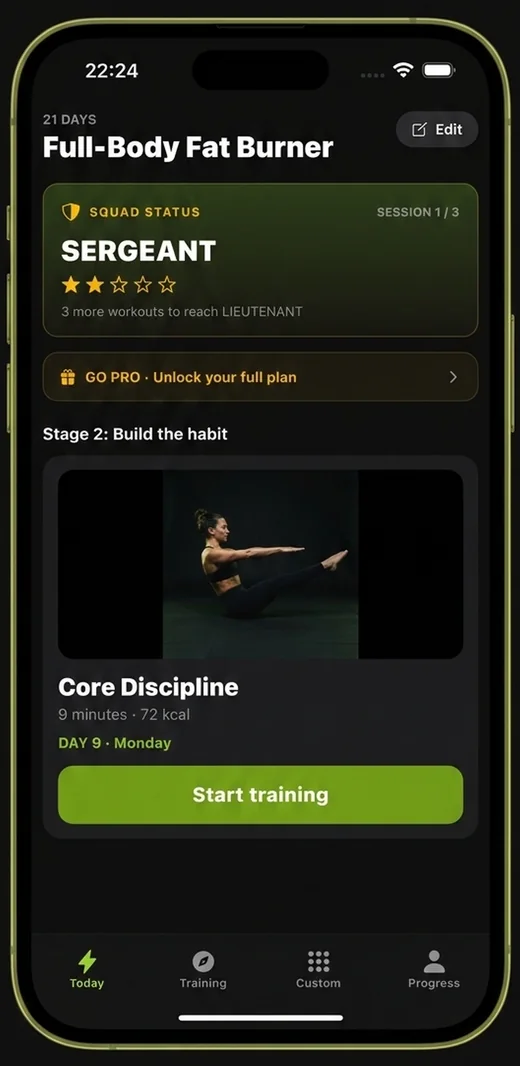
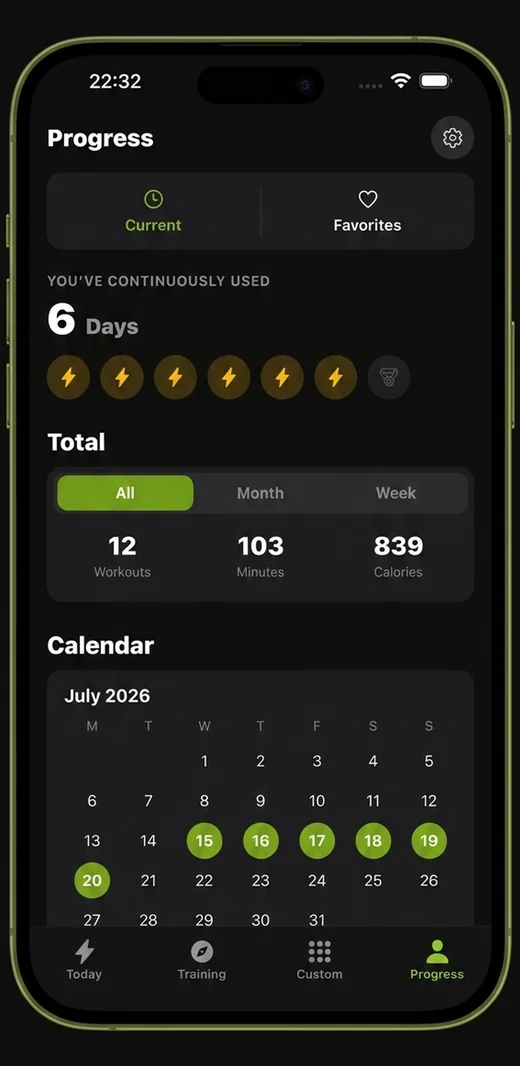
Take the drill with you
Everything on this site, built into a pocket coach. Military Calisthenics Coach turns the standards into a daily session you can run in a barracks, a garage or a hotel room — timed, tracked and scaled to you.
- A 21-day program that adapts to your level
- Guided timed sessions — no counting, no guessing
- Ranks, streaks and progress you can actually see

A Navy SEAL calisthenics workout is not about fancy equipment or complicated gym machines; it is about absolute mastery of your own body weight through high-volume, repetitive movement. This style of training builds the kind of functional, lean endurance required to withstand the physical pressures of special operations selection, stripped down to its most basic components. When you commit to this program, you are adopting a philosophy where consistency and technical perfection under fatigue define your success. Understanding what military calisthenics is begins with recognizing that these movements exist to test your mental resilience just as much as your muscular output.
The Core Pillars of Special Operations Conditioning
The foundation of this protocol relies on the ‘Big Four’: push-ups, pull-ups, sit-ups, and running. While specialized units utilize a variety of calisthenics equipment in the field, the core of the work remains gravity-based. To train like the operators, you must learn to manage your tempo. A standard, high-quality push-up requires a clean lockout at the top and a full range of motion, with the chest touching the floor. If your form breaks, the repetition does not count.
Form Standards
- Push-ups: Maintain a rigid plank position. Glutes tight, core braced, no sagging in the lower back.
- Pull-ups: Start from a dead hang; chin must pass the plane of the bar. For those struggling, follow the dead-hang to strict pull-up progression to ensure you are building strength safely.
- Sit-ups/Flutter Kicks: Ensure your spine stays neutral. For flutter kicks, hands are placed under the glutes for support, keeping the legs straight with toes pointed.
The High-Volume Circuit Protocol
This workout is designed to be performed as a circuit. You will rotate through each exercise with minimal rest until the prescribed volume is complete. For beginners, use the scaling options provided in the 8-week military calisthenics workout plan to adjust the volume down while keeping the integrity of the movement.
The “BUD/S Prep” Circuit
Perform this sequence for 4 total rounds. Rest 90 seconds between rounds.
| Exercise | Repetitions | Focus Point |
|---|---|---|
| Push-ups | 25-50 | Chest to floor, full lockout |
| Pull-ups | 5-15 | Full dead-hang start |
| Burpees | 10-20 | Explosive jump, full extension |
| Flutter Kicks | 50 (count to 100) | Low back pinned to ground |
If you find your performance dropping significantly by the third round, it is better to perform more sets with fewer reps per set than to sacrifice form. Efficiency is the mark of a well-trained athlete.
Progression and Standards
Progression in military-style training is tracked through measurable standards. You do not guess your progress; you record your times and rep counts. If you are training to meet military fitness test standards, you should test yourself once every four weeks to gauge your improvement.
To increase your work capacity, reduce your rest periods by 5 seconds each week rather than just adding more volume. This forces your body to recover faster under increasing metabolic stress. If you are just starting your fitness journey, do not attempt the full volume on your first attempt. Utilize calisthenics for beginners techniques to ensure your tendons and ligaments adapt to the load before moving into the high-volume phases.
Integrating Targeted Strength
While the Navy SEAL calisthenics workout focuses on endurance, you still need to address specific weak points. If your push-ups are stalling, incorporate specific push up progression drills at the end of your session. If your back development is lagging, use calisthenics back workout methods to ensure you can handle the high rep counts on the pull-up bar. The goal is to build a chassis that is both durable and capable of moving itself through any environment.
Sustainability and Recovery
Military operators know that training is useless if you are too injured to deploy. Overtraining is a common pitfall when jumping into high-volume bodyweight protocols. Ensure you are tracking your sleep and hydration. If you feel excessive joint pain—not muscle soreness—dial back the frequency. Incorporate calisthenics mobility exercises on your off days to maintain range of motion and prevent the tightening that often accompanies high-repetition training. Consistency beats intensity every time, so ensure your plan is one you can maintain for the long haul.
Frequently asked questions
How many times a week should I do this workout?
Beginners should limit this intensity to 3 days per week to allow for central nervous system recovery. As your work capacity improves, you can move toward a 4-on, 1-off schedule, provided you are managing your sleep and nutritional intake effectively.
Can I do this workout at home without a pull-up bar?
While you can perform push-ups, burpees, and flutter kicks anywhere, you need a pull-up bar for a complete military-style workout. If you are stuck in a space with no equipment, try the 20-minute no-gear barracks workout as an effective substitute for that day.
What if I cannot complete the prescribed reps?
Scaling is a standard military training practice. If you cannot hit the target reps, reduce the number by 50% and focus on perfect form, or use regressive variations like knee push-ups until your base strength level meets the requirement.
How long until I see results?
If you follow the program with total consistency and maintain a clean diet, you will notice significant changes in muscular endurance and body composition within 6 to 8 weeks. Focus on beating your previous week’s total repetition count rather than just looking for visual changes in the mirror.