Mastering Military Fitness Test Standards: A Beginner's Guide
Understand military fitness test standards to build a rock-solid foundation. Learn how to track your progress with professional, bodyweight-based benchmarks.

Military Calisthenics Coach
Take the drill with you
Everything on this site, built into a pocket coach. Military Calisthenics Coach turns the standards into a daily session you can run in a barracks, a garage or a hotel room — timed, tracked and scaled to you.
- A 21-day program that adapts to your level
- Guided timed sessions — no counting, no guessing
- Ranks, streaks and progress you can actually see

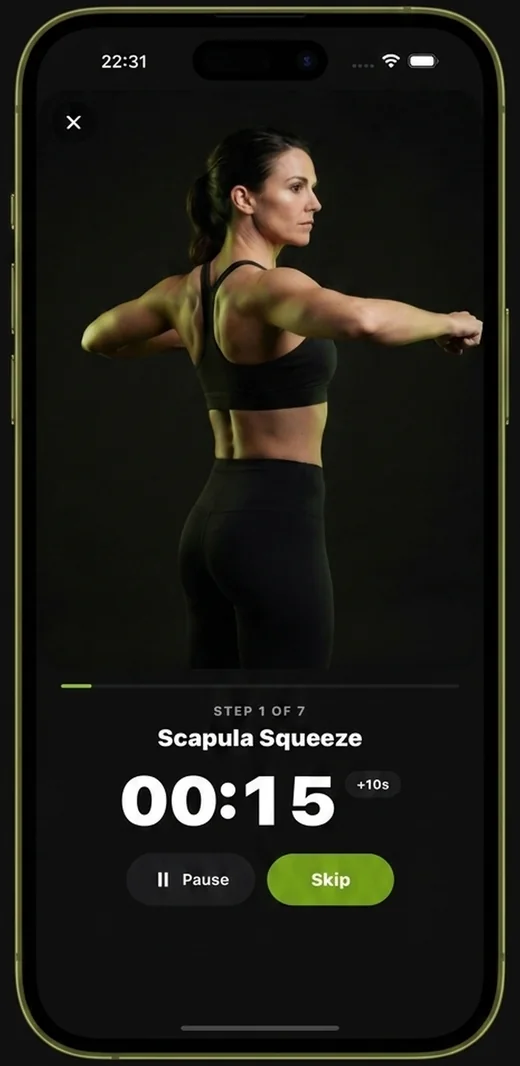
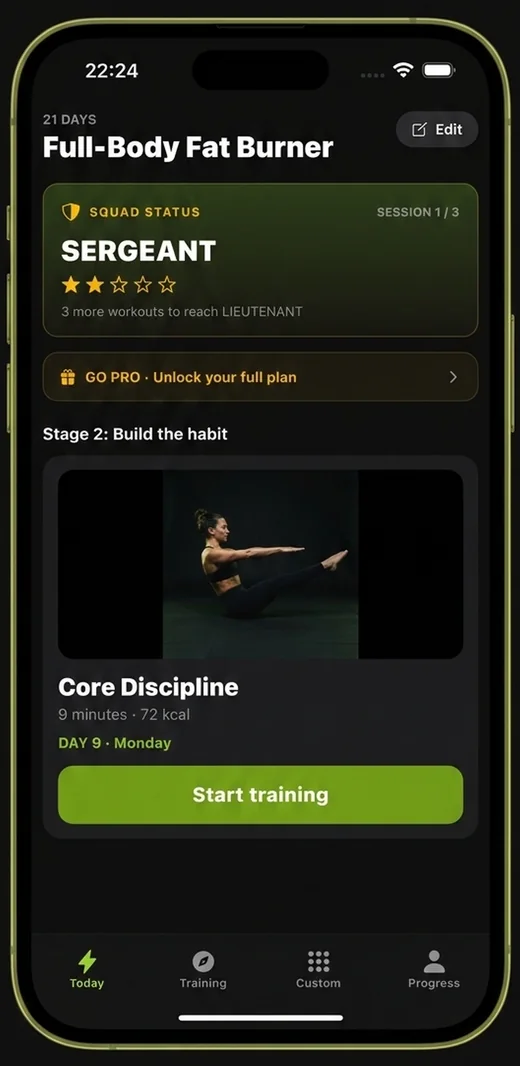
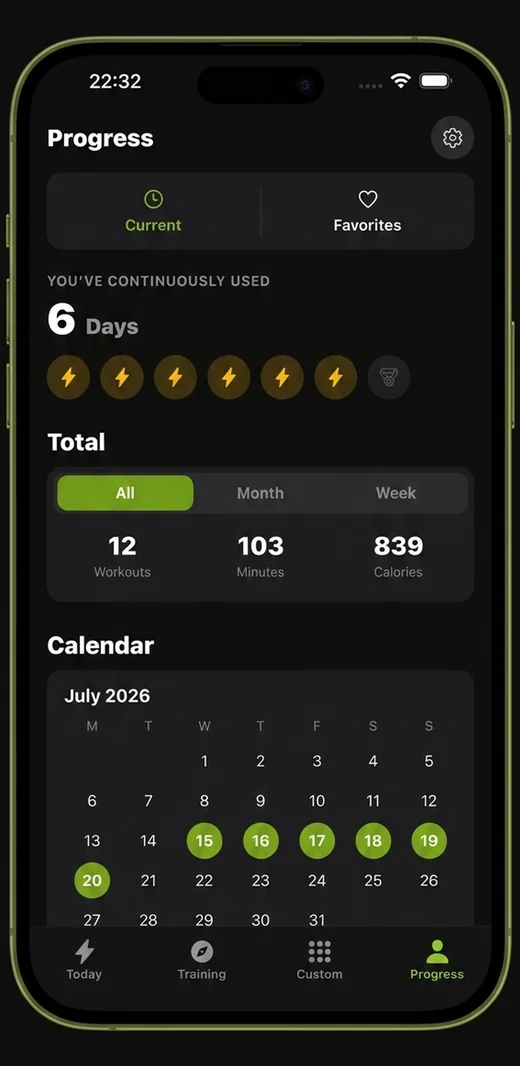
Understanding military fitness test standards provides a universal, objective baseline for human performance that cuts through the noise of modern fitness trends. Whether you are aiming to enlist or simply want to know where you stand, these metrics offer a ruthless reality check of your physical capability using only your body weight. You do not need a gym membership or fancy machines to reach these levels; you only need consistent practice, high-quality form, and a commitment to the process. If you are just starting your journey, calisthenics for beginners is the best place to build the foundational strength required to meet these benchmarks.
The Anatomy of Fitness Standards
Military branches have traditionally used physical fitness tests as a gatekeeper for readiness. While the specific events—such as the Army’s transition to the army combat fitness test or the classic push-up and sit-up metrics of the Navy and Air Force—vary, the underlying principles remain constant. You are testing endurance, relative strength, and work capacity.
Core Movement Benchmarks
- Push-ups: Testing chest and tricep endurance with a strict standard (chest to deck, full extension).
- Pull-ups: Measuring relative upper body strength and pulling power.
- Core Endurance: Traditionally sit-ups, now shifting toward planks or leg tucks to measure muscular fatigue.
- Aerobic Capacity: Timed runs or shuttle sprints to test cardiovascular output.
By focusing on what military calisthenics is, you learn to treat every rep as a performance drill rather than a chore. Consistency in these movements will build a physique that is as functional as it is aesthetic.
Establishing Your Baseline
Before you can improve, you must measure your current capacity. Find a flat surface and a stable bar. Execute each movement until you hit technical failure—the point where your form breaks down.
Testing Protocol
- Push-ups: 2 minutes of continuous movement. Keep your elbows tucked at a 45-degree angle. If your hips sag, the set ends.
- Pull-ups: Maximum repetitions. Dead hang at the bottom, chin over the bar at the top. Use the dead-hang to strict pull-up progression if you cannot yet complete five reps.
- Plank: Time to failure. Maintain a hollow-body position with your glutes squeezed and your core braced.
Track these numbers in a logbook. This data is your primary tool for progress. If you find yourself struggling with the basics, incorporate the 20-minute no-gear barracks workout to increase your training frequency without needing equipment.
Progressive Programming for Every Trainee
To move from a beginner level to meeting high-performance military fitness test standards, you must employ progressive overload. You cannot simply perform the same number of reps forever and expect growth. You must manipulate volume, intensity, and rest intervals.
A 4-Week Progression Template
| Week | Push-ups (Sets x Reps) | Pull-ups (Sets x Reps) | Plank (Sets x Time) |
|---|---|---|---|
| 1 | 3 x 10 | 3 x 2 | 3 x 45s |
| 2 | 3 x 12 | 3 x 3 | 3 x 60s |
| 3 | 4 x 12 | 3 x 4 | 3 x 75s |
| 4 | 4 x 15 | 4 x 4 | 3 x 90s |
For those who prefer a structured path, following the 8-week military calisthenics workout plan ensures you hit these metrics methodically without overtraining. Always remember to use a calisthenics warm up routine to ensure your joints are prepared for the stress of the training session.
Form Over Everything
In a military environment, a rep that does not meet the standard is a rep that does not count. This is not about ego; it is about safety and discipline. If your chest does not touch the ground, or if your chin does not clear the bar, you have not actually performed the repetition.
Common Form Faults
- Push-ups: “Worming” (the hips rising before the shoulders) indicates core weakness. Fix this by practicing planks.
- Pull-ups: Kipping or using momentum. Eliminate the swing by keeping your legs straight and tension engaged.
- Plank: Shoulders rounding forward. Retract your scapulae and push through your forearms.
If you are struggling with your chest press movements, look into push-up progression techniques that force you to own the movement through a full range of motion. Precision is what separates trainees who simply move, from trainees who achieve athletic excellence.
Scaling for Success
Not everyone starts with the same physical capacity. The beauty of bodyweight training is the ease of scaling. If you cannot do a standard push-up, perform them on an elevated surface like a bench or a low wall. As you get stronger, lower the elevation until you are flat on the floor. If you are struggling with pull-ups, use bands or negative repetitions where you jump up and lower yourself as slowly as possible.
The Coach’s Checklist for Scaling
- Safety: Does the current variation cause joint pain rather than muscular fatigue? If yes, adjust.
- Range of Motion: Are you moving through the full required distance? If no, decrease the difficulty.
- Tempo: Can you control the descent for 3 seconds? If no, reduce volume until you gain control.
Frequently asked questions
How many push-ups do I need for a baseline?
Most entry-level military fitness test standards suggest a baseline of at least 30-40 push-ups in two minutes. If you are starting from zero, aim for 10 high-quality reps per set and focus on increasing the frequency of your training sessions each week.
How long does it take to prepare for a fitness test?
Depending on your current fitness level, it typically takes 8 to 12 weeks of consistent, periodized training to see significant improvements in your test scores. Success requires adhering to a structured plan rather than guessing your way through workouts each day.
Can I train these movements every day?
While some athletes perform high-volume calisthenics daily, beginners should start with three to four sessions per week to allow for recovery. Your muscles need time to repair the micro-tears created during intense training, which is when the actual physiological adaptation occurs.
What is the best way to improve my pull-ups?
Frequency and strict form are the keys to pull-up growth. Utilize greasing-the-groove methods—performing sub-maximal sets throughout the day—or focus on negative eccentric pull-ups to build the necessary strength in your lats and biceps.