Calisthenics for Beginners: The Ultimate Military-Style Starter Guide
Start your journey with this guide to calisthenics for beginners. Learn foundational movements, weekly progressions, and military-proven training techniques.

Military Calisthenics Coach
Take the drill with you
Everything on this site, built into a pocket coach. Military Calisthenics Coach turns the standards into a daily session you can run in a barracks, a garage or a hotel room — timed, tracked and scaled to you.
- A 21-day program that adapts to your level
- Guided timed sessions — no counting, no guessing
- Ranks, streaks and progress you can actually see

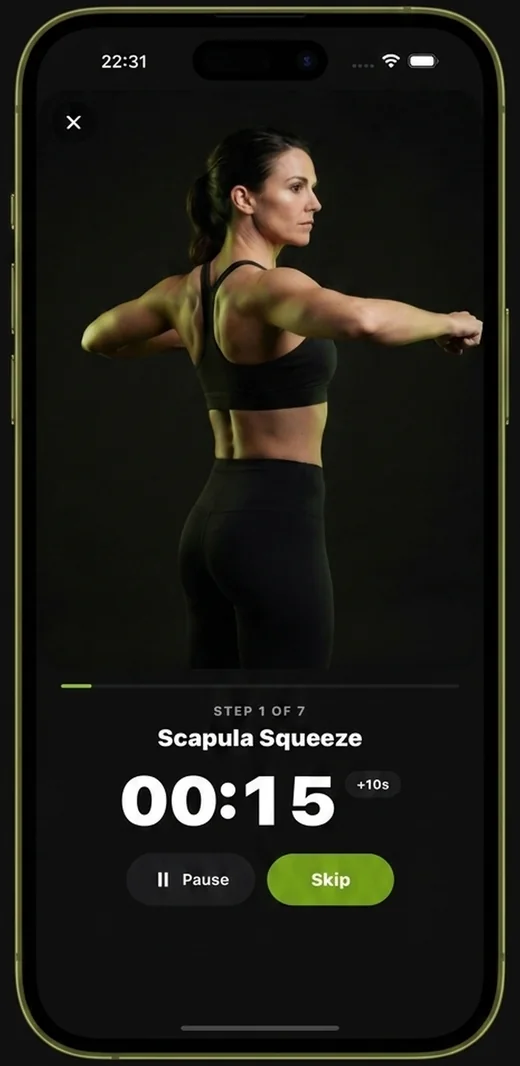
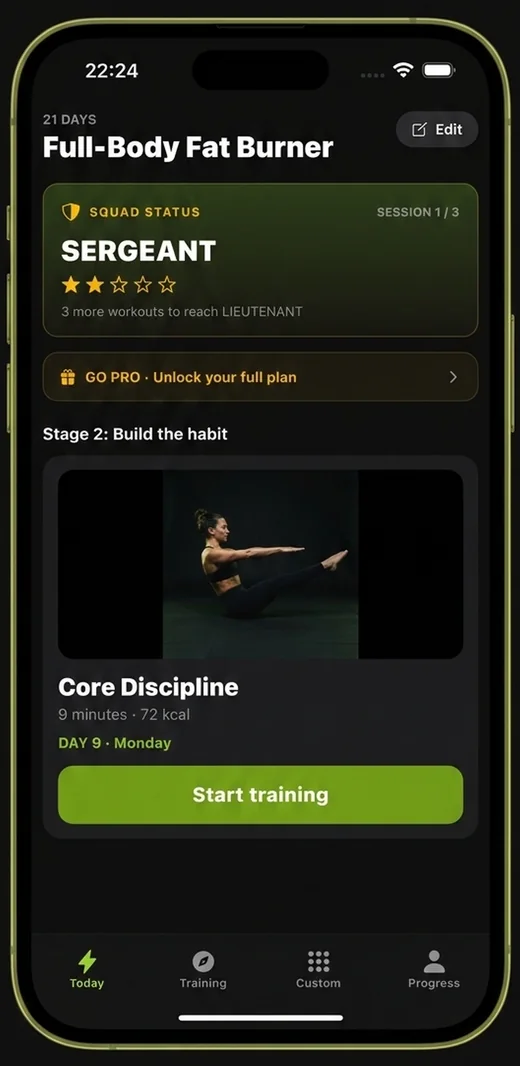
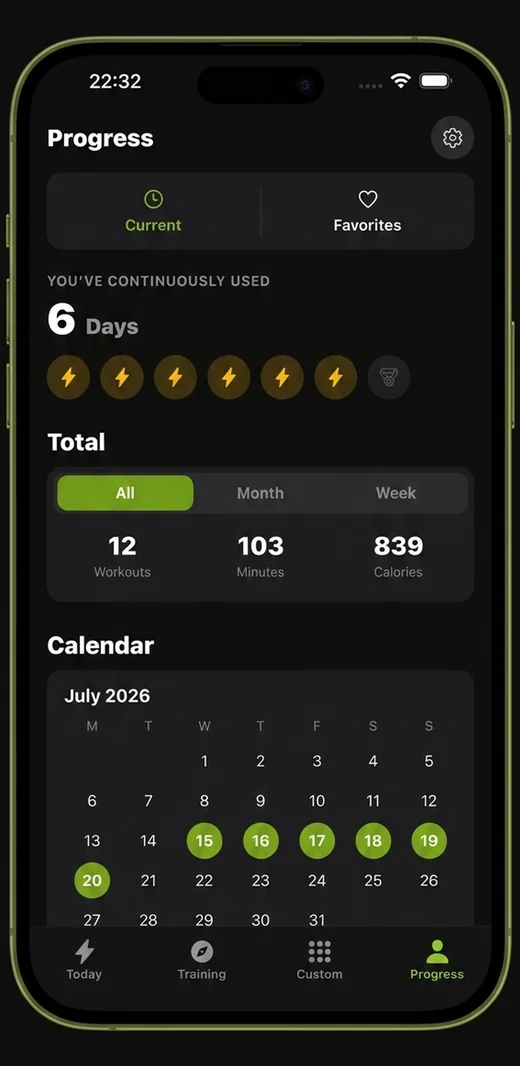
Starting a journey into calisthenics for beginners is the most effective way to build functional, high-level physical resilience without needing a gym membership or expensive machinery. Military fitness relies on mastering your own body weight to develop strength, endurance, and iron-clad discipline. By focusing on the four pillars of movement—pushing, pulling, squatting, and core stabilization—you are not just working out; you are building the exact movement patterns required for tactical readiness. Whether you are aiming for peak performance or just trying to get into fighting shape, this guide will provide the structure necessary to transform your fitness over the next thirty days.
The Core Principles of Bodyweight Training
In the military, physical training is not about isolation or aesthetic perfection; it is about absolute efficiency and utility. If you are new to this style of training, you must understand that your body is the ultimate tool. Progression is achieved through mechanical disadvantage—meaning you change your angle or range of motion to make an exercise harder. Before you dive deep into what military calisthenics is, recognize that consistency beats intensity during your first month. You are building a baseline, not trying to break your central nervous system on day one.
The Foundational Movements
To build a rock-solid foundation, you must master the fundamental exercises. Each movement has a primary version and a regression, ensuring you can perform the reps with perfect form.
1. The Push (Push-ups)
If a standard floor push-up is too difficult, start with incline push-ups using a stable table or a low wall. Keep your elbows at a 45-degree angle to your body, not flared out. Your chest should touch the surface, and your core must remain rigid like a plank.
2. The Pull (Pull-ups/Rows)
Pulling is the hardest movement for most, but it is non-negotiable for upper-body strength. If you cannot do a pull-up, practice inverted rows or negative pull-ups. You can refer to the dead-hang to strict pull-up progression to master this specific skill.
3. The Squat (Air Squats)
Squats build the lower body power required for rucking and running. Keep your heels glued to the ground and push your hips back as if sitting into a chair. Your knees should track over your toes.
4. The Core (Planks)
Your core is the bridge between your upper and lower body. Perform planks by squeezing your glutes and bracing your abs, holding for time rather than reps.
Your First 4-Week Training Schedule
Follow this structure to build steady, sustainable progress. Perform these workouts three times per week, leaving at least one rest day between sessions. As you get more comfortable, you can eventually transition to the 8-week military calisthenics workout plan.
| Week | Push-ups | Squats | Inverted Rows/Pull-ups | Plank Hold |
|---|---|---|---|---|
| 1 | 3x8 | 3x12 | 3x5 | 3x30 sec |
| 2 | 3x10 | 3x15 | 3x7 | 3x45 sec |
| 3 | 4x10 | 4x15 | 3x8 | 3x60 sec |
| 4 | 4x12 | 4x20 | 4x8 | 4x60 sec |
Strategies for Progression and Recovery
To see real results as a beginner, you must practice progressive overload. In the context of bodyweight training, this means doing more reps, shorter rest periods, or moving to a more difficult variation of an exercise. For example, once you can hit 20 clean push-ups, move to diamond push-ups to increase the load on your triceps.
Recovery is just as important as the work itself. Military athletes understand that injury prevention is part of the mission. Always warm up with dynamic stretching—arm circles, leg swings, and light jumping jacks—before starting your sets. Aim for 90 to 120 seconds of rest between sets in the first two weeks, gradually reducing this to 60 seconds by the end of the month.
Measuring Your Milestones
By the end of your first month, you should feel a noticeable difference in your posture, grip strength, and cardiovascular recovery. Use these milestones to gauge your readiness:
- Can you complete the prescribed reps with perfect form, without shaking or rounding your back?
- Is your heart rate returning to near-baseline within two minutes of your last set?
- Are you able to perform a complete, non-stop circuit without failure?
If you find yourself hitting a plateau early, go back to the regressions. There is no shame in scaling back; the only failure is quitting. Once you have built this foundation, you can incorporate higher-intensity training like the 20-minute no-gear barracks workout to further improve your conditioning.
Frequently asked questions
How often should I train to see results?
For a beginner, three to four days per week is ideal. This allows your muscles and joints enough time to recover and adapt to the new stress of the movements.
Should I train to failure every set?
No. Especially in your first month, stay two reps away from failure. This ensures you maintain perfect form and prevents excessive soreness that could keep you from your next session.
Can I do this program if I am completely out of shape?
Yes, that is exactly who this program is for. Start with the easiest possible regressions—such as wall push-ups and chair-assisted squats—and focus strictly on the mind-muscle connection.
Do I need to track my macros to succeed?
While precise tracking isn’t strictly mandatory for calisthenics, you must consume enough protein to support muscle repair. Aim for at least 0.8 grams of protein per pound of body weight to ensure your body has the materials it needs to build new strength.