The Spartan Calisthenics Workout: Brutal Bodyweight Training
Master the Spartan calisthenics workout for maximum results. This no-nonsense, high-volume circuit builds raw strength and grit using only bodyweight.

Now on iPhone
Military Calisthenics Coach
Take the drill with you
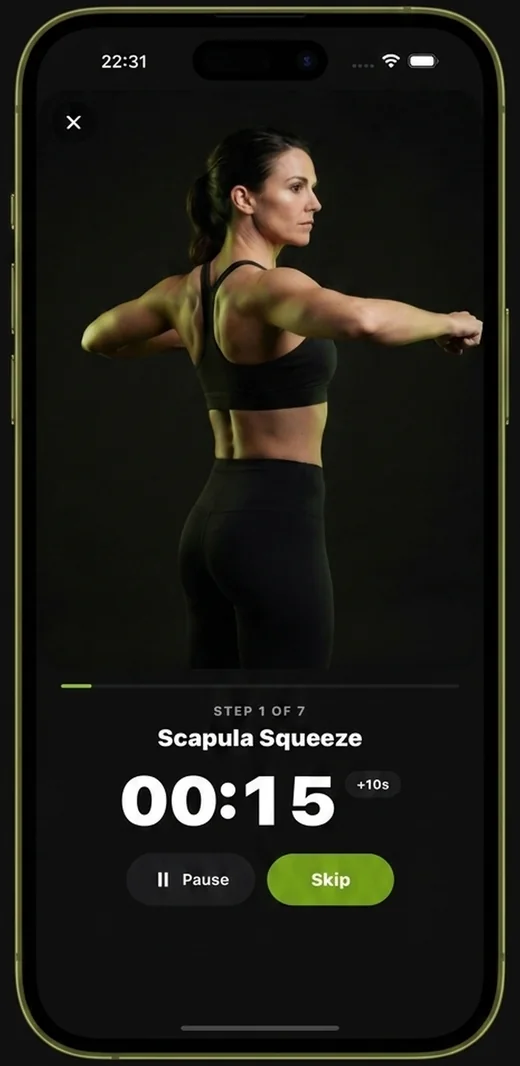
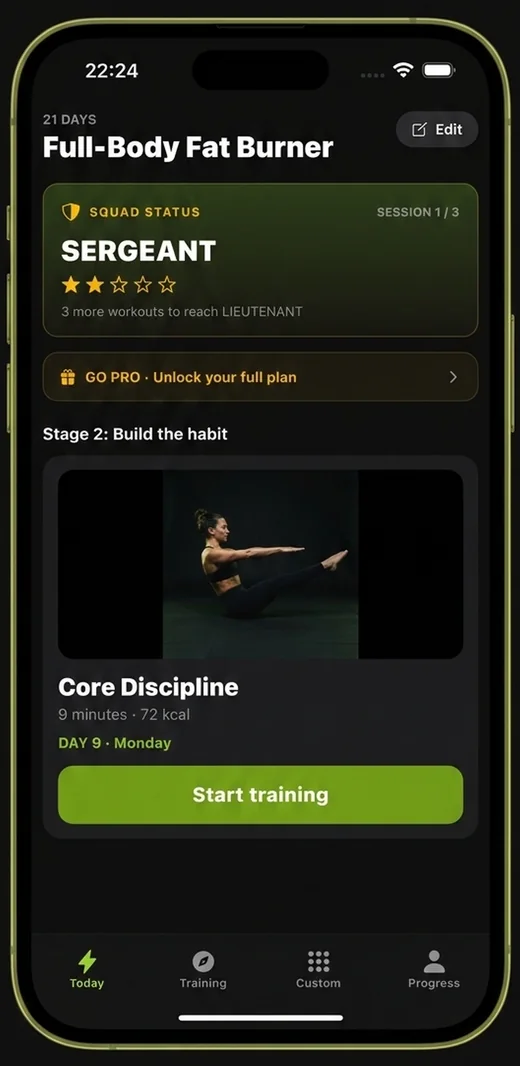
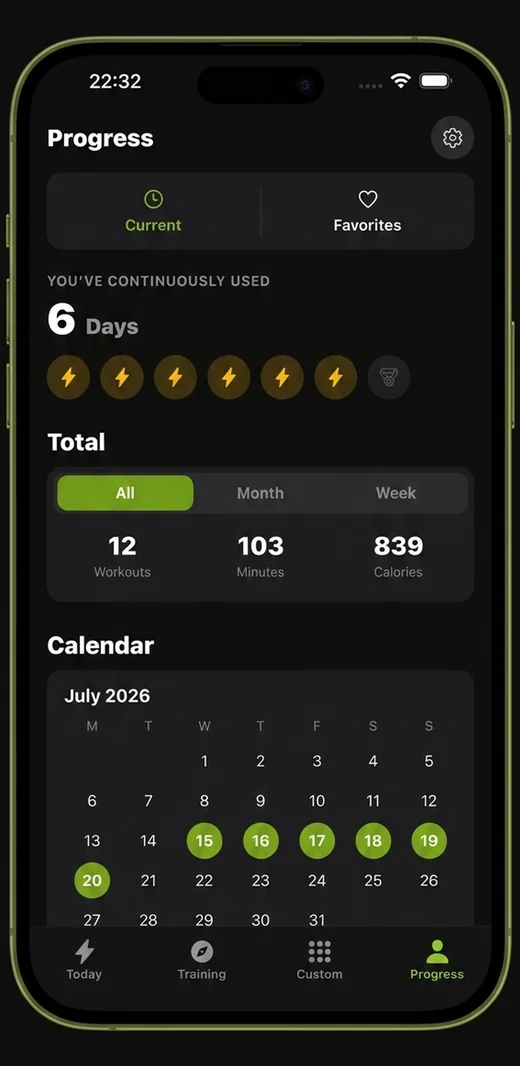
Everything on this site, built into a pocket coach. Military Calisthenics Coach turns the standards into a daily session you can run in a barracks, a garage or a hotel room — timed, tracked and scaled to you.
- A 21-day program that adapts to your level
- Guided timed sessions — no counting, no guessing
- Ranks, streaks and progress you can actually see

A spartan calisthenics workout demands total discipline, focusing on high-volume movements that force physical adaptation through sustained, intense effort. In the military, fitness is not about aesthetics; it is about the ability to perform under fatigue when the mission requires it. This circuit mimics the foundational, no-nonsense intensity of entry-level training, stripping away complexity to leave only the raw mechanics of pushing, pulling, and core stabilization. Whether you are training at home or at a local calisthenics park, the goal is to complete the prescribed volume with strict form, treating each repetition as a standard to be met rather than a chore to be rushed. If you are new to this style of training, start by understanding what military calisthenics is to grasp the importance of cadence and consistent output.
The Spartan Foundation: Mechanical Standards
Before you attempt high-volume circuits, you must master the fundamental standards. Military fitness testing—such as the army combat fitness test—relies on lock-out extensions and full ranges of motion. If your push-up does not reach a complete lockout at the top or chest-to-deck contact at the bottom, the rep does not count. In a spartan-style circuit, self-policing your form is the difference between building functional strength and cheating yourself out of progress. Use a tempo of 1-0-1-0 (one second down, zero pause, one second up) for most movements to ensure you are not relying on momentum.
The Circuit Composition
This circuit is designed to be performed with minimal rest. If you need to break a set, rest for no more than 15 seconds before resuming to finish your total count. If you are struggling with these movements, visit our calisthenics for beginners guide to build the necessary base. For those ready to test their limits, perform the following in order, resting 60 seconds between rounds.
| Exercise | Target Repetitions (Per Round) | Focus Area |
|---|---|---|
| Standard Push-Ups | 20-30 | Chest/Triceps |
| Strict Pull-Ups | 8-12 | Back/Biceps |
| Air Squats | 40-50 | Quads/Glutes |
| Alternating Lunges | 30 Total | Stability |
| Plank Hold | 60 Seconds | Core |
Progressive Volume and Intensity
Progress in military-style training is linear and measurable. You do not increase volume by sacrificing form; you increase it by becoming more efficient within the same movement patterns. If you find the baseline volume difficult, apply the push up progression to modify the difficulty while maintaining the prescribed set count. Beginners should aim to complete three full rounds. Intermediate trainees should target five, and those looking to simulate intense boot camp workout plan scenarios should push for seven.
To track progress, keep a physical log. Record not just the total rounds, but the time taken to complete the entire circuit. When your circuit time drops by 10% over two weeks of consistent training, increase your repetitions by 5% in the following week. This systematic approach ensures you avoid plateaus and keeps your progress as transparent as the standards themselves.
Integrating Targeted Calisthenics Movements
While the circuit provides the volume, specific weaknesses require isolated attention. Many trainees fail to advance because their pulling strength lags behind their pushing capacity. If you cannot hit the pull-up target, utilize the dead-hang to strict pull-up progression on off-days to build the necessary latent strength. Similarly, a calisthenics core workout can be added to the end of the session to ensure your trunk remains rigid during heavy fatigue.
Remember that strength is a skill. Even during high-volume work, treat every repetition as if a drill sergeant is watching. If your back arches during the plank or your knees cave during squats, your body is looking for the path of least resistance. Correct this immediately. If you need a more structured approach, the 8-week military calisthenics workout plan offers a pre-programmed path to build these foundations without the guesswork.
Recovery and Longevity
Raw grit is useless without the structural integrity to support it. Every spartan calisthenics workout should be followed by a standard cool-down to maintain joint mobility. Focus on the hip flexors, shoulders, and thoracic spine. If you feel tightness hindering your squat depth, integrate calisthenics mobility exercises into your morning routine. Training like the military means treating your body as your primary piece of equipment; if the equipment breaks, the mission fails.
Stay consistent. The beauty of bodyweight training is the elimination of excuses. Whether you are in a living room, a garage, or an open field, the standards remain the same. The hardest part of this protocol is not the complexity of the movements, but the relentless application of effort over time.
Frequently asked questions
How many times a week should I perform the spartan circuit?
Perform this circuit three to four times per week, allowing at least one day of rest or active recovery between sessions. This frequency provides enough stimulus to trigger adaptations while allowing your central nervous system time to recover from high-volume work.
Can I scale the intensity if I am not fit enough yet?
Yes, you should scale the intensity by modifying the leverage of the movements rather than shortening the circuit. For instance, use knee push-ups or assisted pull-up bands to ensure you can complete the full range of motion while maintaining the target repetition ranges.
How long should I rest between the circuits?
Rest for exactly 60 to 90 seconds between each complete round of the circuit. Keeping rest periods short is essential for developing the cardiovascular conditioning required for military-style fitness standards.
What do I do if I reach failure during a set?
If you reach technical failure—the point where you can no longer perform a repetition with perfect form—rest for 10 seconds, take a deep breath, and continue until the target repetition count is reached. Never count a repetition that lacks the required standard of form.