Build Functional Strength With This Boot Camp Workout Plan
Master your bodyweight with a structured boot camp workout plan. Follow this military-inspired guide to improve performance, fitness, and raw strength.

Military Calisthenics Coach
Take the drill with you
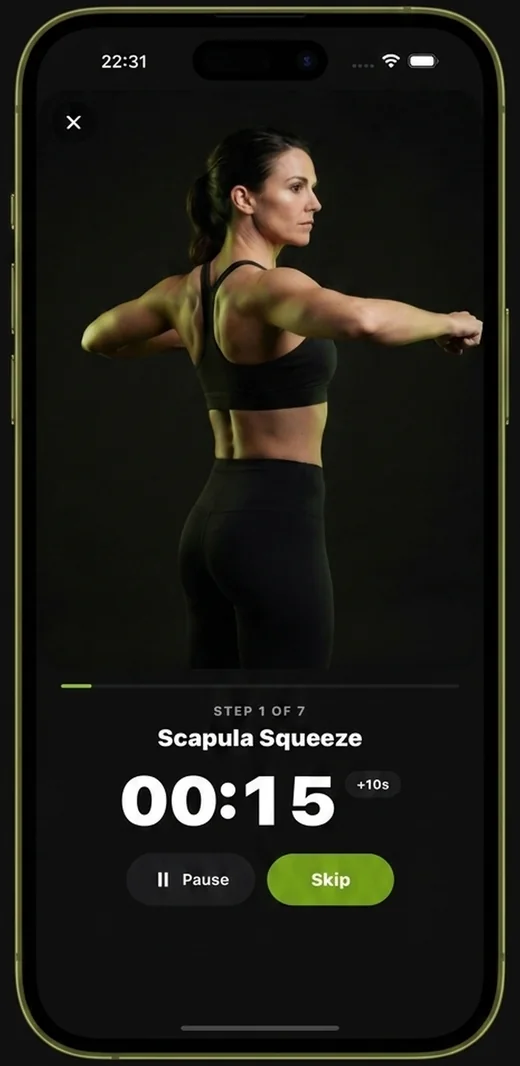
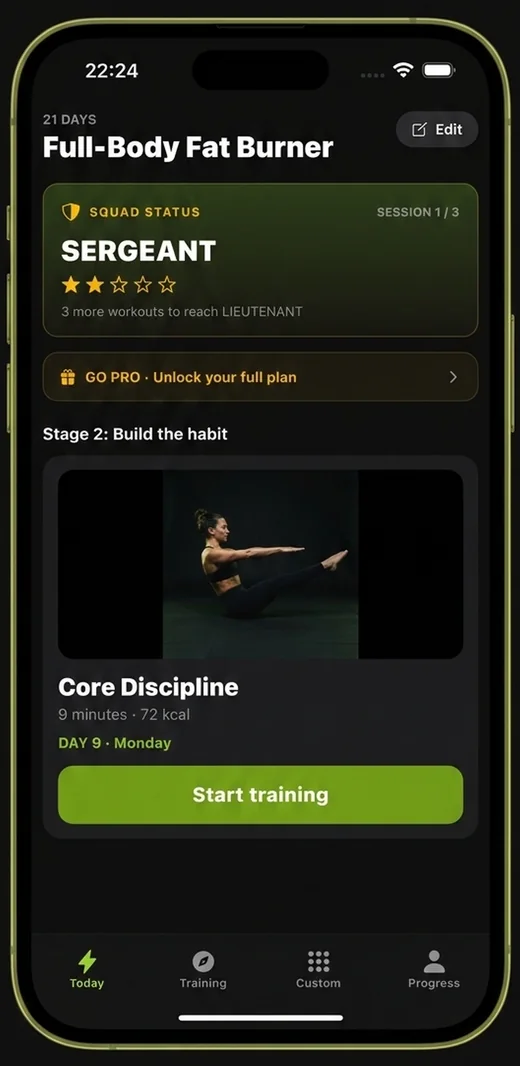
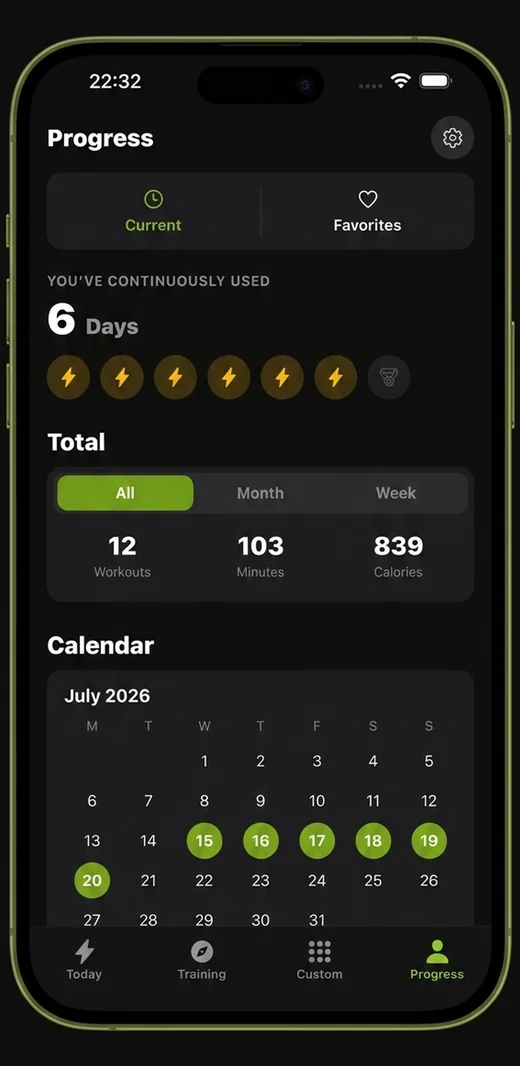
Everything on this site, built into a pocket coach. Military Calisthenics Coach turns the standards into a daily session you can run in a barracks, a garage or a hotel room — timed, tracked and scaled to you.
- A 21-day program that adapts to your level
- Guided timed sessions — no counting, no guessing
- Ranks, streaks and progress you can actually see

A effective boot camp workout plan utilizes the principles of military physical readiness training to build a foundation of strength, endurance, and discipline that translates to any environment. Whether you are training in a local park, a home gym, or a confined barracks space, the methodology remains the same: focus on compound movements, trackable volume, and progressive overload. When you understand what military calisthenics is, you realize it is not about fancy equipment; it is about mastering your own frame against the constant pull of gravity. This program is designed to move you from a baseline level of fitness toward the high-capacity endurance required for serious field performance.
The Philosophy of Military-Style Training
Military training focuses on durability and efficiency. You do not train to look a certain way; you train so that your body performs on command regardless of fatigue levels. This requires a shift in mindset: instead of chasing the “pump,” you chase the standard. Before you begin, define your baseline. Perform a max-effort test of push-ups, sit-ups, and pull-ups to see where you stand. If you struggle to hit double digits, prioritize push up progression and the dead-hang to strict pull-up progression before increasing the total volume of your sessions.
Essential Movement Patterns
- Pushing: Horizontal (push-ups) and vertical (pike push-ups/handstand work).
- Pulling: Horizontal (inverted rows) and vertical (pull-ups).
- Lower Body: Squat patterns (air squats/lunges) and hinge patterns (glute bridges).
- Core: Static holds (planks) and dynamic movement (leg tucks/sit-ups).
The Weekly Boot Camp Structure
Consistency is the only secret to success. A standard military-inspired routine relies on a high frequency of training but varied intensity to prevent injury. If you are starting from zero, calisthenics for beginners is a vital foundation. This schedule follows a 4-day active rotation with active recovery sessions on off days to ensure you maintain mobility.
| Day | Training Focus | Intensity Level |
|---|---|---|
| Monday | Upper Body & Core | High |
| Tuesday | Lower Body & Cardio | Moderate |
| Wednesday | Active Recovery/Mobility | Low |
| Thursday | Full Body Calisthenics | High |
| Friday | Endurance/Run Base | Moderate |
| Saturday | Calisthenics & Strength | Moderate |
| Sunday | Rest | None |
Executing the Movements
When performing your sets, prioritize form over speed. In a military context, a repetition that does not meet the standard does not count. This is how you avoid injury and ensure you are actually building the required strength. For push-ups, keep your body in a rigid plank. If your hips sag or your elbows flare excessively, you are building bad habits that lead to shoulder issues. Use calisthenics mobility exercises before every session to ensure your joints are prepared for the loading.
If you find yourself limited by space or equipment, utilize the 20-minute no-gear barracks workout. It is designed to maximize output in the minimum amount of time, focusing on high-density training—moving through exercises with minimal rest to keep the heart rate elevated.
Progressing Your Training
Once you have established a routine, you must increase the difficulty to continue seeing gains. Never increase intensity until your volume is consistent. If you can perform 3 sets of 10 push-ups perfectly, move to 3 sets of 12. If you find your progress stalling, look into the 8-week military calisthenics workout plan for a structured approach that periodizes your effort.
Common failure points for those training solo include:
- Breaking form as fatigue sets in: Stop the set when form fails, rather than grinding out “trash reps.”
- Neglecting unilateral work: Ensure you are doing single-leg squats or lunges to correct side-to-side imbalances.
- Ignoring the aerobic base: Military fitness is as much about running as it is about calisthenics. Include steady-state cardio sessions to improve your recovery capacity between sets.
Recovery and Sustainability
Training hard is only one side of the coin. If you do not recover, you do not adapt. Sleep is your most effective recovery tool, followed by consistent nutrition. Many people overlook the necessity of active recovery, such as long, slow walks or deliberate stretching. Treat these as mandatory training blocks rather than optional add-ons. If you feel chronic aches, scale back the volume rather than quitting the program entirely.
Frequently asked questions
How many push-ups should I be able to do?
While specific military fitness test standards vary by branch, a solid civilian goal for a healthy adult is to reach 30 to 40 strict push-ups. Focus on full range of motion, chest to deck, and locked-out elbows at the top of every single repetition.
How long should each workout session last?
Aim for 45 to 60 minutes for a standard session. This includes a warm-up, the primary work, and a cool-down. If you have less time, prioritize high-intensity intervals rather than skipping the training entirely.
Can I do this workout if I am a complete beginner?
Yes, but you must scale the movements to your current ability. Use elevated push-ups or assisted squats to maintain perfect form until you have developed the necessary strength to perform the standard variations without compromising your posture.
What is the best way to track my progress?
Keep a dedicated training logbook or use a simple digital spreadsheet to record every set, rep, and run time. You cannot manage what you do not measure, and having visual proof of your improvement is the best way to stay motivated during the weeks when progress feels slow.