Military Calisthenics Core Workout: Build Combat-Ready Stability
Master this military calisthenics core workout to develop functional, load-bearing strength using zero equipment. Get the tactical edge with our circuit plan.

Military Calisthenics Coach
Take the drill with you
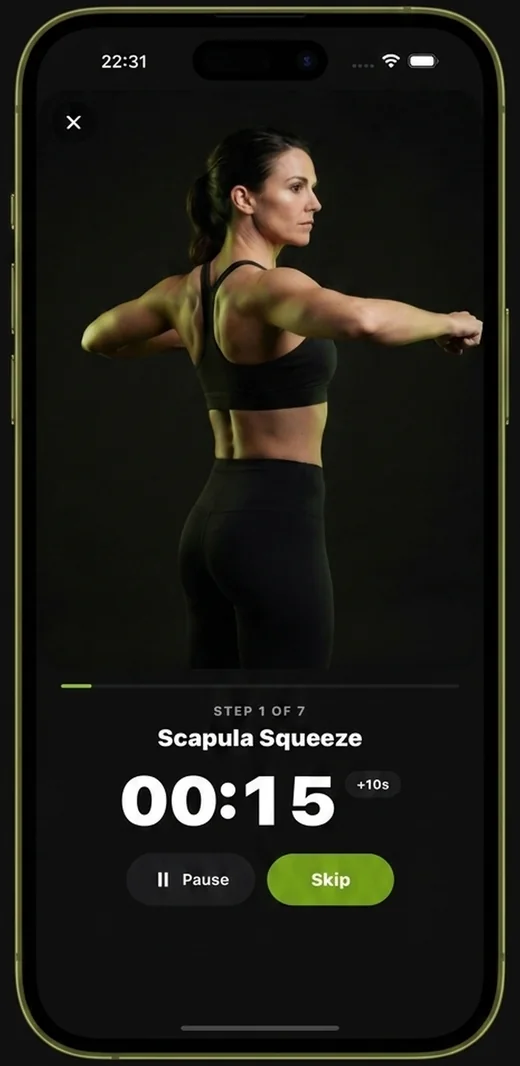
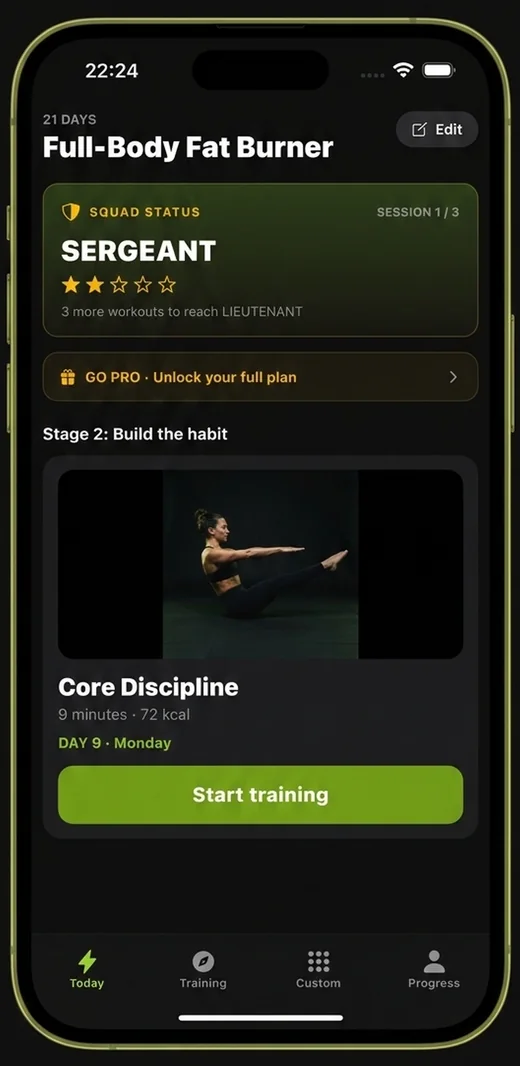
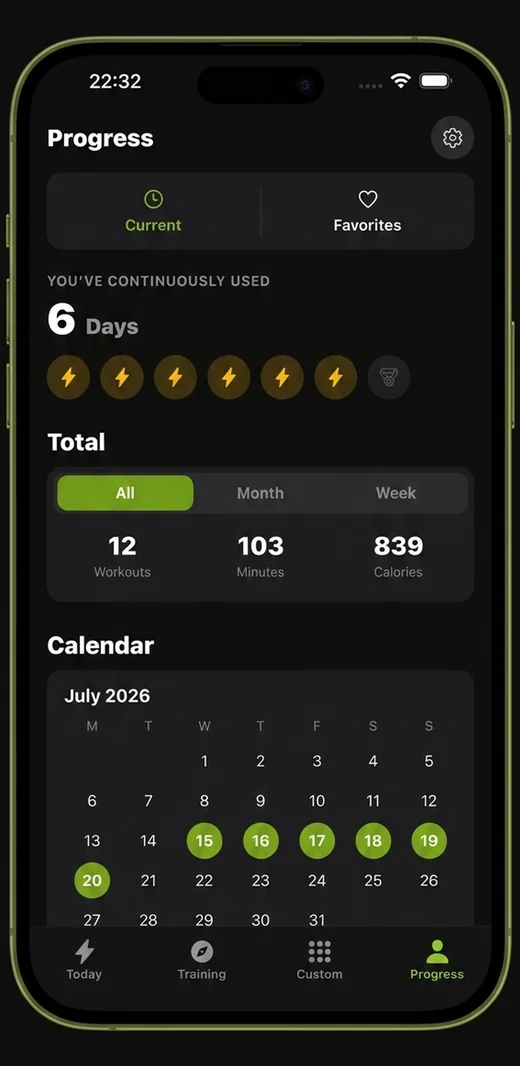
Everything on this site, built into a pocket coach. Military Calisthenics Coach turns the standards into a daily session you can run in a barracks, a garage or a hotel room — timed, tracked and scaled to you.
- A 21-day program that adapts to your level
- Guided timed sessions — no counting, no guessing
- Ranks, streaks and progress you can actually see

A disciplined calisthenics core workout is the foundational pillar of any soldier’s physical readiness, providing the structural integrity needed to carry heavy rucksacks, navigate obstacle courses, and perform explosive maneuvers. Unlike civilian gym training that isolates muscle groups, military-style training focuses on creating a rigid, resilient torso that acts as a bridge between your upper and lower body. By utilizing tension, gravity, and precise control, you can forge a trunk capable of sustaining extreme load without the need for a single weight plate or fancy machine. If you are new to this style of training, consider reviewing what military calisthenics is to understand the philosophy of functional longevity before diving into this rigorous routine.
The Philosophy of Tactical Core Strength
In a tactical environment, a ‘strong core’ doesn’t mean a visible six-pack; it means the ability to transfer force and prevent energy leaks when moving under load. Soldiers rarely lift from a stable bench. They lift while fatigued, while moving, and while carrying uneven weight. Therefore, our core training must be dynamic and focused on isometric stiffness. We prioritize moves that resist rotation and lateral flexion, as these are the exact stressors experienced during a forced march or while navigating uneven terrain with a full combat load. If you are looking to integrate this into a broader routine, you might find success by pairing this core work with the 8-week military calisthenics workout plan for a complete physical overhaul.
The No-Equipment Core Circuit
This circuit is designed to be performed with zero gear, relying entirely on your own body weight to force hypertrophy and neural adaptation. Perform these exercises back-to-back with minimal rest, completing four full circuits for a total of 20 to 25 minutes of high-intensity work.
1. The Hollow Body Hold (60 Seconds)
The hollow body hold is the king of abdominal tension. Lie on your back, press your lower spine into the floor, and lift your legs and shoulders while reaching your arms overhead. Ensure your ribcage stays tucked. If this is too difficult, bring your knees toward your chest while keeping your back flat.
2. Slow-Tempo Leg Raises (15 Reps)
Lie flat, hands tucked under your glutes for support if needed. Raise your legs until they are perpendicular to the floor, then lower them over a 3-second count. The key is in the eccentric phase—don’t let your feet slam against the floor.
3. Tactical Plank-to-Pushup (10 Reps)
Start in a forearm plank. Push up one arm at a time until you are in a high push-up position, then descend back to your forearms. Keep your hips square to the floor; any swaying indicates a failure in core stiffness.
4. Alternating “V”-Ups (20 Reps)
Lie flat, then explode upward to touch your left hand to your right foot. Return to the starting position and repeat on the other side. These build the explosive power necessary for quick tactical adjustments.
Structured Progression Plan
Consistency is the hallmark of any effective military program. Use the table below to track your progression over the next four weeks. As you become proficient, aim to shorten your rest periods rather than just increasing the volume.
| Week | Sets | Reps/Time (Hold) | Rest Between Rounds |
|---|---|---|---|
| 1 | 3 | 30s Hold / 10 Reps | 90s |
| 2 | 3 | 45s Hold / 12 Reps | 75s |
| 3 | 4 | 45s Hold / 15 Reps | 60s |
| 4 | 4 | 60s Hold / 20 Reps | 45s |
For those who find these movements too challenging initially, you can adjust the difficulty by focusing on the range of motion. Never sacrifice form to hit a number; a poorly executed repetition does nothing for your combat readiness. If you find your current fitness level is lacking, don’t be discouraged—start by building your foundation with the 20-minute no-gear barracks workout until your stamina improves.
Why Isometric Holds Beat Crunches
Traditional gym culture often pushes thousands of sit-ups, but military-style training favors isometric tension. When you hold a plank or a hollow body position, you are training your muscles to resist force under prolonged tension. This is precisely how your body reacts when you are wearing a plate carrier for twelve hours. Crunches teach the spine to flex forward, which is rarely a posture you want to encourage while carrying heavy gear. Instead, we want to train the spine to remain neutral. This approach minimizes the risk of lower back injuries—a common ailment for infantry personnel—and maximizes the efficiency of your muscular recruitment.
Integrating Core Work with Full-Body Training
Your core should not be an afterthought. Because every major lift, from push-ups to pull-ups, requires core activation, it is best to perform this circuit either as a warm-up to prime your CNS (Central Nervous System) or as a finisher to maximize metabolic demand. If you are currently working on your upper body, try alternating your core sessions with push up progression days to ensure you are balanced. Remember that your core is the power transfer center; if the center is weak, your arms and legs are effectively fighting against their own instability.
Frequently asked questions
How often should I do this core circuit?
Aim to perform this routine 3 to 4 times per week. Your core muscles have a high recovery capacity, but they still require at least 24 hours of rest to repair the micro-tears created during intense tension work.
Can I do these exercises if I have lower back pain?
If you feel sharp, shooting pain in your lower back, stop immediately. Often, lower back pain during leg raises is caused by a weak abdominal wall that allows the pelvis to tilt; focus on pressing your lumbar spine into the floor and regress to smaller range-of-motion movements until your strength catches up.
Are these exercises enough to get a six-pack?
Visible abdominal definition is primarily a product of body fat percentage. While this circuit will build a thick, functional, and powerful midsection, you must pair it with a disciplined nutritional approach to reveal that muscle definition.
Should I add weight to these exercises later?
Once you can complete the Week 4 targets with perfect form and minimal rest, you can increase the intensity by wearing a weighted vest or holding a heavy object during the holds. However, focus on perfecting bodyweight mastery first, as the stability requirements of load-bearing calisthenics are significant.