Street Workout: The No-Nonsense Guide to Outdoor Bodyweight Training
Master street workout with this military-style guide. Learn the fundamental movements, effective training standards, and a beginner-friendly outdoor session.

Military Calisthenics Coach
Take the drill with you
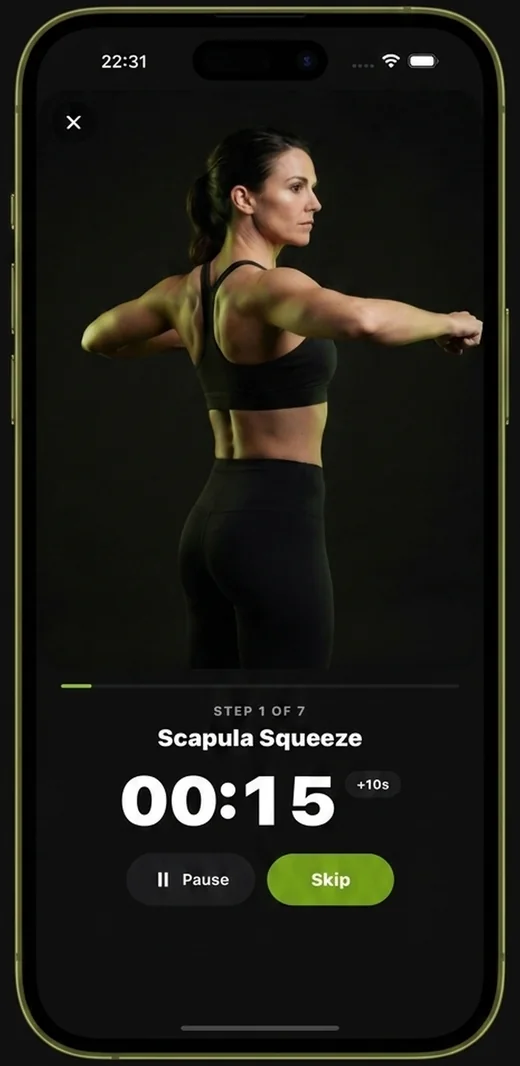
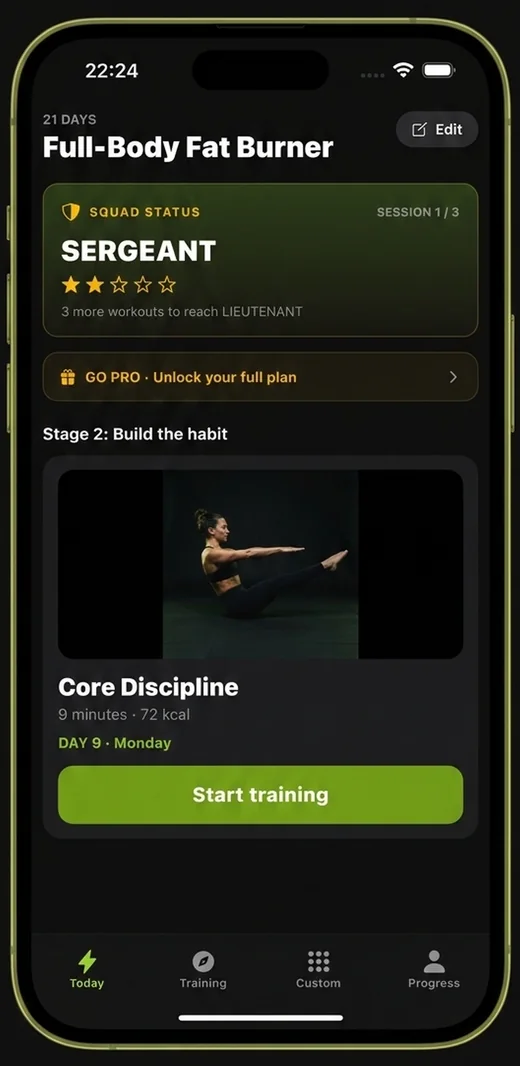
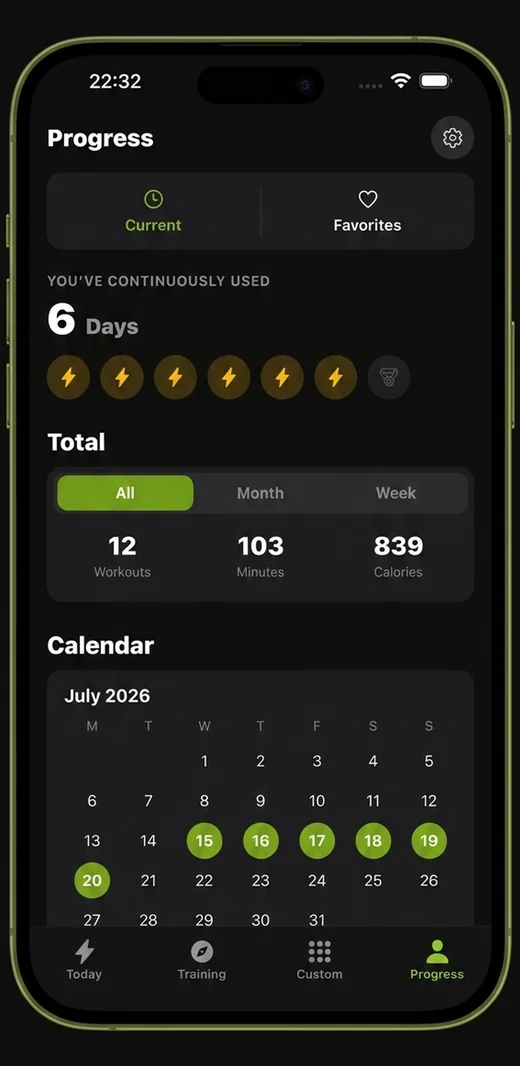
Everything on this site, built into a pocket coach. Military Calisthenics Coach turns the standards into a daily session you can run in a barracks, a garage or a hotel room — timed, tracked and scaled to you.
- A 21-day program that adapts to your level
- Guided timed sessions — no counting, no guessing
- Ranks, streaks and progress you can actually see

Street workout is the practice of utilizing public fitness structures for high-repetition, standard-driven bodyweight exercise, stripping away the complexity of gym equipment to focus on raw functional strength. Unlike freestyle calisthenics, which prioritizes aesthetic skills like the human flag or complex spinning, the core of street workout is built on the same foundations used in army prt exercises: consistent, measurable, and repeatable strength. If you can move your body through space with control, you possess the most valuable tool in any tactical or civilian environment. This discipline requires nothing more than a bar and the discipline to maintain rigid form even as fatigue sets in.
The Philosophy of Bar-Based Training
The fundamental difference between a gym session and a session at a calisthenics park lies in the constraints. In a gym, you can adjust weight stacks or select angles; in street workout, the bar is fixed and your body weight is the load. This reality forces you to prioritize biomechanical efficiency. If your form breaks, the leverage shifts, and you fail the repetition. Military training relies on these same principles to ensure that trainees are strong enough to carry gear and clear obstacles in high-stress environments. You are not training to look like an athlete; you are training to ensure your body performs under load whenever required.
Core Standards for Success
To advance in any discipline, you must respect the standard. Every rep must begin from a dead hang or full extension and finish at the point of maximum contraction. If you are struggling to reach these standards, prioritize the dead-hang to strict pull-up progression before attempting high-volume sets.
| Exercise | Standard | Focus Area |
|---|---|---|
| Pull-ups | Full extension to chin over bar | Back/Biceps |
| Dips | Straight arm lock to chest below elbow | Chest/Triceps |
| Push-ups | Chest to ground, full lockout | Chest/Core |
| Hanging Leg Raise | Full dead hang to toes touching bar | Abdominal Wall |
Establishing Your Baseline
Before attempting complex routines, you must evaluate where your conditioning stands. Use the military fitness test standards as a benchmark for your progress. If you are starting from zero, focus on volume-based accumulation. Aim to complete your total reps for a movement within as few sets as possible. Rest periods should remain strict—no more than 90 seconds between sets—to ensure you are building work capacity rather than just performing leisurely movement.
For those who are just beginning their journey, calisthenics for beginners is the starting point. Do not attempt advanced movements until you have completed at least four weeks of consistent foundational work. If you find the volume too high, reduce the rep count but keep the set count and rest intervals constant to preserve the metabolic demand of the session.
The Fundamental Outdoor Session
This session is designed to be executed at any basic bar setup. It focuses on pushing and pulling strength, which is the cornerstone of upper body calisthenics. Perform this workout three times per week, with at least one rest day between sessions to allow for recovery.
The Workout Structure
- Warm-up: 5 minutes of low-intensity jogging followed by active mobility, specifically targeting shoulders and hips.
- Pull-ups: 3 sets to 75% of your maximum rep count (stop 2 reps before failure).
- Dips: 3 sets of 8-12 repetitions. If this is too hard, utilize dip progression techniques like bench dips or negative-only repetitions.
- Push-ups: 3 sets of 15-20 repetitions. Ensure your core is braced; imagine a straight line from your heels to the back of your head.
- Hanging Knee Raises: 3 sets of 10-15 repetitions. This is an essential calisthenics core workout component for building the tension required for more advanced movements later on.
If you find this program too simple after two weeks, incorporate weighted calisthenics or reduce your rest intervals to 60 seconds to increase the density of the training.
Scaling for All Ability Levels
Coaching mixed-ability groups has shown that the most common failure point for beginners is not muscle strength, but technical failure due to fatigue. If you cannot perform a strict pull-up, do not resort to swinging or kipping to complete the rep. Instead, perform negatives: jump to the top position and lower yourself as slowly as possible over a 5-second count. This builds the specific strength needed to eventually master what military calisthenics is. Strength is not gifted; it is extracted from the bar through repetitive, high-tension practice.
Frequently asked questions
How many days per week should I practice street workout?
For the best results, perform this routine three days per week on alternating days. This allows for adequate muscle recovery while maintaining the frequency needed to develop neuromuscular efficiency in the movements.
Can I use street workout for weight loss?
Street workout is highly effective for improving body composition, especially when combined with controlled caloric intake. By focusing on compound movements, you increase your metabolic demand and support muscle retention, which is key to long-term body recomposition.
What if I cannot find a dedicated street workout park?
Any stable horizontal bar, such as those found at schools or playgrounds, will suffice. If you have limited access to bars, consider looking into the 20-minute no-gear barracks workout to maintain consistency until you can get to a park.
How do I know if my form is correct?
Record a video of your performance from the side. You should see a full range of motion—elbows fully locked at the bottom and full extension at the top—with no excessive movement in the lower back or hips during push-ups and dips.