Mastering Army PRT Exercises: A Military Calisthenics Guide
Learn the fundamentals of army PRT exercises to build functional strength. Use these proven military drills for a structured, consistent home bodyweight workout.

Military Calisthenics Coach
Take the drill with you
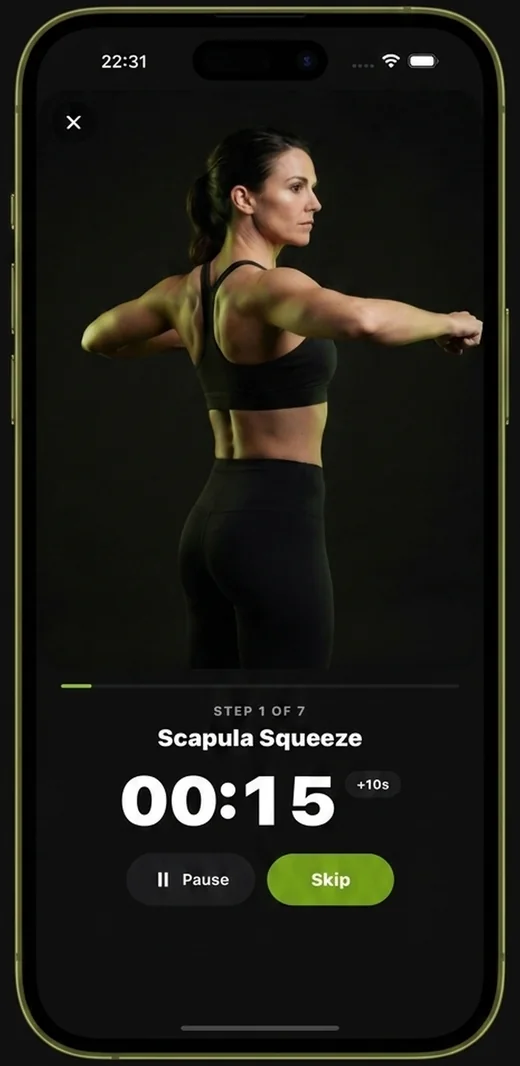
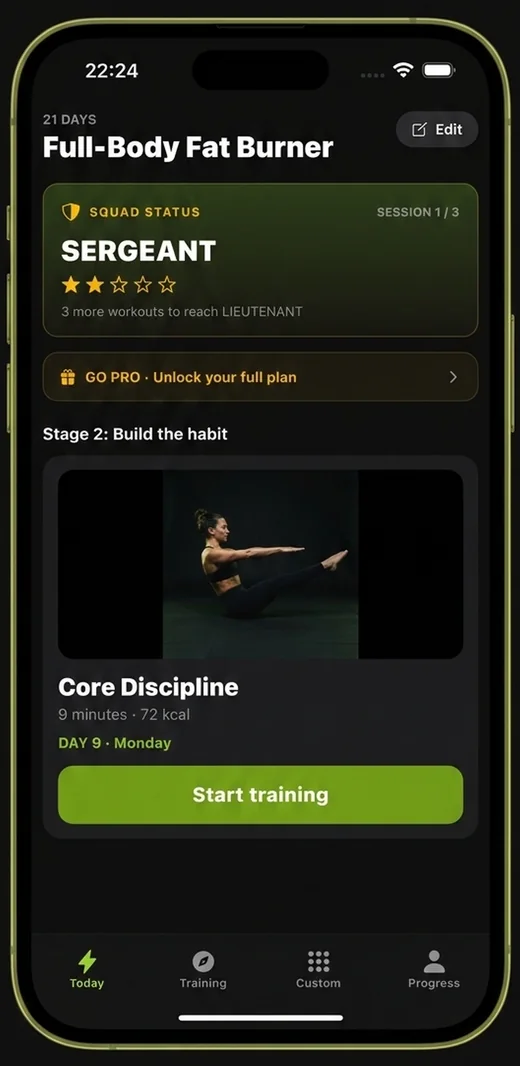
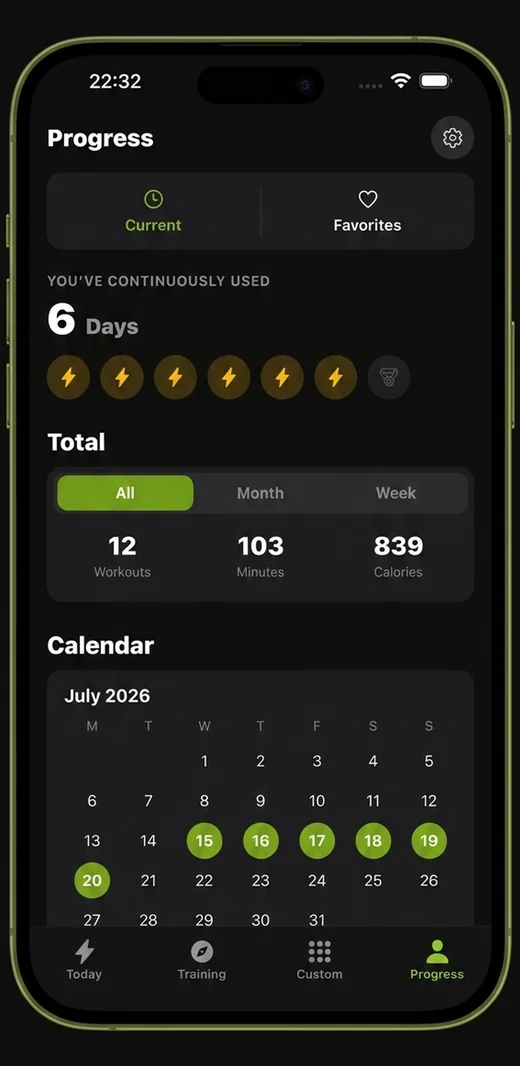
Everything on this site, built into a pocket coach. Military Calisthenics Coach turns the standards into a daily session you can run in a barracks, a garage or a hotel room — timed, tracked and scaled to you.
- A 21-day program that adapts to your level
- Guided timed sessions — no counting, no guessing
- Ranks, streaks and progress you can actually see

Army PRT exercises represent the gold standard for functional bodyweight training, focusing on movement quality, standardized form, and endurance. Based on the principles of the US Army’s FM 7-22 doctrine, these movements are designed to be performed anywhere, with minimal equipment, to prepare the human body for physical adversity. By integrating these specific drills, you are not just exercising; you are adopting a methodology that prioritizes foundational strength and metabolic resilience, making it an ideal approach for calisthenics for beginners who want a no-nonsense, repeatable system.
The Anatomy of a Military Drill
The military approach to physical training relies on the ‘Preparation,’ ‘Conditioning,’ and ‘Climbing’ drill structure. Each drill serves a specific purpose in the lifecycle of a training session. The Preparation Drill serves to prime the body for exertion by focusing on joint mobility and dynamic activation rather than static stretching. The Conditioning Drills are where the volume is accumulated, often utilizing a specific sequence of movements to target large muscle groups.
The Preparation Drill: Foundation First
Before you perform a single explosive repetition, you must wake up your nervous system. In a professional setting, this takes approximately 10 to 15 minutes. Key movements include the Bend and Reach, the Rear Lunge, and the High Jumper. The goal is to move through a full range of motion under control. If you have been struggling with consistency, calisthenics warm up routine principles can help you better understand why skipping this phase leads to decreased performance and unnecessary injury risk.
- Bend and Reach: Stand with feet shoulder-width apart, reach overhead, then hinge at the hips to reach between your legs. Keep knees slightly bent.
- Rear Lunge: Step back until the trailing knee nearly touches the ground, keeping the torso vertical. This is critical for balance.
- High Jumper: Coordinate your arms and legs in a rhythmic, jumping motion that builds explosive power without heavy load.
Conditioning Drill 1: The Core of Capacity
Conditioning Drill 1 is a staple for those training for the army combat fitness test or any standardized athletic assessment. The beauty of this drill is its simplicity; it is a circuit that requires no complex machinery. You are using your own body weight to tax your cardiovascular system and muscular endurance simultaneously.
| Exercise | Standard Reps | Rest | Focus Point |
|---|---|---|---|
| Power Jump | 10 | 30s | Full extension in air |
| V-Up | 10 | 30s | Rigid lower back |
| Mountain Climber | 10 per leg | 30s | Constant plank tension |
| Leg Tuck and Twist | 10 | 30s | Oblique engagement |
| Single Leg Push-Up | 5 per side | 60s | Stability in the core |
For most trainees, starting with two full circuits is sufficient. If you cannot complete the prescribed reps with strict form, scale down by reducing the duration of the movement or increasing the rest period. Remember, what military calisthenics is ultimately boils down to meeting the standard, not just completing the count.
Integrating Climbing Drills and Pulling Strength
If you have access to a calisthenics park or a sturdy overhead bar, you must incorporate pulling movements. Climbing drills are often overlooked by civilians, but they are essential for developing the back and bicep strength required for high-level performance. When working on these, utilize the dead-hang to strict pull-up progression to ensure you are building the necessary ligament and tendon strength before attempting high-volume repetitions.
Common pitfalls I see in the field include the ‘kipping’ movement—using momentum to cheat the rep. If your chin does not clear the bar and your arms do not fully extend at the bottom, the repetition does not count. This is a matter of integrity. If you are not yet ready for a full pull-up, focus on scapular shrugs and dead hangs to build the requisite foundational strength.
Building Your Weekly Training Protocol
To see real results, you need a schedule. The following plan utilizes the drill structure for a balanced, full-body approach. You can implement the 8-week military calisthenics workout plan for a more comprehensive progression, but this baseline will get you started effectively.
- Monday: Preparation Drill + Conditioning Drill 1 (3 Rounds)
- Tuesday: Mobility Work or Low-Intensity Active Recovery
- Wednesday: Preparation Drill + Climbing Drill Focus (Pull-ups, Inverted Rows)
- Thursday: Rest or 30-Minute Brisk Walk
- Friday: Conditioning Drill 1 (Modified for volume: 4 Rounds)
- Saturday: Active recovery or light sport
- Sunday: Total Rest
As you progress, the number one way to scale is through ‘time under tension.’ Instead of rushing through the reps, perform them with a 3-second eccentric (downward) phase. This turns a standard push-up into a much more demanding exercise that recruits more muscle fibers.
Coaching Cues for Technical Excellence
As a coach, I look for three things: alignment, range of motion, and control. In the push-up, if your hips sag, you are turning a core exercise into a lower-back strain. If your head is pushed forward, you are compensating for weak neck and shoulder stabilizers.
The Checklist for Every Rep:
- Core: Tuck the pelvis and tighten the glutes. Imagine someone is about to punch you in the stomach.
- Shoulders: Pack the shoulder blades down and back (away from your ears) during pulling and pushing movements.
- Breathing: Exhale on the exertion (the ‘up’ phase of a push-up), inhale on the return.
- Tempo: Avoid bouncing. Control the movement from start to finish.
Frequently asked questions
How many times a week should I perform army PRT exercises?
Most beginners should aim for three full sessions per week. This provides enough stimulus to trigger adaptations while allowing the necessary 48 hours of recovery between high-intensity bouts.
Can I do these drills if I have no experience?
Yes, these drills are designed to be scaled to any fitness level. Start by cutting the volume in half and focusing entirely on your form before worrying about how fast or how many repetitions you can perform.
What if I cannot perform a single pull-up?
Do not be discouraged; many people start here. Use Australian pull-ups (horizontal rows) or resistance bands to assist the movement, focusing on the the dead-hang to strict pull-up progression to build strength in the required muscle groups.
How long should an army PRT session last?
A well-executed session, including the preparation drill and the primary conditioning phase, should last between 45 and 60 minutes. If you are training at a high intensity, you should not need longer than this to see significant improvements in your physical readiness.