Hand Release Push-Up: Army Form Rules, AFT Standards and a 6-Week Plan
How to do a hand-release push-up to the Army standard, what makes a rep not count, the official AFT minimum and maximum reps for every age group, and a 6-week plan to add reps.

Now on iPhone
Military Calisthenics Coach
Train military-style, one guided workout a day
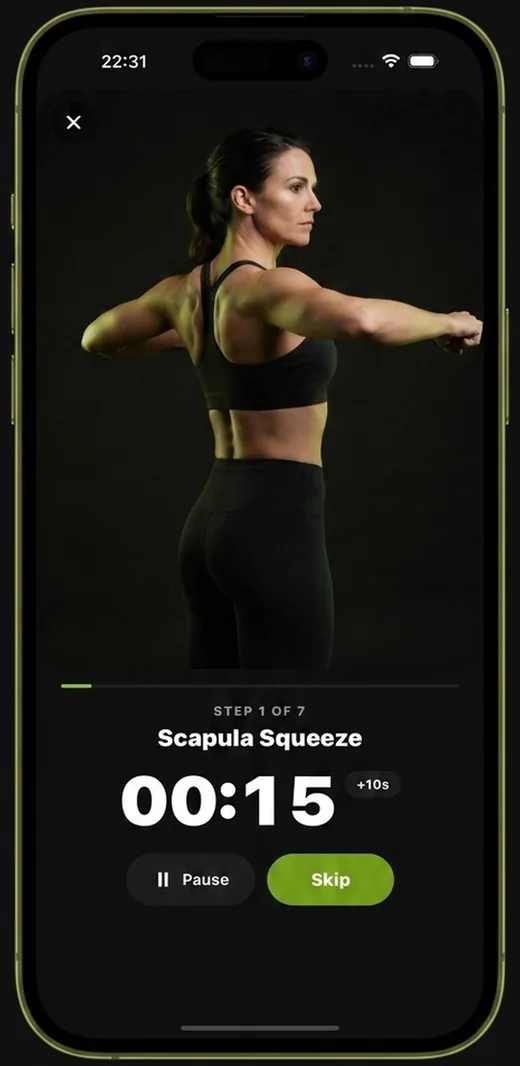
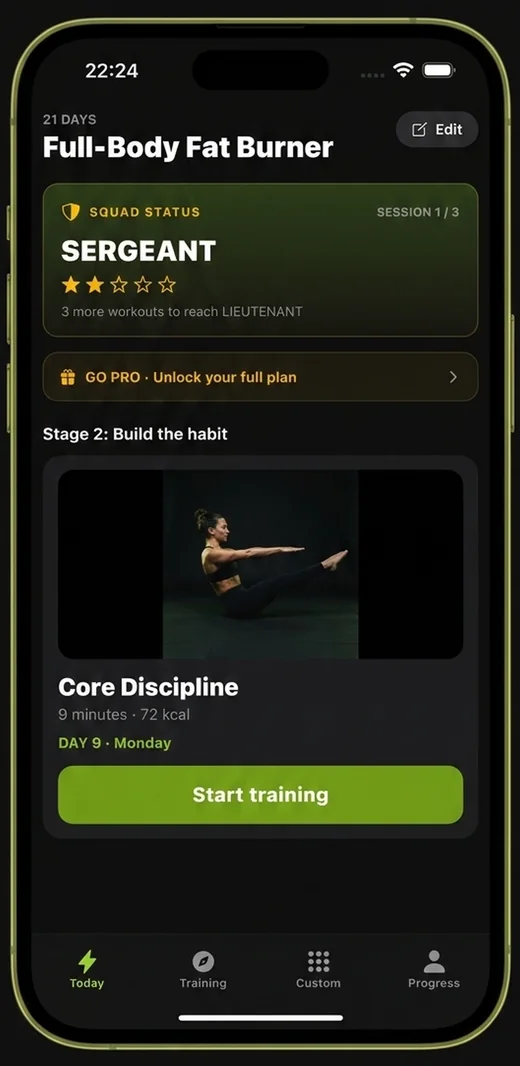
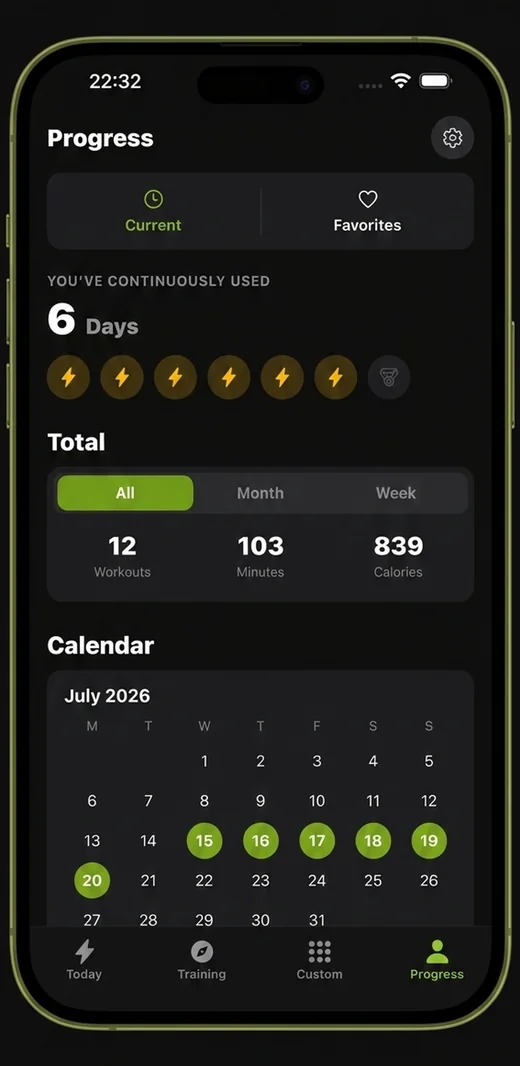
Military Calisthenics Coach is a 21-day military-style calisthenics program for iPhone: one guided bodyweight workout a day that you can run in a barracks, a garage or a hotel room, with timed sets and rests, ranks and streaks.
- A 21-day military-style program, one workout a day
- Guided timed sessions — no counting, no guessing
- Build your own sessions by time, body zone or focus

A hand-release push-up is a push-up in which you lower your whole body to the ground, lift your hands off the floor, then put them back and press up. In the Army version you sweep both arms straight out to the sides into a T before replacing your hands. It is event two of the Army Fitness Test (AFT), scored as the number of correct reps in two minutes.
This guide covers the Army standard rep by rep, the faults that cost reps or end the event, the official minimum and maximum scores for every age group, and a six-week plan to raise your number. The standards come from the Army’s Army Fitness Test Score Tables (approved 15 May 2025, effective 1 June 2025) and the event description on army.mil. Tables can change, so check the current version before an official test.
How to do a hand-release push-up (Army standard)
Set up on a flat surface. You start on the ground, not at the top.
- Start position. Lie face down with your hands flat on the ground and your index fingers inside the outer edges of your shoulders. Your chest and the front of your hips and thighs are on the ground. Toes touch the ground, feet together or up to a boot’s width apart.
- Push up. Press your whole body up as one unit until your elbows are fully straight. This is the front leaning rest.
- Lower. Bend your elbows and lower yourself back to the ground. Your chest, hips and thighs should touch down at the same time.
- Hand release. Without moving your head, body or legs, extend both arms straight out to the sides into the T position.
- Reset. Bring your hands straight back under your shoulders. That completes one rep, and step 2 starts the next.
Keep your body in a generally straight line from head to ankles the whole time. Squeeze your glutes and brace your abs before every press. If your chest rises first and your hips stay on the ground, the rep will not count.
Some civilian guides teach a simpler version where you lift your palms an inch off the floor instead of making a T. It works the same pushing muscles and is a fine training variation. If you are preparing for the AFT, practice the T version, because that is what the grader will watch for.
What counts, what does not, and what ends the event
| Situation | Result |
|---|---|
| Body sags, pikes or snakes during the rep (bends at the knees, hips, trunk or neck) | Rep does not count |
| Chest, hips and thighs do not reach the ground together | Rep does not count |
| Resting in the up position with a straight body | Allowed |
| Bending at the hips, knees, trunk or neck while resting in the up position | Event ends |
| Resting on the ground | Event ends |
| A knee touches the ground, or a hand or foot lifts, while in the up position | Event ends |
The front leaning rest is the only authorized rest position. That has one practical consequence: you cannot take a breather lying on the floor between reps. Any rest you take, you take holding a plank on straight arms.
AFT hand-release push-up standards by age
To pass the AFT you need at least 60 points on every event. The table below gives the reps needed for 60 points (the minimum) and 100 points (the maximum) on the hand-release push-up.
| Age | Men and combat standard: 60 pts | Men and combat standard: 100 pts | Women: 60 pts | Women: 100 pts |
|---|---|---|---|---|
| 17–21 | 15 | 58 | 11 | 53 |
| 22–26 | 14 | 61 | 11 | 50 |
| 27–31 | 14 | 62 | 11 | 48 |
| 32–36 | 13 | 60 | 11 | 47 |
| 37–41 | 12 | 59 | 10 | 43 |
| 42–46 | 11 | 57 | 10 | 40 |
| 47–51 | 11 | 55 | 10 | 38 |
| 52–56 | 10 | 51 | 10 | 36 |
| 57–61 | 10 | 46 | 10 | 24 |
| 62+ | 10 | 43 | 10 | 24 |
Two scoring standards share these tables:
- General standard. Most Soldiers are scored by age and sex, using the column that matches them.
- Combat standard. Soldiers in the 21 combat specialties, such as infantry, armor and field artillery, are scored on the men’s column regardless of sex. The official PDF labels that column “M | C”. They also need at least 350 points in total across the five events.
Below 60 points the table falls quickly: 9 reps scores 50 points and 4 reps scores 0 in every age group. Above 60 points, each extra rep is worth about one point in most age groups, so a few reps make a real difference to your total.
Some recruiting pages and older guides show different numbers, often from the ACFT, which the AFT replaced on 1 June 2025. The army.mil score table PDF is the document of record. To compare the Army with other branches, see our military fitness test standards overview. The Navy, for example, tests standard push-ups for two minutes, covered in our Navy PRT standards guide.
Air Force hand-release push-ups
The Air Force’s fitness assessment lets Airmen choose hand-release push-ups instead of standard push-ups for the strength component. Its timing and scoring are not the same as the Army’s, so do not use the table above for it. Use the current Air Force scoring charts, and see our Air Force PT test guide for training.
Hand-release push-up vs regular push-up
| Hand-release push-up | Regular push-up | |
|---|---|---|
| Bottom of the rep | Body rests on the ground, hands lift off | Chest stops just short of the ground |
| Stretch-reflex bounce | None, every rep starts from a dead stop | Available |
| Range of motion | Full every rep, easy to judge | Depends on the person and the grader |
| Speed per rep | Slower | Faster |
| Extra work | Arms lift into a T, which works the upper back | None |
The dead stop is why most people get fewer hand-release push-ups than regular push-ups. It is also why graders like it: there is no argument about depth. If regular push-ups are still hard for you, build them first with our push-up progression and come back.
Regressions: where to start
Do a two-minute test on day one, using the Army standard. Then pick your starting point:
| Two-minute score | Train with |
|---|---|
| 0–4 | The foundation block below, until you can do five full reps in a row |
| 5–14 | The 6-week plan with full reps, plus two sets of 10 incline hand-release push-ups at the end of each Monday session |
| 15 and up | The 6-week plan with full reps only |
Incline hand-release push-up: hands on a bench or box, body straight. Lower until your chest touches the edge, lift your hands an inch, replace them and press. The higher the surface, the easier it is. Knee hand-release push-up: the Army version from the knees, body straight from head to knees.
Foundation block (score 0–4): three sessions a week on non-consecutive days. Each session: 5 sets of 5 incline or knee hand-release push-ups with 60 seconds rest, then 3 sets of 10 inverted rows and a 30-second plank on straight arms. Lower the incline as the sets get easy. Every two weeks, test how many full reps you can do in a row; at five, start the 6-week plan.
A 6-week plan to add hand-release push-up reps
Three sessions a week on non-consecutive days, for example Monday, Wednesday and Friday. It assumes you can do at least five full hand-release push-ups.
Before every session, warm up for five minutes, then do two easy sets of five incline or knee hand-release push-ups. Our calisthenics warm-up routine works well.
Your set number: take your latest two-minute score, multiply by 0.4 and round down (minimum 3). If you scored 25, your set number is 10.
| Week | Monday: volume | Wednesday: strength | Friday: pace |
|---|---|---|---|
| 1 | 5 sets of your set number, 60 s rest | Strength session | 4 × 30 s at goal pace, 30 s rest |
| 2 | 5 sets, 60 s rest | Strength session | 4 × 30 s, 30 s rest |
| 3 | 6 sets, 60 s rest | Strength session | 3 × 40 s, 40 s rest |
| 4 | 6 sets, 45 s rest | Strength session | 3 × 40 s, 40 s rest |
| 5 | 7 sets, 45 s rest | Strength session | 2 × 60 s, 60 s rest |
| 6 | 3 sets, 60 s rest | 2 × 30 s at goal pace, then stop | Two-minute retest |
Strength session: three rounds of
- 6 hand-release push-ups, taking three seconds to lower each one (use the incline version for any you cannot do cleanly)
- 6 eight-count T push-ups (below)
- 10 inverted rows or 5 pull-ups, to balance all the pushing
- A 30-second plank on straight arms, the same position you rest in during the test
Rest two minutes between rounds.
Goal pace: pick a goal score for week 6. A reasonable target is your current score plus 20 percent, rounded up. Divide it by four to get your reps per 30 seconds. A goal of 32 means 8 reps every 30 seconds. On Friday, hit that pace exactly, no faster. For 40-second blocks multiply the 30-second number by 1.33 and round down; for 60-second blocks double it.
If you miss reps two sessions in a row, repeat the week. After the retest in week 6, calculate a new set number and goal and run the plan again.
The eight-count T push-up is an Army drill built from the hand-release push-up. Counting each step:
- Squat with your hands on the ground.
- Thrust your legs back to the front leaning rest.
- Lower your body to the ground.
- Move your arms straight out to the sides into the T.
- Put your hands back under your shoulders.
- Push up to the front leaning rest, body straight.
- Return to the squat.
- Stand up.
Test-day pacing
- Do not sprint the first 30 seconds. Start at your goal pace and hold it. Rushed reps are the ones most likely to break form.
- Rest before you have to. A few seconds in the front leaning rest, with your body straight, is better than a forced stop later.
- Make the T obvious. A crisp arm movement leaves the grader no doubt.
- Push your whole body up together. When you tire, it is easy to let the chest leave the ground before the hips, and that rep will not count.
Common mistakes
- Training only regular push-ups. They help, but the dead stop and the hand release need their own practice.
- Going to failure every session. The plan keeps most sets short of failure so you can train three times a week. If you want to add easy daily volume, our piece on doing push-ups every day explains how to keep it sustainable.
- Skipping the pulling work. Three pressing sessions a week with no rows or pull-ups leaves your shoulders unbalanced. Keep them in.
- Resting on the floor in training. In the test it ends the event. Rest in the up position from the first day.
Frequently asked questions
Are hand-release push-ups harder than regular push-ups?
Yes, for most people. Your chest, hips and thighs rest on the ground at the bottom of every rep, so you cannot bounce out of the bottom and every rep starts from a dead stop. Expect fewer reps than with regular push-ups, and test both separately rather than converting one score into the other.
How many hand-release push-ups do you need to pass the Army Fitness Test?
You need 60 points on the event: 15 reps for men aged 17 to 21 and 11 reps for women aged 17 to 21 under the tables effective 1 June 2025. The minimum falls with age, down to 10 reps. Soldiers in combat specialties are scored on the men’s column, whatever their sex.
How many hand-release push-ups is a maximum score?
It depends on age and sex. The highest requirement is 62 reps for men aged 27 to 31. Men aged 17 to 21 need 58 reps, and women aged 17 to 21 need 53.
Can you rest during the hand-release push-up test?
Only in the up position, the front leaning rest, with your body straight. Resting on the ground, putting a knee down, or lifting a hand or foot while in the up position ends the event.
Can I do hand-release push-ups on my knees?
In training, yes. Knee and incline versions are good ways to learn the movement and build volume. In the Army test a knee on the ground ends the event, so move to full reps as soon as you can do a few clean ones.
What muscles do hand-release push-ups work?
The chest, triceps and front of the shoulders, with your abs and glutes holding your body straight. Lifting your arms into the T also works the muscles between and behind your shoulder blades.
Sources
- Army Fitness Test Score Tables, approved 15 May 2025, effective 1 June 2025 (army.mil, PDF)
- Army Fitness Test, event descriptions and training exercises (army.mil)
- Army establishes new fitness test of record to strengthen readiness and lethality (army.mil, April 2025)
- Hand-Release Push-Up (HRP), AFT Event 2 (goarmy.com)
- Air Force PT test changes: two-mile run and push-up options (Air & Space Forces Magazine, September 2025)