Master the Air Force PT Test: Standards and Training Guide
Crush the Air Force PT test with our no-nonsense calisthenics training guide. Learn standards, form cues, and a structured plan for your push-ups and sit-ups.

Military Calisthenics Coach
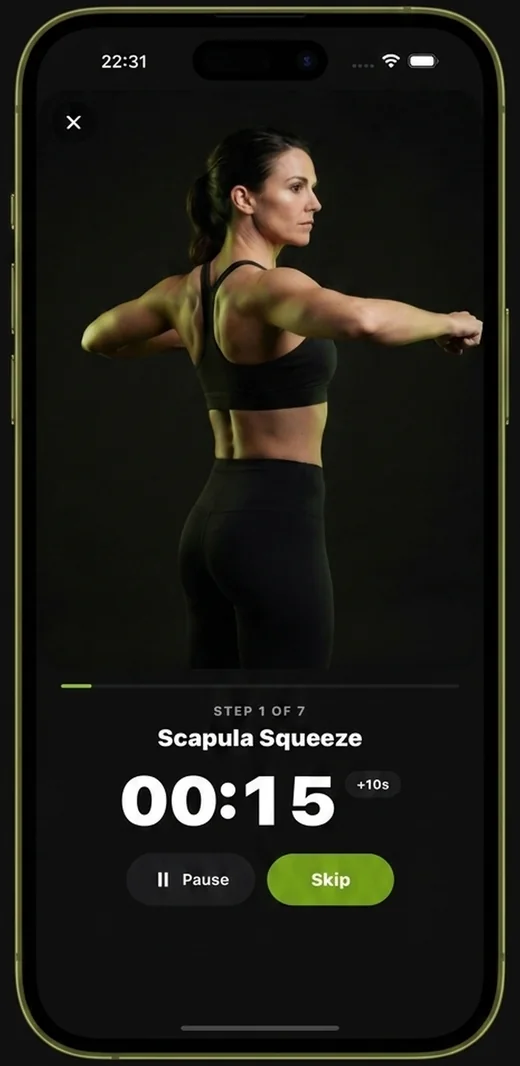
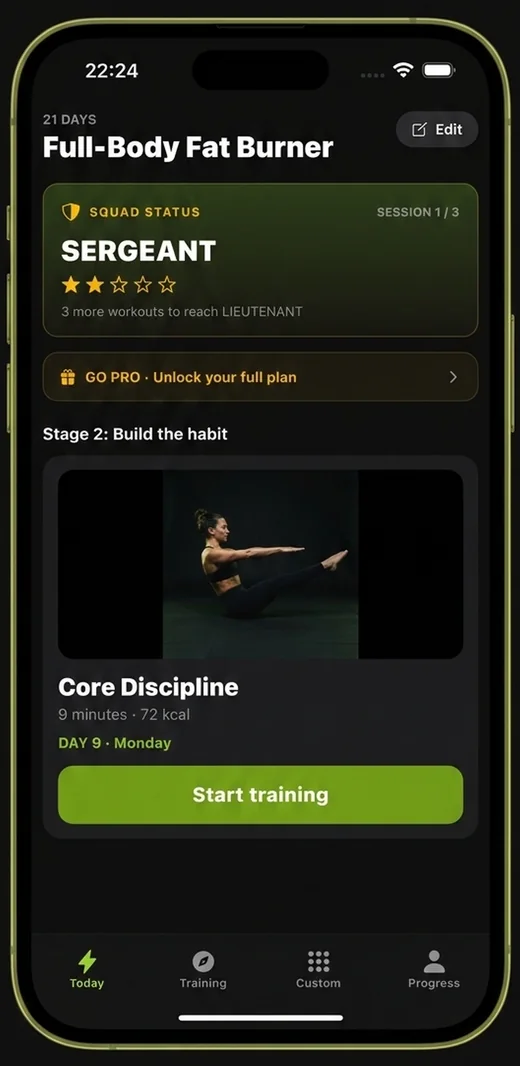
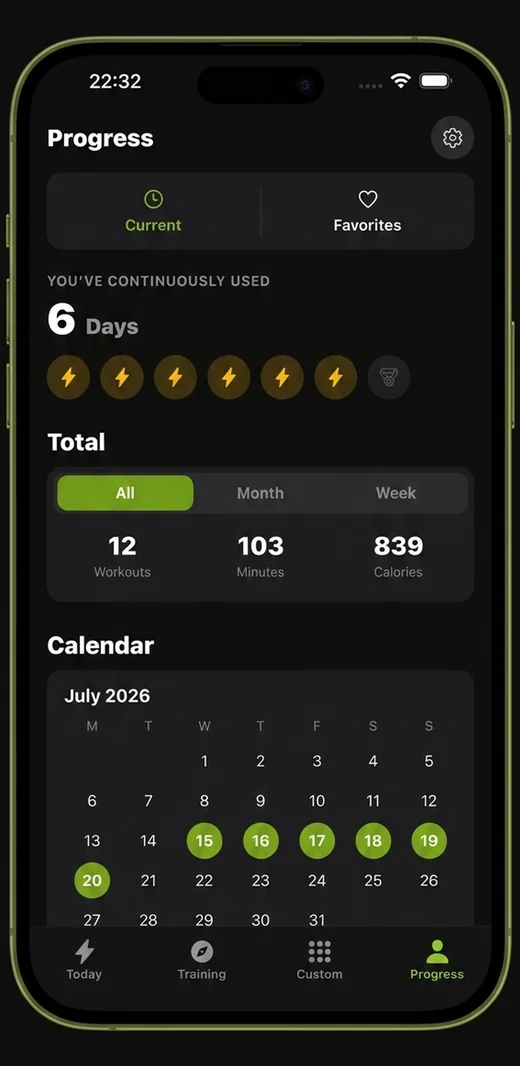
Take the drill with you
Everything on this site, built into a pocket coach. Military Calisthenics Coach turns the standards into a daily session you can run in a barracks, a garage or a hotel room — timed, tracked and scaled to you.
- A 21-day program that adapts to your level
- Guided timed sessions — no counting, no guessing
- Ranks, streaks and progress you can actually see

The Air Force PT test is a fundamental benchmark of physical readiness that requires consistent, high-volume performance in foundational bodyweight movements. Whether you are an active-duty member preparing for your next assessment or a civilian looking to adopt a disciplined, results-driven fitness routine, understanding the mechanics of these tests is critical for success. The current evaluation focuses on aerobic capacity, push-up endurance, and core strength, all measured against strict form standards. To perform well, you must move beyond casual training and embrace the rigour of what military calisthenics is, focusing on clean repetitions and strict tempo control.
Understanding the Air Force PT Test Components
Success starts with a clear understanding of the scoring requirements. The test evaluates your fitness through specific events designed to measure muscular endurance and cardiovascular health. You are not just trying to complete reps; you are trying to complete them to a standard that qualifies as a “good” or “excellent” score. For the push-up event, your chest must come within a specific distance of the floor—usually dictated by an instructor’s fist or a mechanical device—and your arms must reach full extension. For the sit-up or core event, the focus is on the hinge at the hips and complete range of motion.
Beginners often fail because they lack the capacity to maintain form as fatigue sets in. If your form breaks, the reps do not count. This is where military fitness test standards become your best friend. Study the official manual for your branch or relevant organization, as instructions change. Treat your training like a drill: perform every rep as if a supervisor is watching, because on test day, they will be.
Building Push-up Endurance
Push-up volume is the primary hurdle for most trainees. To improve your score, you must move away from “max effort” sets that leave you unable to train the following day. Instead, focus on volume accumulation. Use a push up progression to ensure you are not hitting a plateau by doing the same level of intensity for months.
In my experience coaching groups, trainees who struggle with high-rep sets often have weak triceps and poor scapular stability. Implement a tempo of 1-0-1-0 (one second down, no pause, one second up). If you cannot hit 20 clean repetitions, start with knee push-ups or incline push-ups against a stable surface. As you get stronger, reduce the angle until you are hitting floor push-ups with perfect form. Do not rush; consistency in your calisthenics at home sessions will yield better results than sporadic, gut-busting workouts.
Mastering the Core Event
Core strength is about more than just aesthetics; it is about the ability to stabilize your spine during repetitive movement. When training for the Air Force PT test, many people make the mistake of using momentum. This is a common trap. Your hip flexors will take over if your abs are weak, leading to lower back pain. To build the necessary endurance, focus on controlled repetitions.
Incorporate planks and leg raises into your calisthenics core workout to build static stability, which translates directly to better performance on dynamic core tests. If you are struggling, use a boot camp workout plan to structure your weekly core volume. Aim to increase your total rep count by 5% every week rather than jumping by huge increments, which often leads to injury or burnout.
4-Week Progressions for Air Force PT Readiness
This plan follows a linear progression model designed for those preparing for the test. It is not an end-all-be-all, but it will provide the stimulus needed to increase your numbers.
| Week | Push-up Sets/Reps | Core Event Sets/Reps | Focus |
|---|---|---|---|
| 1 | 4 x 60% of Max | 3 x 10 | Form Perfection |
| 2 | 5 x 60% of Max | 4 x 10 | Increasing Volume |
| 3 | 4 x 75% of Max | 3 x 15 | Intensity/Tempo |
| 4 | 3 x Max (Test) | 3 x 20 | Deload/Test Prep |
For more advanced programming, you can integrate the 8-week military calisthenics workout plan to bridge the gap between basic fitness and high-level athletic performance.
Practical Training Tips for Beginners
If you are intimidated by the prospect of the test, start by mastering the basics. Do not attempt complex movements until your foundation is rock solid. Focus on full range of motion. A half-rep is a wasted rep. When training in a park or at home, find a mirror or record yourself on your phone to check your “locking out” at the top of the push-up.
Also, consider the calisthenics warm up routine before every session. Many trainees skip this and wonder why their performance drops mid-workout. A proper warm-up primes your central nervous system for explosive effort. For women or those who find standard push-ups particularly challenging at the start, prioritize military calisthenics for women resources to find effective scaling options that respect your current physiological baseline without sacrificing the intensity of the workout.
Frequently asked questions
How many push-ups do I need for the Air Force PT test?
Requirements vary by age and gender categories set by Air Force standards. You should check the most recent official Air Force fitness charts to find the exact number required for your specific age group to pass or earn a higher scoring tier.
How long should I train for the PT test?
For most individuals, a dedicated 8 to 12-week preparation cycle is sufficient to see significant gains in push-up and sit-up performance. Starting your training at least three months out allows you to progress gradually and avoid the common pitfalls of overtraining and injury.
Can I train push-ups every day?
While you can perform high-volume calisthenics frequently, training to absolute failure every single day is counterproductive. Follow a structured program like the one provided above, which balances hard work with recovery days to ensure your muscles adapt and grow stronger.
What is the most common reason people fail the PT test?
Most failures occur due to a lack of attention to form standards rather than a lack of raw strength. If your chest does not reach the required depth or your arms do not lock out, the instructor will not count the rep, causing you to panic and lose your rhythm.