Build Real Strength: The Ultimate Calisthenics Workout at Home
Master your body weight with a no-nonsense calisthenics workout at home. Get clear standards, scalable drills, and a weekly routine designed for results.

Military Calisthenics Coach
Take the drill with you
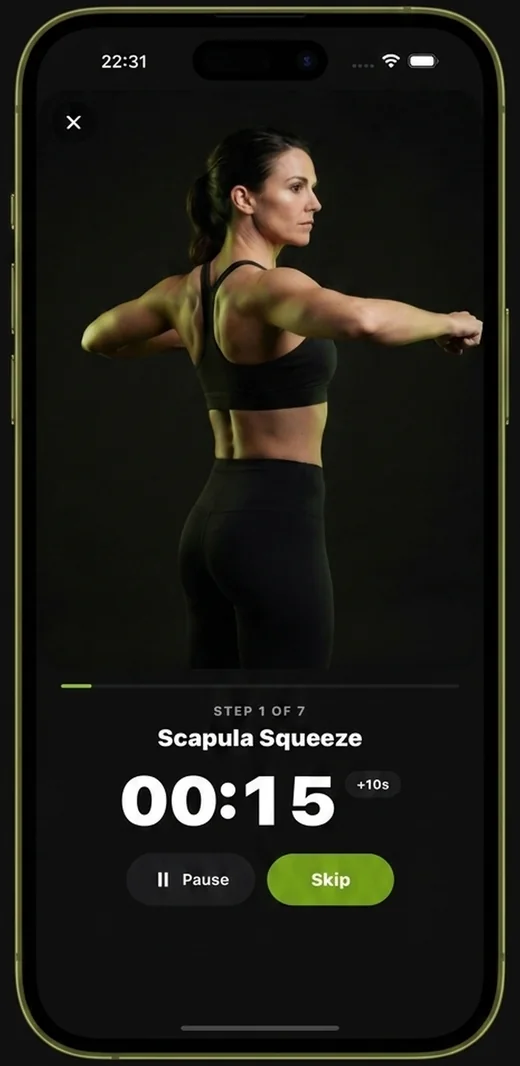
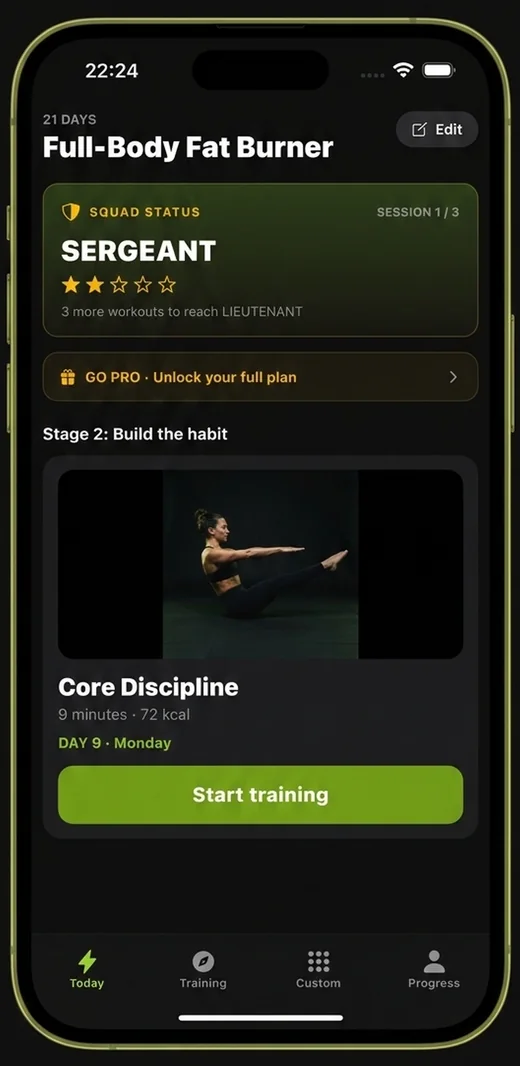
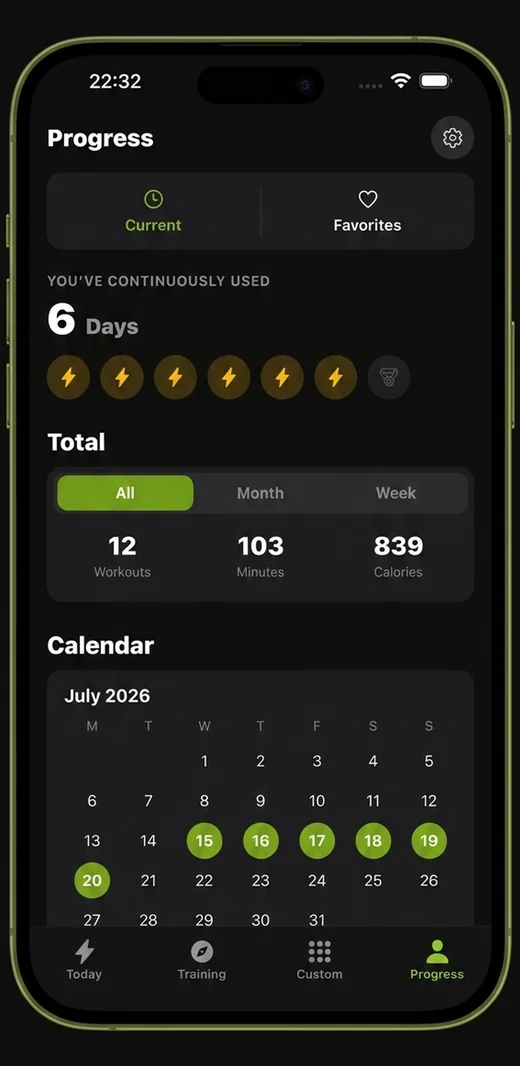
Everything on this site, built into a pocket coach. Military Calisthenics Coach turns the standards into a daily session you can run in a barracks, a garage or a hotel room — timed, tracked and scaled to you.
- A 21-day program that adapts to your level
- Guided timed sessions — no counting, no guessing
- Ranks, streaks and progress you can actually see

A disciplined calisthenics workout at home is the most efficient way to build functional, long-term strength without the need for a gym membership. Military physical training relies on the principle of progressive overload using only body weight, ensuring you can train anywhere, from a living room to a backyard. This approach mirrors the foundational principles described in what military calisthenics is, prioritizing clean movement patterns over fancy equipment. When you strip away the cables and dumbbells, you are left with the only piece of equipment that matters: your own physique. Whether you are a complete novice or working toward specific fitness standards, these movements form the bedrock of combat readiness and general athletic capability.
The Foundation: Essential Movement Standards
Military training focuses on four primary movement patterns: pushing, pulling, hinging, and core stabilization. Without these, your routine lacks balance. To treat this like a real PT session, you must hold yourself to strict standards on every rep. A push-up is not a push-up if your hips sag or your chest fails to reach the floor. Refer to the push up progression if you cannot yet perform five clean, strict repetitions.
The Push-Up (Horizontal Push)
- Standard: Chest within two inches of the floor. Lock elbows completely at the top.
- Scaling: If full push-ups are impossible, perform them with hands on a sturdy countertop or table. Do not use your knees; use an incline to keep your core engaged in a plank position.
The Bodyweight Row (Horizontal Pull)
- Standard: Use a sturdy table or two chairs with a broomstick between them. Pull your chest toward the bar/surface, squeezing your shoulder blades together.
- Scaling: Walk your feet further under the table to increase difficulty or further out to decrease it. This is essential for a complete calisthenics back workout.
The Squat (Lower Body)
- Standard: Hips drop below the level of your knees. Keep heels flat on the ground.
- Scaling: If you cannot hit depth, hold onto a doorway frame for balance. Increase volume by slowing the tempo to three seconds on the descent.
Structuring Your Training Sessions
Consistency beats intensity every time. In a barracks or a home environment, the key to success is a rigid structure that leaves no room for hesitation. Every training session should follow this sequence: Warm-up, Skill/Strength focus, Capacity work, and Cool-down. For those starting out, calisthenics for beginners provides the necessary context for building this habit.
The Warm-up (10 Minutes)
- 2 minutes: Light movement (jogging in place or shadow boxing).
- 3 sets: 10 jumping jacks, 10 arm circles, 10 bodyweight squats.
- This primes the joints and elevates the heart rate without causing premature fatigue.
The Core Circuit
- Complete 3 rounds of: 15 sit-ups, 30-second plank, 10 mountain climbers.
- Rest 60 seconds between rounds. This is a standard calisthenics core workout that builds the bracing capability required for heavier lifts.
Weekly Schedule for Steady Gains
Do not jump into high-frequency training immediately. Start with a three-day-a-week schedule to allow for connective tissue adaptation. If you want a more comprehensive approach, look at the 8-week military calisthenics workout plan.
| Day | Focus | Activity |
|---|---|---|
| Mon | Strength | Push/Pull/Squat focus (3x10) |
| Tue | Rest/Recovery | Active recovery (light walking) |
| Wed | Capacity | Circuit training (AMRAP 20 mins) |
| Thu | Rest | Full recovery |
| Fri | Strength | Push/Pull/Squat focus (3x12) |
| Sat | Endurance | Rucking or light run (2-3 miles) |
| Sun | Rest | Mobility / Stretch |
Furniture Substitutes and Minimal Equipment
If you lack access to a calisthenics park, you must improvise. Using household items is a hallmark of military ingenuity. For dips, use two sturdy kitchen chairs set against a wall to prevent them from sliding. For pull-ups, if you do not have a doorway bar, focus on the dead-hang to strict pull-up progression using a door frame or a low tree branch. If you are serious about long-term progress, investing in a basic pull-up bar is the only piece of calisthenics equipment that truly changes the game.
The “Anywhere” Session
If you are tight on space or time, perform this sequence:
- 50 Squats (for time)
- 40 Push-ups
- 30 Walking Lunges
- 20 Bodyweight Rows (using a table)
- 10 Burpees
Frequently asked questions
How many reps should I aim for in each set?
Beginners should aim for 8–12 reps per set with perfect form. If you can perform more than 15 reps, the movement is likely too easy, and you should look to slow down your tempo or decrease the leverage to make it harder.
How long should I rest between sets?
For strength-focused sets, rest between 90 and 120 seconds to ensure your nervous system recovers enough for the next set. If you are performing a circuit for endurance, shorten your rest to 30–45 seconds to keep the heart rate elevated.
Can I train every day?
While you can perform light mobility or core work daily, you should not perform high-intensity strength training every day. Muscle recovery happens during rest periods; training too frequently without recovery will stall your progress and increase injury risk.
What is the best way to track progress?
Maintain a simple training log where you record the total reps and sets completed for every workout. If you perform 3 sets of 8 push-ups this week, your standard for next week should be 3 sets of 9 or 10, showing measurable, incremental improvement.