The No-Nonsense Prison Workout Routine for Elite Bodyweight Fitness
Master the art of minimal-space training with a proven prison workout routine. Build raw strength and endurance using basic bodyweight movements.

Now on iPhone
Military Calisthenics Coach
Take the drill with you
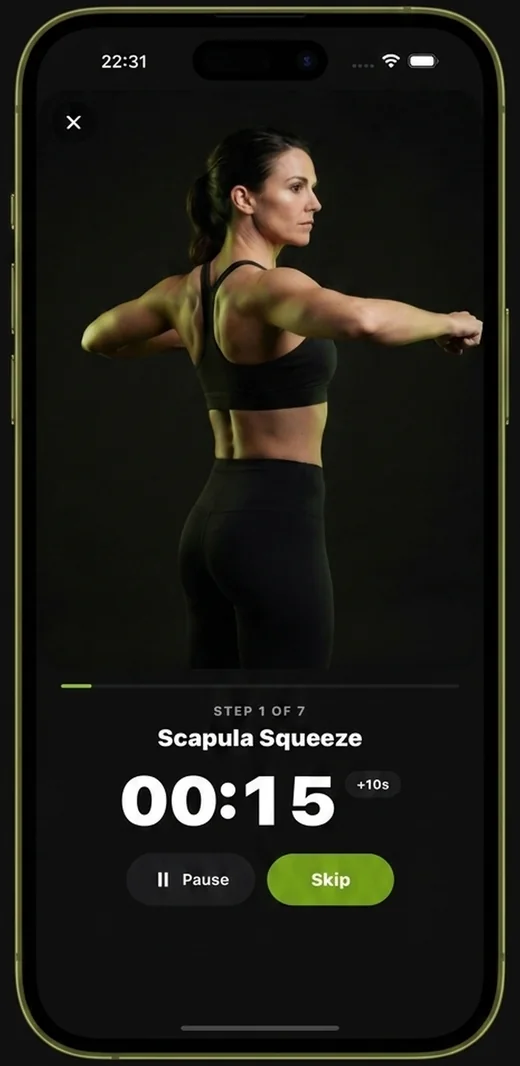
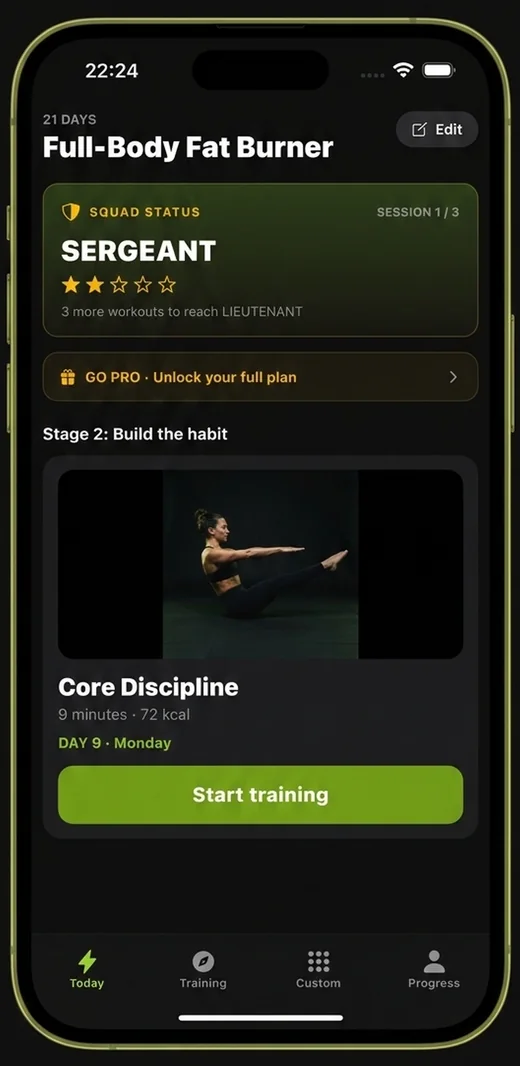
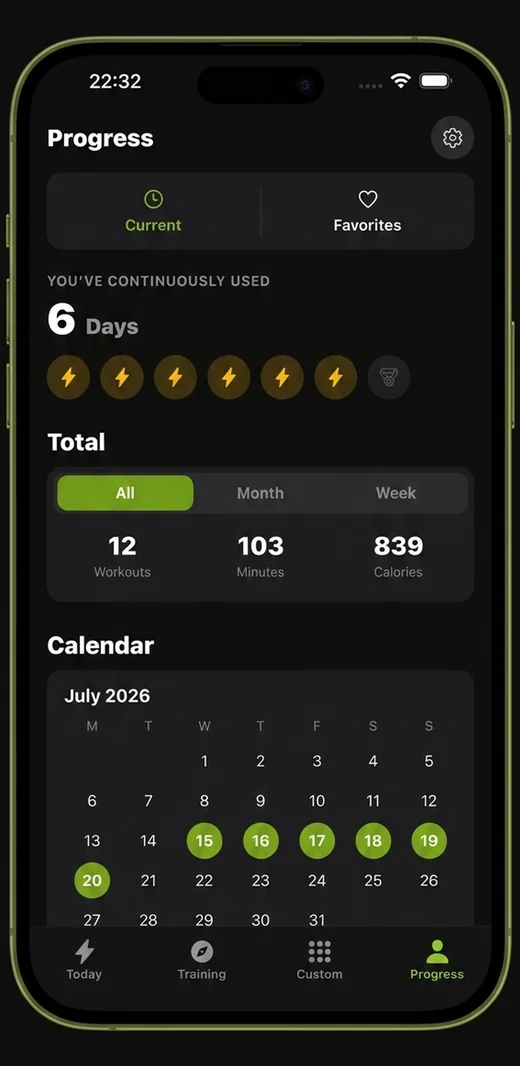
Everything on this site, built into a pocket coach. Military Calisthenics Coach turns the standards into a daily session you can run in a barracks, a garage or a hotel room — timed, tracked and scaled to you.
- A 21-day program that adapts to your level
- Guided timed sessions — no counting, no guessing
- Ranks, streaks and progress you can actually see

A prison workout routine is the ultimate test of training discipline, relying exclusively on high-volume bodyweight movements and tight, standardized performance metrics within minimal floor space. Whether you are in a barracks, a spare bedroom, or a confined outdoor area, this methodology strips away the need for fancy gym equipment to focus on what actually matters: muscular endurance, relative strength, and mental fortitude. By utilizing strict pyramids, ladders, and time-under-tension drills, you transform a small footprint into a high-performance training ground that mimics the intensity of what military calisthenics is.
The Philosophy of Confined Training
In environments where equipment is non-existent, the athlete must become their own resistance. Prison-style training relies on three core pillars: consistency, tempo control, and volume. You are not chasing the latest fitness trends; you are chasing the standard. This approach is similar to how recruits learn during a [boot camp workout plan](/blog/where](/blog/boot-camp-workout-plan/), where the goal is to hit a specific rep count with perfect form under fatigue.
Before you start, understand that tempo is your weight. If you cannot add plates to a bar, you add time to the eccentric (lowering) phase of a push-up or pull-up. A standard, slow-cadence rep—two seconds down, one second hold, one second up—makes standard movements significantly more challenging. If you are struggling with the basics, refer to calisthenics for beginners to build your foundation before attempting high-volume ladder sets.
Core Movement Standards
To train effectively, you must define what a “rep” is. Sloppy form creates injuries, not results. For a push-up, your chest must touch the deck, and your elbows should not flare beyond 45 degrees. For pull-ups, start from a dead hang and ensure your chin clears the bar. If you aren’t there yet, check out the dead-hang to strict pull-up progression to ensure you are training the correct motor patterns.
The Daily Ladder
Ladders are the bread and butter of this training style. You perform a set of 1, then 2, then 3, up to a target number (e.g., 10), and back down to 1. This keeps the heart rate high while accumulating significant volume.
| Round | Push-ups | Sit-ups | Burpees |
|---|---|---|---|
| 1 | 1 | 2 | 1 |
| 2 | 2 | 4 | 2 |
| … | … | … | … |
| 10 | 10 | 20 | 10 |
| 9 | 9 | 18 | 9 |
Rest only as long as it takes to complete the previous set. This builds the work capacity required for events like the army combat fitness test.
A Week of Prison-Style Sessions
This routine is designed to be performed in 30 to 45 minutes. You do not need to overcomplicate the programming; you need to increase the density of your work over time.
Monday: The Push-Pull Pyramid
Perform a pyramid of pull-ups and push-ups. Start at 1 rep of each, progressing by 1 rep until you reach 10, then descend back to 1. If you cannot manage the pull-up volume, use pull up alternatives such as inverted rows using a sturdy table or door frame.
Tuesday: Core and Conditioning
Focus on 100 burpees for time. This is a classic test of endurance. Follow this with a calisthenics core workout consisting of planks, leg raises, and flutter kicks. Aim for 3 sets of 60 seconds for each.
Wednesday: Active Recovery
Do not sit still. Perform 20 minutes of calisthenics mobility exercises to ensure you remain injury-free. Mobility is not optional; it is the maintenance required for consistent training.
Thursday: The High-Volume Push-Up/Squat Day
Perform 500 squats and 200 push-ups broken into sets of 20. Do not focus on speed; focus on rhythm. This is about capacity, not a sprint.
Friday: The “10-Minute Drill”
Set a timer for 10 minutes. Perform as many rounds as possible (AMRAP) of 5 pull-ups, 10 push-ups, and 15 squats. This is a condensed version of the 20-minute no-gear barracks workout.
Progression and Scaling
If you find the prescribed volume too easy, do not add more sets immediately. Instead, shorten your rest periods. If you are struggling, reduce the volume but keep the form strict. Scaling is not a weakness; it is a tactical decision to ensure you can perform the next day. If you want to integrate this with a broader structure, follow the 8-week military calisthenics workout plan to ensure you are hitting different energy systems throughout the month.
Frequently asked questions
How many days a week should I follow a prison workout routine?
For most people, four to five days a week is the sweet spot. This allows enough frequency to build skill and endurance while providing enough recovery for the central nervous system to adapt to the volume.
Can I gain muscle using only a prison workout routine?
Yes, you can build significant lean muscle by using high-volume sets and manipulating the tempo of your movements. Focus on keeping the muscles under tension for longer periods rather than rushing through the repetitions.
What do I do if I cannot perform a single pull-up yet?
Do not force reps with poor form. Start by practicing the dead-hang, then move to negatives where you jump to the top of the bar and lower yourself as slowly as possible over five seconds. Consistent negative training will build the strength needed for your first strict rep.
How long should I rest between sets in a ladder?
In a true high-intensity routine, your rest period is equal to the time it took you to complete the work, or roughly 30 to 60 seconds for the smaller sets. As you get tired during the middle of the pyramid, you may need to extend your rest slightly to maintain form, but avoid resting for more than 90 seconds.