Master the Military Burpee Workout for Elite Conditioning
Build functional endurance and grit with a structured military burpee workout. No equipment needed—just follow these standards for rapid progress.

Now on iPhone
Military Calisthenics Coach
Take the drill with you
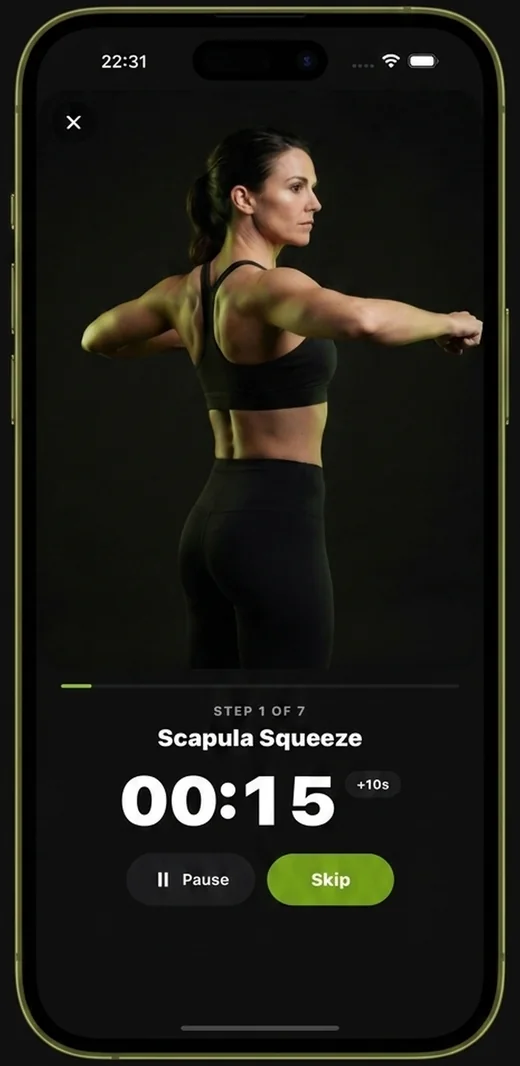
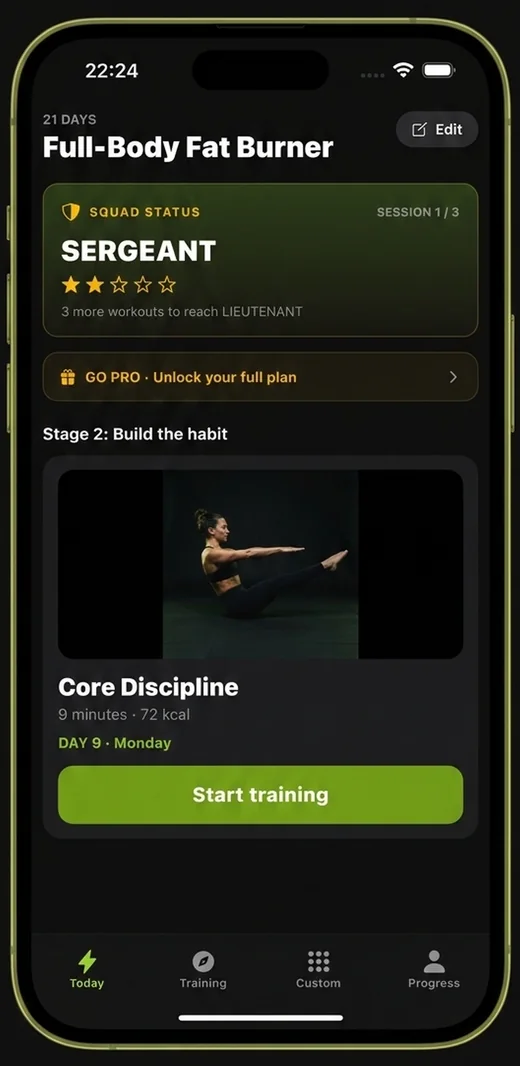
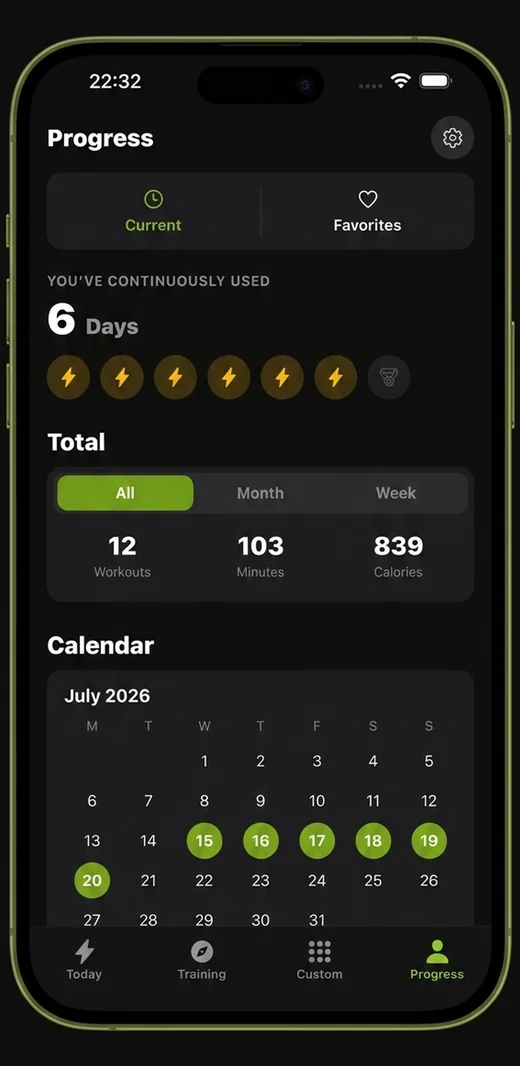
Everything on this site, built into a pocket coach. Military Calisthenics Coach turns the standards into a daily session you can run in a barracks, a garage or a hotel room — timed, tracked and scaled to you.
- A 21-day program that adapts to your level
- Guided timed sessions — no counting, no guessing
- Ranks, streaks and progress you can actually see

A high-intensity military burpee workout is one of the most effective ways to build full-body explosive power and aerobic capacity without needing a single piece of equipment. In the armed forces, the burpee is not just an exercise; it is a tool for assessing mental fortitude and conditioning under fatigue. By mastering the movement and adhering to strict technical standards, you transform a simple movement into a formidable test of your physical limits. Whether you are prepping for a service assessment or simply focusing on calisthenics for beginners, the burpee serves as a foundation for total physical readiness.
Understanding the Military Standard
Unlike the casual burpee often seen in commercial gyms, the military variant demands total body engagement and rigid form throughout every phase of the movement. You do not simply drop to the floor; you control the descent. You do not just jump; you extend fully at the top of the movement. When learning what military calisthenics is, you will find that consistency of form is the primary marker of a disciplined athlete.
The 8-Count Bodybuilder Burpee
The 8-count bodybuilder is the gold standard of military-style calisthenics. It breaks the movement down into distinct segments, ensuring every muscle group is active.
- From a standing position, squat down and place your hands on the deck.
- Kick your feet back into a front-leaning rest (high plank) position.
- Perform a strict push-up, keeping your elbows tucked at 45 degrees.
- Return to the plank position.
- Spread your legs wide (abduction).
- Bring your legs back together.
- Return your feet to the squat position.
- Stand up and complete a controlled vertical jump with overhead hand clap.
Practice this slow and steady to establish the neural patterns before attempting to increase your tempo. If you struggle with the push-up portion, visit push up progression to build the necessary strength.
Programming the Burpee for Results
Randomly throwing burpees into a workout rarely yields long-term gains. You need to apply progressive overload, just as you would with the 8-week military calisthenics workout plan. We use two primary methods: the EMOM (Every Minute on the Minute) and the Ladder.
The Burpee EMOM Method
The EMOM is the simplest way to measure progress. Pick a rep count that you can complete within 40 seconds, leaving 20 seconds for recovery. If you complete 10 reps in 30 seconds, you have 30 seconds to breathe. If you cannot finish the reps within 45 seconds, the volume is too high for your current conditioning level.
| Week | EMOM Duration | Reps Per Minute | Total Reps |
|---|---|---|---|
| 1 | 10 Minutes | 6 | 60 |
| 2 | 12 Minutes | 6 | 72 |
| 3 | 12 Minutes | 7 | 84 |
| 4 | 15 Minutes | 7 | 105 |
The Ladder Protocol
Ladders are designed to simulate the endurance demands found in ruck-ready conditioning. Start at 1 rep and climb to 10, then descend back to 1 without stopping. Use a “go as fast as possible but keep perfect form” intensity. If your form breaks—specifically your lower back arching during the plank phase—you must terminate the set or lower the intensity immediately.
Integrating Burpees into Your Weekly Routine
Burpees should supplement, not replace, your core strength training. A balanced routine incorporates pushing, pulling, and hinges. You might integrate these into calisthenics full body workout days as a finisher. Performing 100 burpees for time once a week is a classic benchmark. If you finish in under 7 minutes, you are moving well. If it takes you longer than 10, focus on calisthenics for weight loss and improving your base aerobic engine.
Scaling for Mixed Ability
If you are training in a group, always ensure the weakest trainee can maintain the standards of the movement.
- Modification 1: Perform the movement without the jump.
- Modification 2: Perform the push-up phase on an elevated surface like a bench or a sturdy box.
- Modification 3: Skip the push-up entirely, focusing on the squat-to-plank transition until your core strength improves.
Maintaining Form Under Fatigue
Failure during a burpee workout usually manifests as sagging hips during the plank phase. This puts excessive strain on the lumbar spine. If you feel your hips sinking, reset your core. Engage your glutes and pull your belly button toward your spine before you continue. Think of the plank phase of the burpee as a calisthenics core workout unto itself; if you aren’t holding a hollow body position, you are losing the structural benefit of the movement.
Frequently asked questions
How many burpees should a beginner do?
Start with a manageable block of 20 to 30 total burpees per session, broken into sets of 5 reps to ensure form quality. Focus on movement integrity first; once you can complete 5 sets of 5 with perfect form, start applying the EMOM protocols outlined above.
How long should a burpee workout take?
Most effective burpee sessions last between 10 and 20 minutes. If your session extends beyond 20 minutes, you are likely training at an intensity that is too low to drive significant aerobic adaptation.
Can I do burpees every day?
While technically possible, burpees are taxing on the central nervous system and the joints. Limit dedicated high-intensity burpee sessions to three times per week to allow for adequate recovery and tissue repair.
What is the difference between a burpee and a bodybuilder?
The burpee is generally considered a 4-count movement (drop, kick back, kick up, jump). The bodybuilder is an 8-count movement that adds a push-up and a leg spread, making it significantly more demanding on the chest, shoulders, and core musculature.