Ruck-Ready: Building the Engine to Carry Weight
Calisthenics and conditioning that prepare your body for loaded carries and ruck marches — the work that wins the parts of the test nobody trains for.

Military Calisthenics Coach
Take the drill with you
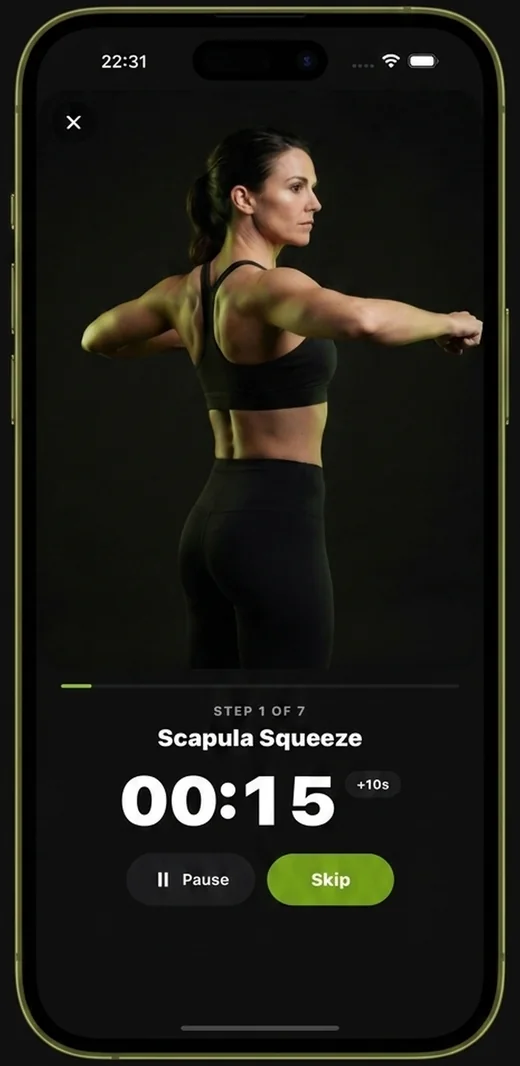
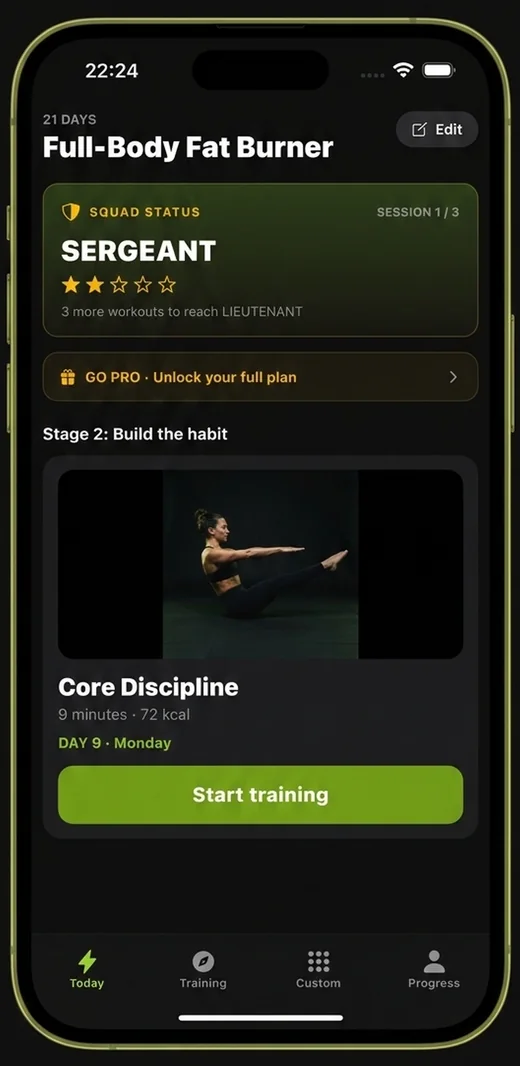
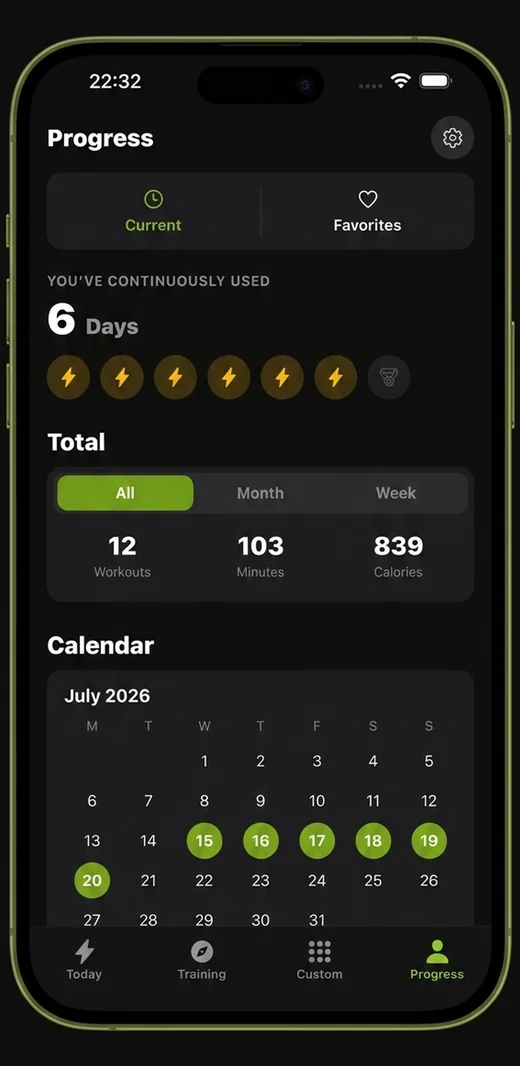
Everything on this site, built into a pocket coach. Military Calisthenics Coach turns the standards into a daily session you can run in a barracks, a garage or a hotel room — timed, tracked and scaled to you.
- A 21-day program that adapts to your level
- Guided timed sessions — no counting, no guessing
- Ranks, streaks and progress you can actually see

Anyone can train to move their own bodyweight. The military standard is moving it plus a loaded pack across distance, on tired legs, without breaking posture. Rucking is where reps meet reality — and it is trainable long before you ever strap on a pack. It is also the conditioning half of military calisthenics: the engine work that turns raw strength into readiness.
The three demands of carrying weight
A heavy carry tests three qualities at once:
- Postural endurance — your spine and core holding position under load.
- Unilateral leg strength — each leg taking the full weight in turn.
- Aerobic base — the engine that keeps you moving when the heart rate climbs.
Train all three and the pack stops being a punishment.
Calisthenics that carry over
| Movement | Sets × Reps | Builds |
|---|---|---|
| Walking lunges | 4 × 20 steps | Unilateral leg strength |
| Step-ups (knee high) | 4 × 12 per leg | Carry-specific power |
| Hollow body hold | 4 × 40 seconds | Postural core endurance |
| Superman hold | 3 × 30 seconds | Posterior chain |
| Farmer-march in place | 3 × 60 seconds | Grip + trunk stability |
The build-up
Add load and distance the way you’d add weight to a bar — slowly and on a plan.
- Weeks 1–2: Walk 3 km with no load at a brisk pace. Establish the habit.
- Weeks 3–4: Add a 10 kg pack. Keep the distance, hold the posture.
- Weeks 5–6: Increase to 5 km, same load. Note where form breaks down.
- Weeks 7–8: Bump the load to 15 kg over 5 km. Now you’re ruck-ready.
Never jump load and distance in the same week. Injuries on a ruck come from impatience, not weight.
The non-negotiable: recovery
Carrying weight is brutal on feet, knees and lower back. Stretch the hip flexors, roll the calves, and treat your boots like equipment that can end your training if it fails. Take a full rest day after every long ruck.
Build the engine first. The pack only reveals what the calisthenics already built.