Free Calisthenics Workout Plan: 3-Day Printable Program
A free calisthenics workout plan you can start today: a 3-day full-body program with progressions, rep standards and a printable sheet. No gym, no equipment beyond a bar.

Military Calisthenics Coach
Take the drill with you
Everything on this site, built into a pocket coach. Military Calisthenics Coach turns the standards into a daily session you can run in a barracks, a garage or a hotel room — timed, tracked and scaled to you.
- A 21-day program that adapts to your level
- Guided timed sessions — no counting, no guessing
- Ranks, streaks and progress you can actually see

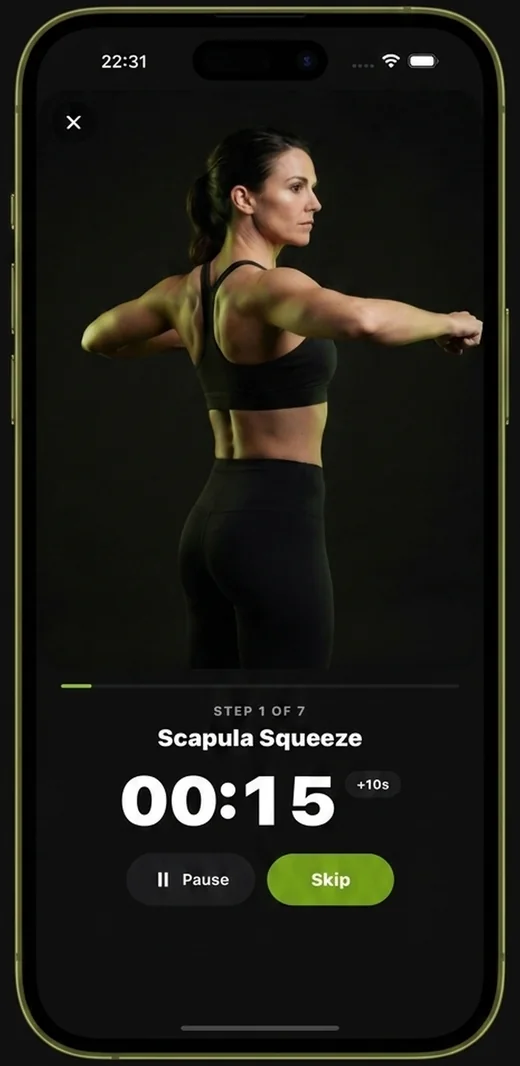
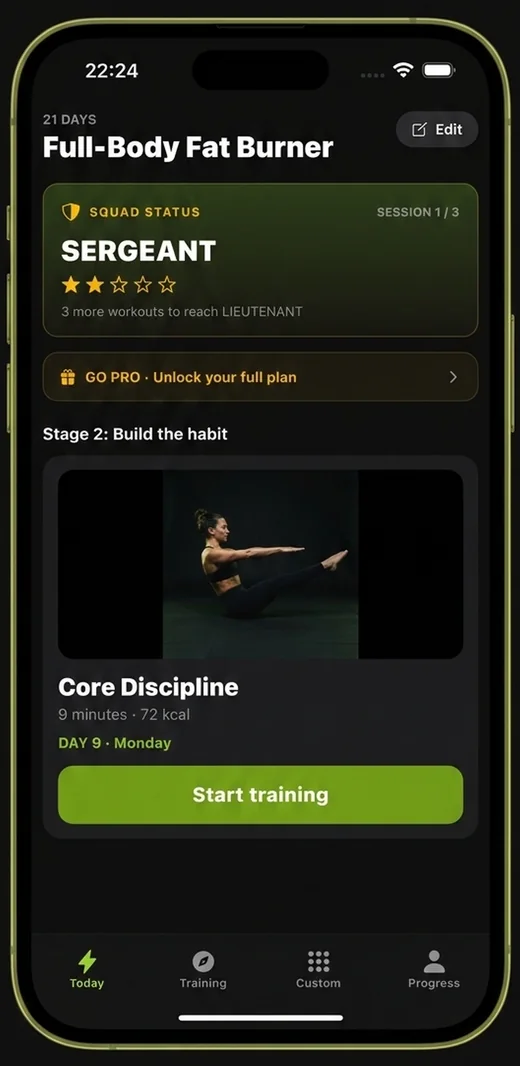
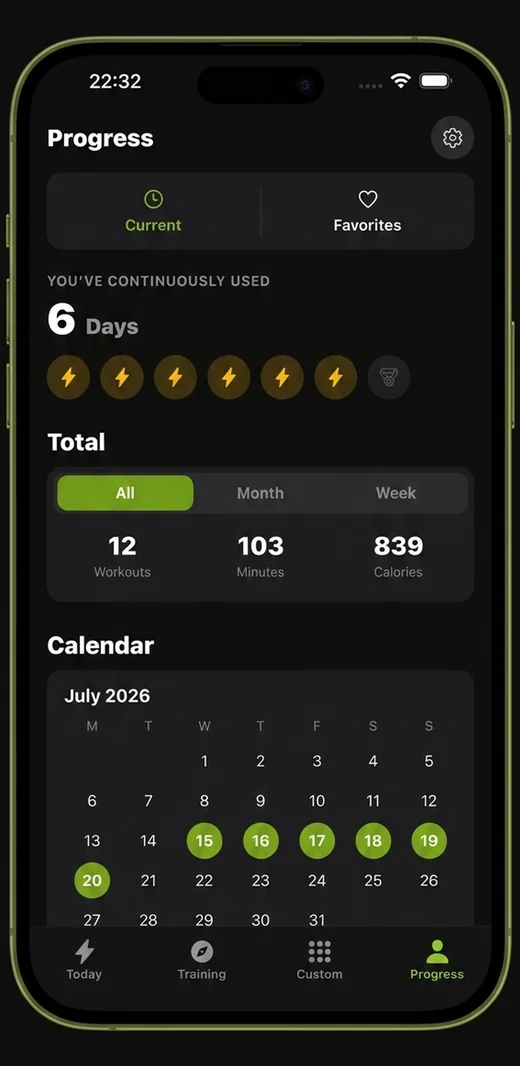
This free calisthenics workout plan provides a structured, progressive path to building functional strength using only your body weight. By following these three-day-per-week sessions, you eliminate the guesswork often associated with strength training and focus on measurable physical output. This program is designed to be saved as a PDF for easy printing, ensuring you have your training logs in hand when you are at the gym or a calisthenics park.
Looking for the military version? This page is the general-purpose plan. If you specifically want military-style training — armed-forces test standards, an 8-week progression and a printable PDF — go straight to the free military calisthenics workout plan, or read what military calisthenics is first.
The Principles Behind This Free Calisthenics Workout Plan
This plan relies on simplicity, consistency, and clear standards. You do not need complex machines to build muscle or endurance — you need a small number of movements trained often, with a rule for when to make them harder. That is the whole method, and it is why a free calisthenics workout plan can outperform a paid gym program you do not follow. Whether you are training at home, in a small apartment or outdoors, the objective is to execute every repetition with perfect form. A rep that compromises your range of motion is a rep that does not count.
Beginner to Intermediate Progression
This plan operates on a three-day, full-body split. By training full-body three times a week, you maximize the frequency of neuromuscular patterns, which is critical for calisthenics for beginners. Each movement has a regression and a progression. If you cannot hit the bottom of the rep range, scale the movement down. If you can perform the top of the rep range with perfect form for all sets, progress to the harder version.
The Weekly Schedule
| Day | Focus | Goal |
|---|---|---|
| Monday | Strength A | Quality Reps |
| Wednesday | Strength B | Volume |
| Friday | Strength C | Conditioning |
Strength A (Monday)
- Push-ups: 3 sets of 8-12 reps (Use push up progression if needed)
- Bodyweight Rows: 3 sets of 8-12 reps (Utilize a bar or sturdy table)
- Air Squats: 3 sets of 15-20 reps
- Plank: 3 sets of 45-60 seconds
Strength B (Wednesday)
- Dips: 3 sets of 5-10 reps (Follow dip progression if you cannot perform a full dip)
- Pull-ups: 3 sets of 3-8 reps (See the dead-hang to strict pull-up progression)
- Lunges: 3 sets of 10-12 reps per leg
- Leg Raises: 3 sets of 10-15 reps
Strength C (Friday)
- Burpees: 4 sets of 10 reps
- Pike Push-ups: 3 sets of 6-10 reps
- Glute Bridges: 3 sets of 15-20 reps
- Mountain Climbers: 3 sets of 30 seconds
Mastering the Movements
Success in calisthenics hinges on tension. When performing a push-up, do not let your lower back sag. Keep your core tight, just as you would during a calisthenics core workout. For squats, ensure your hips drop below your knees. In any graded fitness test, a rep that does not meet the standard is simply not counted. Hold yourself to that same standard. If you are struggling with upper body movements, consider incorporating a focused calisthenics chest workout or calisthenics back workout to bolster your weak points. Remember that lower body development is just as important; keep your calisthenics leg workout consistent to ensure overall balanced development.
Progression Standards
You are ready to progress when you can consistently hit the high end of the rep range for two consecutive workouts. For example, if you are doing 3 sets of 12 push-ups, the moment you can complete 3 sets of 12 with a steady 2-second eccentric phase (the lowering portion), move to the next variation. This might mean elevating your feet for push-ups or moving toward diamond push-ups. Tracking your progress on a printable sheet is essential; this is essentially your own personal calisthenics workout plan pdf to track your evolution from amateur to capable athlete.
Scaling for All Abilities
Training is about progress, not ego. If you are starting at zero, use a wall push-up to build the initial strength required for a floor push-up. If you are training in a group, ensure the faster members of the group perform extra pauses at the top or bottom of the movement rather than just doing more reps. This keeps the group intensity high without compromising form. Group training programs often use this method to ensure that nobody is left behind while the strongest participants continue to work on their local muscular endurance.
Frequently asked questions
How many days per week should I follow this plan?
This program is designed for 3 days per week to ensure adequate recovery time between sessions. This frequency allows for muscle repair and central nervous system recovery while providing enough volume to drive strength adaptations.
How long will it take to see results?
If you maintain 100% compliance with the volume and standards outlined, you will observe significant improvements in your ability to perform bodyweight movements within 4 to 6 weeks. Physical readiness is a direct product of consistent, effort-based labor over time.
Can I perform this workout if I have no equipment?
Yes, this program is designed for minimal environments. If you do not have a pull-up bar, you can perform floor-based rows using a sturdy table or explore calisthenics equipment that is portable for home use.
What is the best way to scale movements?
Use leverage to your advantage to decrease the difficulty. If a standard pull-up is too difficult, use your feet to assist your pull or perform eccentric-only negatives until you have the capacity to pull your own body weight.