The 30 Day Calisthenics Challenge: A No-Nonsense Guide
Start our 30 day calisthenics challenge to build functional strength. Follow this day-by-day plan for beginners designed for measurable, consistent progress.

Military Calisthenics Coach
Take the drill with you
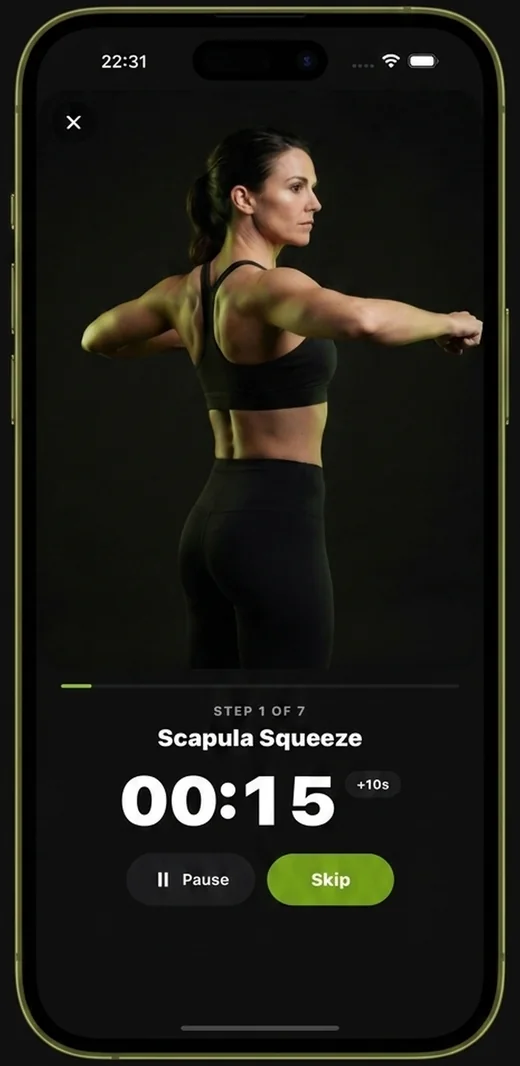
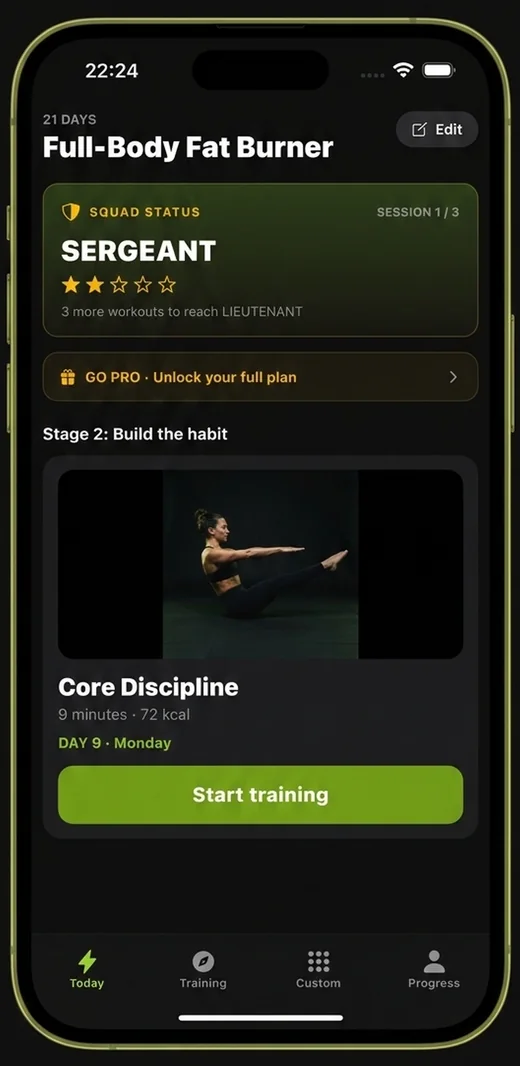
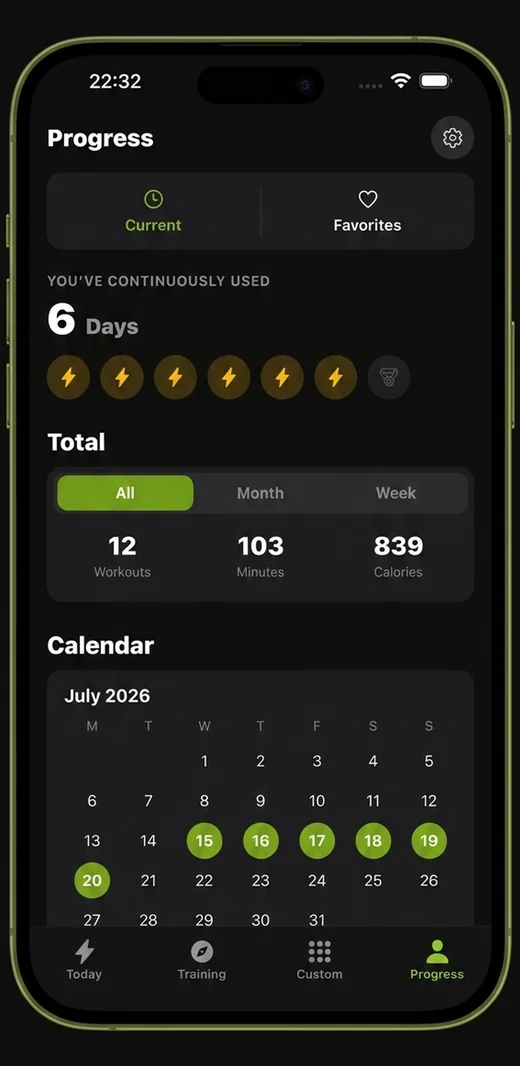
Everything on this site, built into a pocket coach. Military Calisthenics Coach turns the standards into a daily session you can run in a barracks, a garage or a hotel room — timed, tracked and scaled to you.
- A 21-day program that adapts to your level
- Guided timed sessions — no counting, no guessing
- Ranks, streaks and progress you can actually see

Starting a 30 day calisthenics challenge is the most effective way to build a foundation of functional strength, endurance, and discipline using only your own body weight. This program strips away the complexity of modern fitness fads and focuses on the core principles of what military calisthenics is: repetitive, high-quality movement performed with strict standards. Whether you are training for a professional fitness test or simply want to improve your physical readiness at home, the key is not in fancy equipment, but in your ability to show up and execute the prescribed work with consistency. Before diving in, ensure you understand the basic movements covered in calisthenics for beginners to avoid injury and ensure proper form.
Understanding the Training Methodology
Military-style training relies on three pillars: volume, progressive overload, and recovery. You will notice that this program alternates between intense effort and active recovery. In the armed forces, Physical Readiness Training (PRT) is not about reaching exhaustion in a single session; it is about building the capacity to perform tasks reliably under stress.
The Golden Rule of Standards
Do not chase reps at the expense of form. If you cannot complete a push-up with your chest touching the deck or a squat with your hip crease below your knee, the repetition does not count. In the field, sloppy reps lead to injury; in your living room, they lead to stalled progress. If you find yourself struggling with the baseline movements, utilize the push-up progression guide to build the necessary strength before attempting high-volume days.
30 Day Calisthenics Challenge Calendar
This schedule follows a four-week cycle. Week 1 establishes the baseline. Week 2 increases volume. Week 3 introduces intensity variations. Week 4 serves as the “peak” week where you test your newfound capacity. If you need a quick session on a busy day, refer to the 20-minute no-gear barracks workout.
| Week | Mon | Tue | Wed | Thu | Fri | Sat | Sun |
|---|---|---|---|---|---|---|---|
| 1 | Baseline Test | Push/Core | Leg/Cardio | Rest | Push/Pull | Full Body | Rest |
| 2 | Push/Core | Pull/Legs | Rest | Push/Core | Pull/Legs | Full Body | Rest |
| 3 | Intensity Focus | Rest | Intensity | Volume | Rest | Intensity | Rest |
| 4 | Volume Focus | Rest | Intensity | Rest | Final Test | Rest | Rest |
Executing the Movements
To see results, you must master the fundamental exercise patterns. If you are struggling with upper body movements, refer to the dead-hang to strict pull-up progression to ensure you are building strength in the right muscles.
- Push-Ups: Maintain a rigid torso. Keep your elbows at a 45-degree angle from your body. Do not allow your lower back to sag.
- Squats: Feet shoulder-width apart. Keep your heels on the ground. Drive through your mid-foot as you stand.
- Planks: Squeeze your glutes and pull your belly button toward your spine. Your body should form a straight line from heels to head.
- Lunges: Ensure your front knee tracks over your toes, not caving inward. Keep your torso upright.
Scaling for Every Ability
One of the most common mistakes is trying to perform movements that are too advanced for your current level. Scaling is not a weakness; it is a tactical necessity. If you cannot perform 10 full push-ups, move your knees to the ground or elevate your hands on a sturdy surface. If pull-ups are currently impossible, focus on scapular retractions and dead hangs. You can also explore military calisthenics for women for specific modifications regarding body proportions and initial strength barriers. Remember, the goal is to complete the prescribed volume with perfect technique.
Setting Realistic Expectations
Over the course of 30 days, you should expect to see an increase in your muscular endurance and an improvement in your technique. Do not expect to transform your physique overnight. True results come from the accumulated stress of hundreds of sessions over months. Focus on the data: track your reps, track your rest times, and observe how your recovery improves. By the end of the month, you should be able to perform your baseline test with significantly more ease than on Day 1. If you want to continue this journey, move on to the 8-week military calisthenics workout plan for a structured, long-term approach to strength.
Frequently asked questions
How many reps should I do if I am a beginner?
Start with a number that allows you to finish with two reps ‘in the tank’—meaning you could have done two more with perfect form. For most beginners, this is often between 5 and 10 reps per set for movements like push-ups or lunges. Never go to failure in the first week, as this will hamper your ability to stay consistent.
How long should the workouts last?
Each session should take between 30 and 45 minutes, including a 5-minute warm-up and a 5-minute cool-down. If you find yourself spending more than an hour, your rest periods are likely too long. Keep your rest to 60-90 seconds between sets to maintain the desired intensity.
Can I perform this challenge at home?
Yes, you can complete this entire challenge at home with no equipment, provided you have a sturdy surface for push-ups and floor space. If you want to add variety or intensity later, you can look into calisthenics equipment such as a doorway pull-up bar, but it is not required for this initial 30-day block.
What should I do if I miss a workout day?
Do not attempt to ‘double up’ the next day, as this leads to burnout and injury. Simply resume the program at your next scheduled session. Consistency over a long timeline is more important than achieving a perfect 30-day streak.