Military Calisthenics Over 50: Free Printable PDF Plan
A free military calisthenics workout for men and women over 50: an 8-week printable PDF plan with joint-friendly regressions, balance work and two rest days between sessions. No gym, no signup.

Now on iPhone
Military Calisthenics Coach
Military calisthenics, one guided workout a day
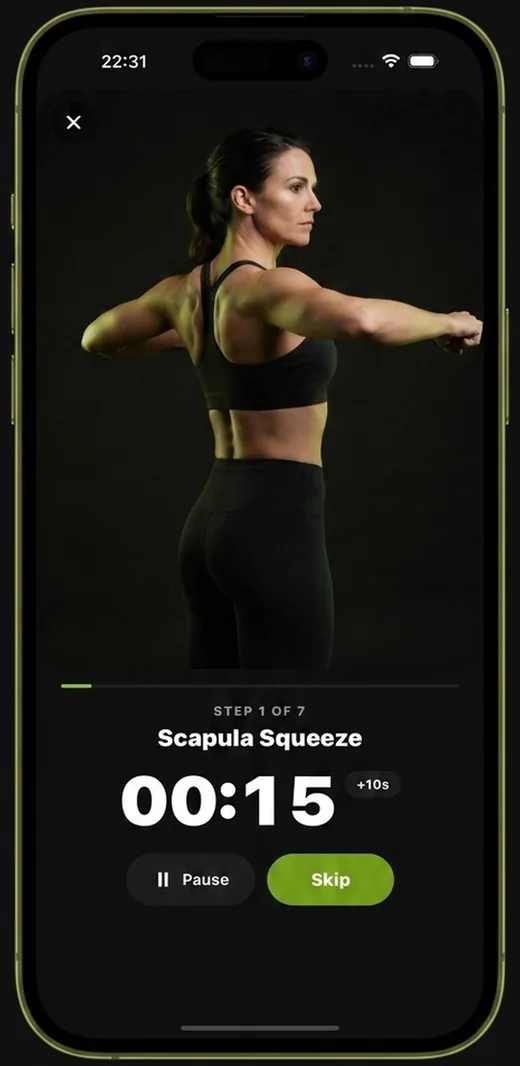
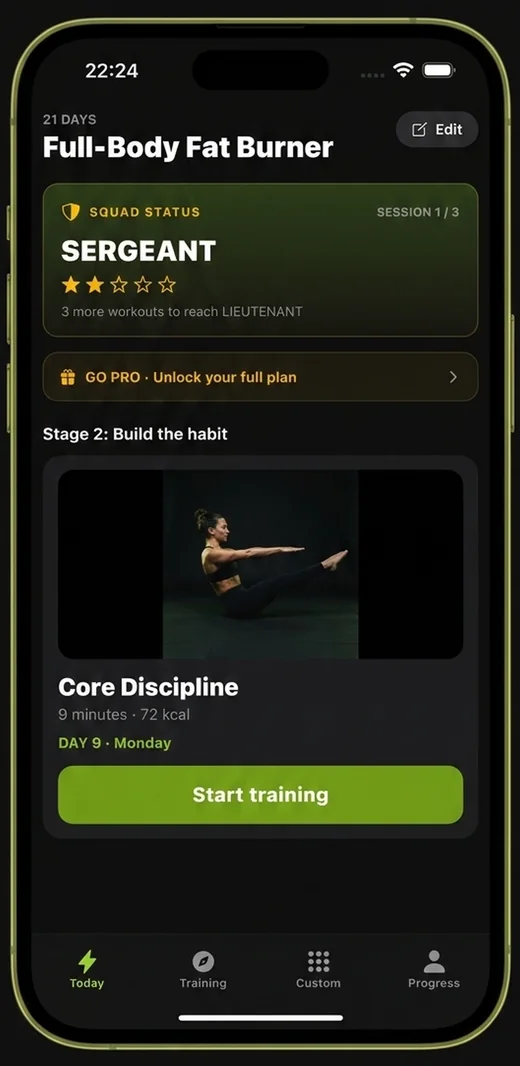
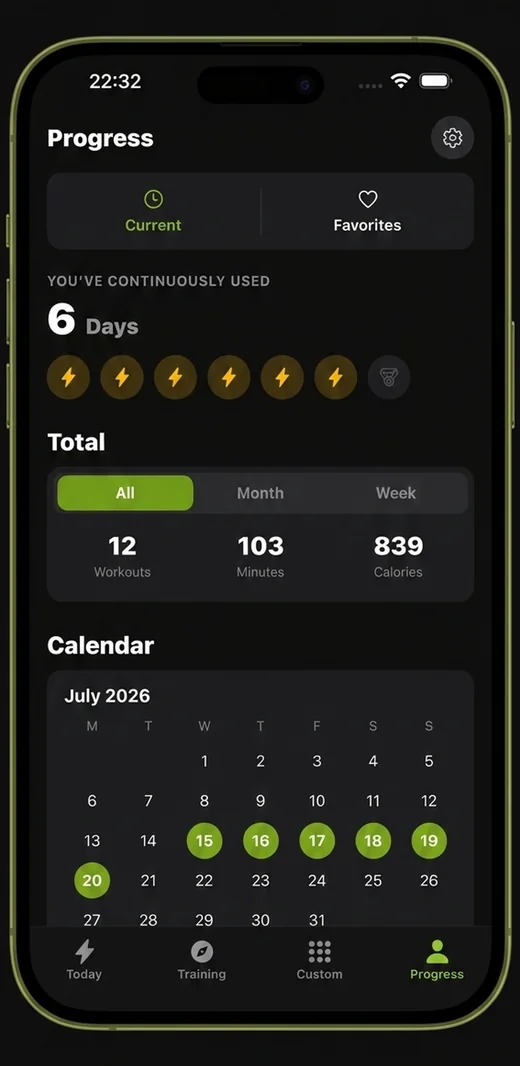
Military Calisthenics Coach builds you a personalized military-style calisthenics plan for iPhone: guided 5–30 minute bodyweight sessions you can run in a barracks, a garage or a hotel room, with timed sets and rests, ranks and streaks.
- A personalized plan that steps up after every 4-week PT test
- Guided timed sessions — no counting, no guessing
- Build your own sessions by time, body zone or focus
 Noted — thanks. We build Android once enough readers ask.
This is a free military calisthenics workout for men and women over 50 — an 8-week plan you can print or save as a PDF, built on the same bodyweight movements armed forces train, scaled for joints and recovery in your fifties and beyond. Use the Save as PDF / Print button above to keep a copy in your training log.
It needs no gym and no signup. A wall, a sturdy table or low bar, and a chair are enough to start. A pull-up bar helps later but is not required.
If you are in your forties, the military calisthenics over 40 plan is a better fit. If you are new to the method entirely, skim what military calisthenics is first.
What changes after 50
Strength and muscle are still very trainable after 50 — that is well established. What changes is how much margin you have:
- Recovery takes longer. Two days between hard sessions is normal now, not a sign of weakness.
- Joints and tendons need a slower ramp. They adapt more slowly than muscle, so add volume in small steps.
- Balance matters more. Single-leg strength and getting up off the floor are the skills that keep you independent, so they are trained in every session.
- Bone needs load. Bodyweight strength work and walking both help — another reason not to skip the lower-body days.
The movements stay the same as at 25: push, pull, squat, hinge, brace and carry. Only the starting point and the spacing change.
The regression ladder
Every exercise in the plan has a ladder. Start on the rung where you can do the reps with clean form and two or three reps left in the tank. Move up a rung only when the top of the rep range feels easy for two sessions in a row.
| Movement | Rung 1 | Rung 2 | Rung 3 | Rung 4 |
|---|---|---|---|---|
| Push | Wall push-up | Counter / table push-up | Bench or step push-up | Floor push-up |
| Pull | Towel row in a doorway | Table row, knees bent | Low-bar row, legs straight | Negative pull-up |
| Squat | Sit-to-stand from a chair | Box squat to a low chair | Air squat | Slow air squat (3 s down) |
| Hinge | Glute bridge | Single-leg glute bridge | Bodyweight good morning | Single-leg reach |
| Core | Dead bug | Incline plank on a table | Floor plank | Side plank |
The 8-week over-50 plan
Two sessions a week for weeks 1–3, three sessions a week from week 5 if recovery is good. Walk 20–30 minutes on non-training days. Weeks 4 and 8 are deloads: do about 60% of your usual reps.
Weekly schedule
| Day | Weeks 1–3 | Weeks 5–8 |
|---|---|---|
| Monday | Session A | Session A |
| Tuesday | Walk | Walk |
| Wednesday | Walk or rest | Session B |
| Thursday | Session B | Walk |
| Friday | Walk | Session A |
| Saturday | Rest | Walk or rest |
| Sunday | Rest | Rest |
Session A — push, legs and balance
- Push (your rung): 3 sets of 6–12
- Squat (your rung): 3 sets of 8–12
- Glute bridge: 3 sets of 10–15
- Single-leg stand: 3 holds of 20–30 seconds per leg, near a wall or chair
- Dead hang or towel hang: 3 sets of 10–20 seconds (skip if your shoulders object)
Session B — pull, core and get-ups
- Pull (your rung): 3 sets of 6–12
- Dead bug or plank (your rung): 3 sets of 20–40 seconds
- Split squat holding a chair: 2 sets of 6–8 per leg
- Floor get-up: 5 slow reps — sit or kneel on the floor, then stand, using a chair if needed
- Farmer’s carry: 4 lengths of 30 seconds with two shopping bags or dumbbells
The 8-week progression
| Weeks | What to do | Intent |
|---|---|---|
| 1–3 | 2 sessions a week, as written | Learn the movements; find your rung |
| 4 | 60% reps | Deload |
| 5–7 | 3 sessions a week if recovery is good; move up a rung where earned | Build volume |
| 8 | 60% reps, then retest | Deload and measure |
Warm up for ten minutes, every time
The warm-up is the part of the plan that keeps you training in month six:
- Five minutes of easy movement — a brisk walk, marching on the spot, arm circles.
- Shoulders — 10 slow wall slides and 10 scapular push-ups against a wall.
- Hips and knees — 10 sit-to-stands from a chair and 10 leg swings per side.
- One easy set of the first exercise at half effort.
Sharp pain means stop. A dull ache means drop a rung and keep going. Our mobility routine and warm-up routine go deeper.
Retest and realistic targets
At the end of week 8, retest three things: max push-ups on your current rung, the number of sit-to-stands from a chair in 30 seconds, and a timed 1-mile walk. Compare them only against your own week-1 numbers.
Military fitness tests score older age brackets against lower standards, and that is the published expectation, not a concession. If you want to see how your numbers compare, the military fitness test standards page breaks them down by test.
Where to go after the 8 weeks
Repeat the block from your new rungs, or move on to the over 40 plan once floor push-ups and low-bar rows feel routine. For gentler, everyday movement work, see calisthenics for seniors. Women can apply the pull-up emphasis from military calisthenics for women to either plan.
Print this plan or save it as a PDF
Use the Save as PDF / Print button at the top of this page. The ladder, schedule and progression print as a clean, black-on-white document you can stick on the fridge or keep in a training log. It is free, with no signup and no email wall.
Military calisthenics over 50 FAQ
Is military calisthenics safe for people over 50? For most healthy adults, yes — every movement scales down to a wall, a chair or a table, and nothing involves heavy weights overhead. Warm up longer, rest more between sessions and stop sets well short of failure. Get clearance from a physician first, especially with heart problems, high blood pressure, osteoporosis or a joint injury.
Can I get this over-50 plan as a printable PDF? Yes — hit the Save as PDF / Print button at the top of the page to download or print the whole 8-week plan free. No signup, no email wall.
How many days a week should I train calisthenics over 50? Two or three, with at least one full rest day between sessions and walking in between. Move to three only when two feel easy to recover from.
I cannot do a push-up or a pull-up. Can I still follow this plan? Yes — that is who it is built for. Start on the wall, the table and the dead hang, and move down the ladder week by week.
How is this different from the over-40 plan? It starts from easier regressions, adds balance and get-up practice to every session, and spaces sessions further apart. When it feels easy after a full block, move on to the over 40 plan.
A note on trust and safety
This plan is an independent, educational resource and is not affiliated with or endorsed by any armed force. It is general fitness information, not medical advice. Training is physically demanding — progress gradually, prioritise form over numbers, and consult a qualified physician before starting any new exercise program, especially over 50 or with an existing injury or medical condition.
Next: run the calisthenics warm-up routine before every session, and when you are ready for the bar, follow the pull-up progression.