The Ultimate Military Calisthenics Chest Workout: No Bench Needed
Master this military-style calisthenics chest workout to build brute strength without a gym. No bench, just pure bodyweight power for elite conditioning.

Military Calisthenics Coach
Take the drill with you
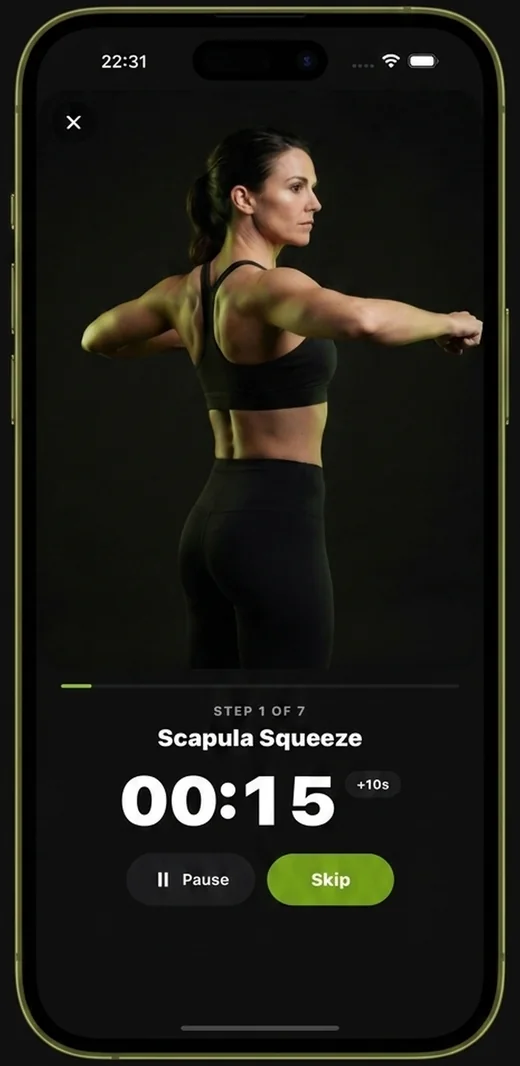
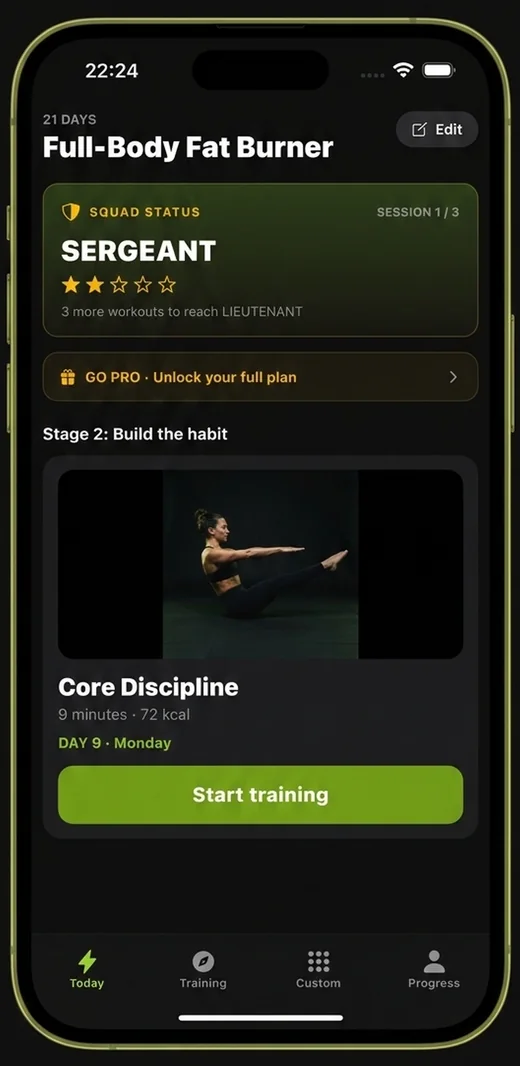
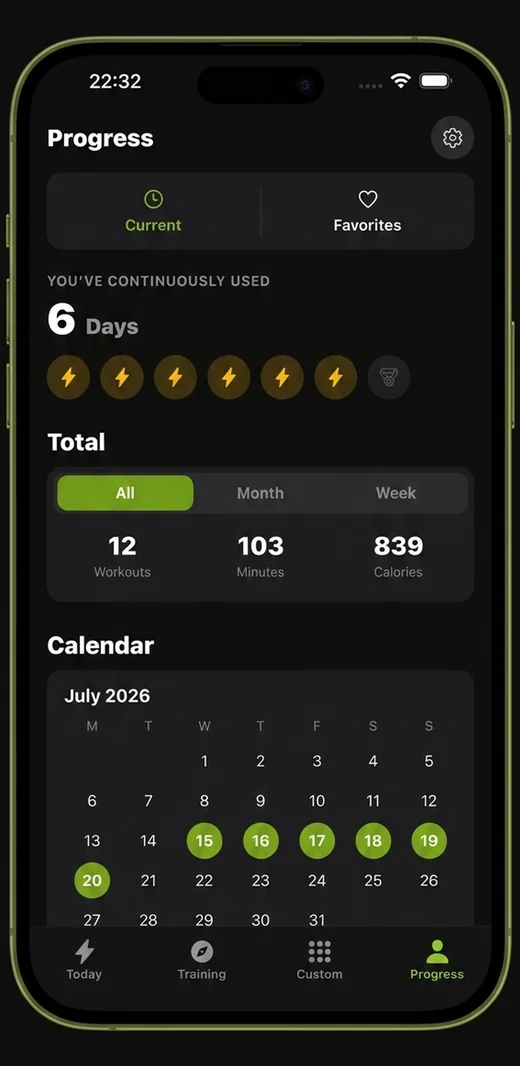
Everything on this site, built into a pocket coach. Military Calisthenics Coach turns the standards into a daily session you can run in a barracks, a garage or a hotel room — timed, tracked and scaled to you.
- A 21-day program that adapts to your level
- Guided timed sessions — no counting, no guessing
- Ranks, streaks and progress you can actually see

A high-intensity calisthenics chest workout is the most effective way to build functional, armor-plated pushing strength using only your body weight and gravity. If you want to develop the muscular chest and triceps endurance required for tactical operations, you must move beyond standard push-ups and embrace time-under-tension and varying leverage. Unlike traditional gym training, this regimen focuses on the biomechanical demands of military service, where your ability to push your own weight reliably is a matter of mission readiness. By incorporating specific tempo variations and isometric holds, you will force muscle fiber recruitment that exceeds standard sets, ensuring you develop the grit and physique demanded by the elite.
The Philosophy of Tactical Pushing Strength
In the armed forces, you rarely have access to a flat bench press. Instead, you have the dirt, the barracks floor, and perhaps a set of dip bars. This reality defines the calisthenics chest workout methodology. We don’t focus on isolation; we focus on stability, core integration, and explosive output. When you perform a push-up properly, you are essentially performing a moving plank. If your core fails, your chest output drops significantly. If you are new to this style of training, be sure to check out calisthenics for beginners to understand the foundational movement patterns that precede advanced chest hypertrophy.
Understanding how to control your body through different planes of motion is essential. A standard push-up targets the mid-pectoral fibers, but by adjusting your hand position and foot elevation, you can shift the stress to the clavicular (upper) or sternocostal (lower) heads. This session is designed to leave no fiber untouched.
The 4-Week Progression Framework
This plan relies on progressive overload through density—shortening rest periods—and mechanical disadvantage. We utilize a 3-0-1-0 tempo. This means 3 seconds on the eccentric (lowering) phase, 0 seconds at the bottom, 1 second on the concentric (pushing) phase, and 0 seconds at the top. This tempo prevents you from using momentum to cheat the reps.
The Weekly Schedule
| Week | Movement | Sets | Reps | Tempo | Rest |
|---|---|---|---|---|---|
| 1 | Standard Push-Ups | 4 | 15 | 3-0-1-0 | 90s |
| 2 | Wide Grip Push-Ups | 5 | 15 | 3-0-1-0 | 75s |
| 3 | Decline Push-Ups | 5 | 18 | 3-0-1-0 | 60s |
| 4 | Diamond Push-Ups | 6 | 12 | 3-0-1-0 | 45s |
Essential Movements for Chest Hypertrophy
To build a complete upper body, you cannot rely on push-ups alone. You must integrate deep-tissue loading via dips and variations that stress the stabilizer muscles. If you find your progress stalling on your dips, refer to the dip progression guide to ensure your mechanics are sound before adding intensity.
1. The Tactical Push-Up (Standard)
Start in a high plank position with hands shoulder-width apart. Keep your elbows tucked at a 45-degree angle to your torso. This protects your shoulders and emphasizes the chest. Lower for three seconds, ensuring your chest touches the deck, then explode up in one second. Do not lock out your elbows fully; keep tension in the chest at the top of the movement.
2. Deep Parallel Bar Dips
If you have access to a set of bars, this is your primary chest builder. Lean forward slightly to place more emphasis on the pecs rather than the triceps. Lower yourself until your shoulders are below your elbows, then drive up forcefully. This is the cornerstone of the 20-minute no-gear barracks workout when you need to get a high volume of work done in a short period.
3. Decline Push-Ups
Elevate your feet on a sturdy object like a chair or a low ledge. This angle shifts the weight toward the upper chest and front deltoids. This movement is excellent for filling out the clavicular shelf of the pectorals, which gives the chest a ‘full’ look and contributes to superior pushing power in overhead tasks.
Integrating Ancillary Movements
While this is a chest-focused session, you cannot neglect the posterior chain. If you train your chest without training your back, you will develop a hunched posture that is detrimental to both performance and health. To avoid this, balance this session with a dedicated calisthenics back workout at least twice a week. You should also understand what military calisthenics is to ensure you are training for endurance, power, and longevity rather than just cosmetic gains.
Don’t forget to stabilize your core throughout these pushing movements. If you struggle with mid-section engagement, integrate movements from a dedicated calisthenics core workout to ensure your power transfer from your legs to your chest is optimal.
Scaling for Elite Readiness
To reach the next level, you must eventually transition into vertical pushing. The pinnacle of calisthenics chest and shoulder power is the handstand push-up. Once you can comfortably perform 30 standard push-ups with perfect form, start working on your handstand push up progression. This will take your upper body strength into the realm of elite athletes who have mastered gravity, not just moved it.
Frequently asked questions
How often should I train chest using calisthenics?
For most individuals, training the chest 2 to 3 times per week is ideal. This allows enough time for muscle recovery while providing enough frequency to trigger hypertrophy and strength adaptations.
Can I build a large chest without weights?
Absolutely. By using mechanical leverage—such as decline push-ups, explosive variations, and tempo manipulation—you can provide sufficient stimulus to the pectorals to stimulate significant growth.
How do I stop my shoulders from hurting during push-ups?
Ensure your elbows are tucked at a 45-degree angle rather than flared out at 90 degrees. If you continue to experience discomfort, reduce the volume and focus on improving your scapular stability through retraction and depression during every rep.
What if I cannot complete the prescribed reps?
Modify the intensity by performing the movements on your knees or against an elevated surface. Focus on the tempo rather than the total count, as consistent time-under-tension is the key to building the strength required to perform standard reps eventually.