The Ultimate Calisthenics Shoulder Workout for Military Strength
Build functional, durable shoulders with this no-nonsense calisthenics shoulder workout. Master pike push-ups, pseudo-planche holds, and effective prehab.

Military Calisthenics Coach
Take the drill with you
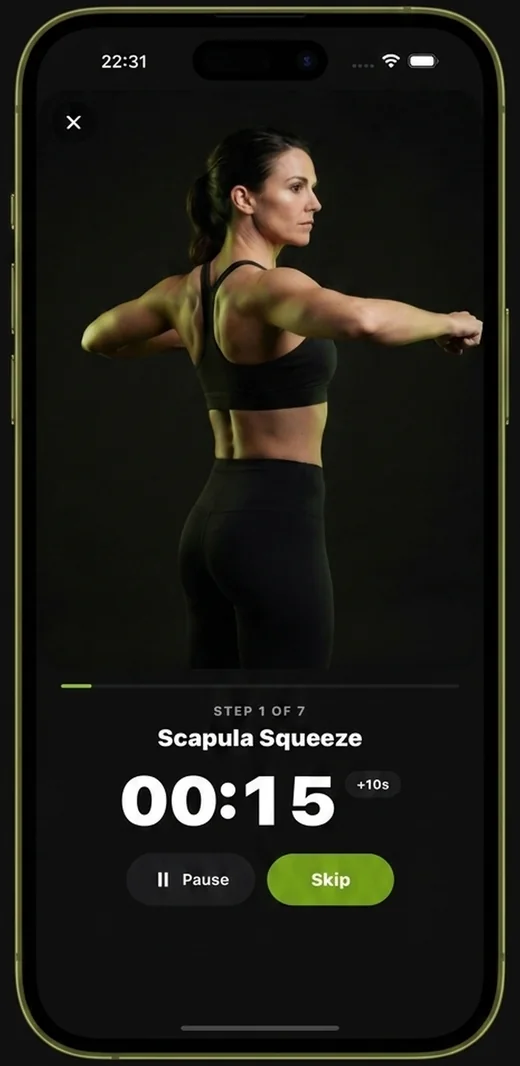
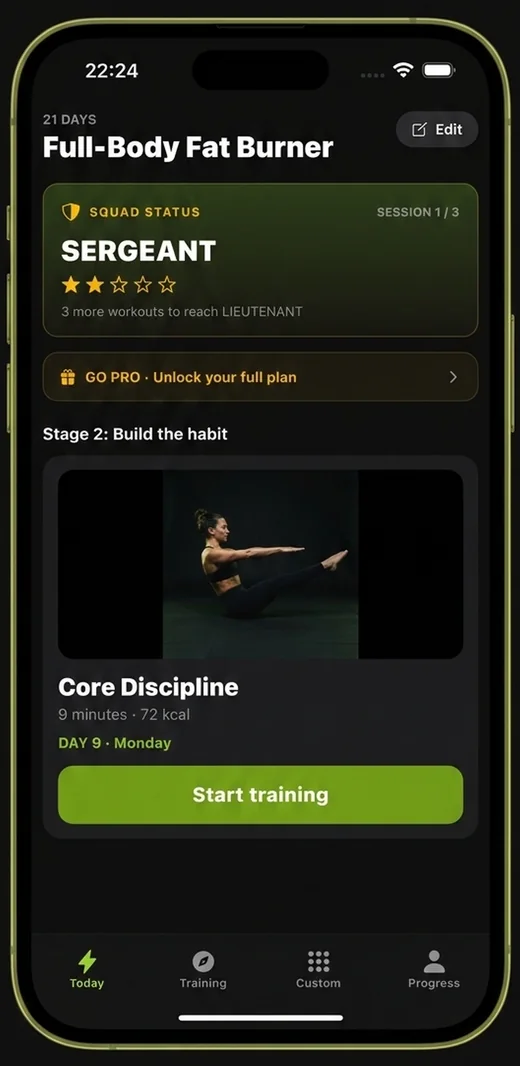
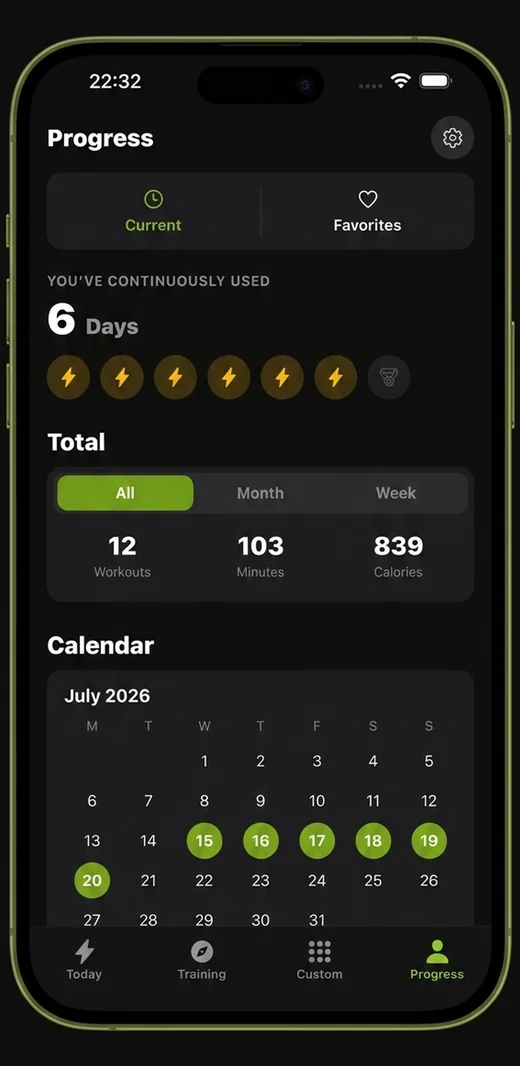
Everything on this site, built into a pocket coach. Military Calisthenics Coach turns the standards into a daily session you can run in a barracks, a garage or a hotel room — timed, tracked and scaled to you.
- A 21-day program that adapts to your level
- Guided timed sessions — no counting, no guessing
- Ranks, streaks and progress you can actually see

A effective calisthenics shoulder workout relies on strict adherence to form, consistent volume, and a deliberate focus on overhead and horizontal stability. In the military, shoulder health is the foundation of every major task—from lifting heavy gear overhead to maintaining the stability required for push up progression. This session prioritizes the deltoids and the small stabilizer muscles of the rotator cuff, ensuring you develop ‘bulletproof’ shoulders that can handle both the high-intensity demands of a field environment and the rigors of your daily calisthenics at home routine. Forget fancy equipment; all you need is a floor, a wall, and a firm grip on your own discipline.
Understanding the Military Standard for Shoulders
Military physical fitness tests often emphasize upper-body endurance through push-ups or pull-ups, but these movements are only as strong as the shoulders behind them. True shoulder strength in calisthenics is defined by your ability to move your body through various planes of motion with absolute control. If you have been following the 8-week military calisthenics workout plan, you already understand that success comes from repetition and tempo control rather than chasing fatigue with poor form. For the beginner, this means prioritizing the pike push-up over more advanced variations until you can execute 15 repetitions with perfect, locked-out elbows.
The Prehab Protocol
Never start a high-intensity session without preparing the joint capsule. Your shoulders are highly mobile but fragile. Before beginning your primary work, execute these movements to ensure optimal range of motion:
- Scapular Shrugs: 2 sets of 15 repetitions. Focus on isolating the traps and serratus anterior.
- Wall Slides: 2 sets of 10 repetitions. Keep your back, wrists, and elbows flat against the wall.
- Arm Circles: 30 seconds forward, 30 seconds backward. Maintain constant tension in the deltoids.
Primary Movement: The Pike Push-Up
The pike push-up is the gold standard for overhead calisthenics strength. It mimics the overhead press without requiring external weight. To execute it correctly, place your hands shoulder-width apart on the floor and walk your feet toward your hands, raising your hips as high as possible so that your torso is nearly vertical.
Coaching Cues:
- Head Position: Aim to have the top of your head touch the floor in front of your hands, forming a tripod shape.
- Elbow Tracking: Do not let your elbows flare out to the sides. Keep them tucked at roughly a 45-degree angle to your torso to protect the shoulder joint.
- Tension: Contract your core throughout the movement to prevent your back from arching excessively.
If you find this movement too difficult, start by performing them with your feet on the floor (not elevated). As you advance, you can elevate your feet on a chair or bench to shift more weight onto your shoulders.
Developing Stability: Pseudo-Planche Work and Holds
Pseudo-planche push-ups require you to lean forward during the standard push-up movement, shifting the load from the chest onto the front deltoids. This is essential for those who want to master the handstand push up progression.
The Pseudo-Planche Hold
- Assume a standard high-plank position.
- Lean your entire body forward until your wrists are near your hips.
- Hold this position while keeping your core tight and your arms locked straight.
- Aim for 3 sets of 20-second holds.
This drill builds isometric endurance in the deltoids, which is critical for those who want to understand what military calisthenics is beyond simple aesthetics.
Weekly Calisthenics Shoulder Workout Plan
Consistency is the only metric that matters. Follow this plan for four weeks before increasing the volume. Rest no more than 90 seconds between sets.
| Exercise | Sets | Reps/Time | Focus |
|---|---|---|---|
| Pike Push-Ups | 4 | 8-12 | Depth |
| Pseudo-Planche Push-ups | 3 | 6-10 | Lean Forward |
| Wall Handstand Holds | 3 | 30-45 sec | Stability |
| Rear Delt Rows (using a bar) | 3 | 12-15 | Rear Deltoid |
| Plank-to-Push-up | 3 | 10 | Core Integration |
Incorporating Rear-Delt and Rotator Cuff Health
Many trainees focus entirely on the front (anterior) deltoid, leading to internal rotation of the shoulders and eventual injury. To avoid this, you must integrate pulling movements. If you have access to calisthenics bars, use them for bodyweight rows, which are essential for balancing the pushing volume. If you do not have bars, use a sturdy table for inverted rows. This is as important as the dip progression when building a balanced upper body.
Scaling for Mixed Ability
- For the Beginner: If you cannot perform a single pike push-up, focus on the ‘downward dog’ position. Hold the position for 30 seconds at a time to build endurance in the overhead position without the stress of the push.
- For the Advanced: Elevate your feet significantly above your head to increase the percentage of body weight you are pressing. Once you can manage 15 repetitions with feet at waist height, begin practicing single-arm variations or wall-supported handstand push-ups.
Frequently asked questions
How many times a week should I train shoulders?
Two sessions per week is sufficient for most trainees. Because your shoulders are involved in almost every upper-body movement, training them more frequently can lead to overtraining and inflammation. Quality must always override frequency.
Can I build significant muscle with just these shoulder exercises?
Yes, provided you apply the principle of progressive overload. As the movements become easier, you must increase the difficulty by changing your leverage, decreasing your rest times, or increasing your total volume over time.
What should I do if I feel sharp pain in my shoulder?
Immediately stop the movement that causes the pain. Military training philosophy dictates that you train through fatigue, but never through joint pain. Assess your form, reduce the intensity, and focus on the prehab exercises mentioned earlier until the discomfort subsides.
How long should I rest between sets in this workout?
Rest for 60 to 90 seconds. This duration is long enough to allow for partial recovery of the smaller stabilizer muscles while keeping the intensity high enough to maintain a training stimulus suitable for military-style conditioning.