Army Preparation Drill: All 10 Exercises, Cadence and Reps
The Army Preparation Drill step by step: all 10 exercises in order, count-by-count form, cadence, reps, commands, modified versions and how long it takes.

Now on iPhone
Military Calisthenics Coach
After the warm-up: a guided bodyweight plan built around you
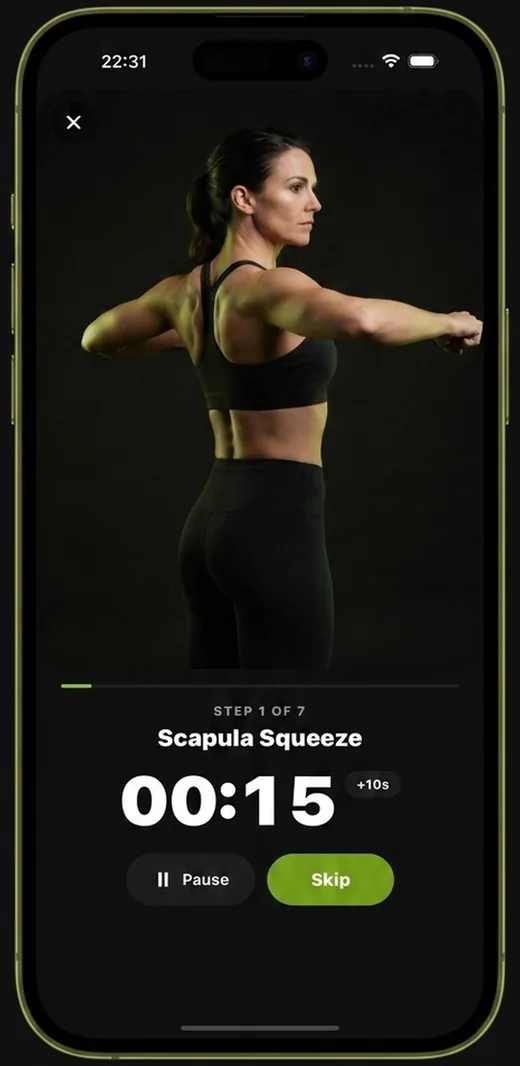
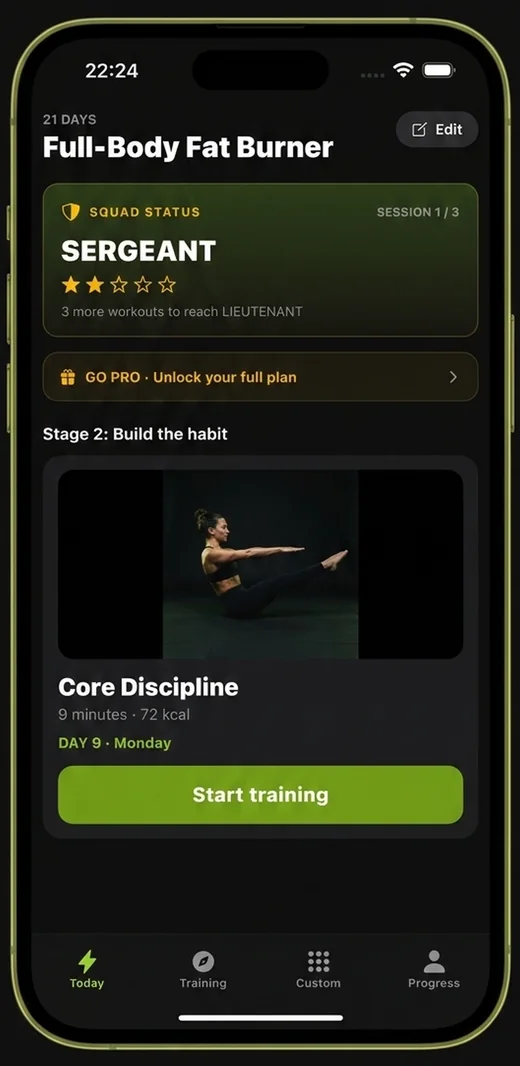
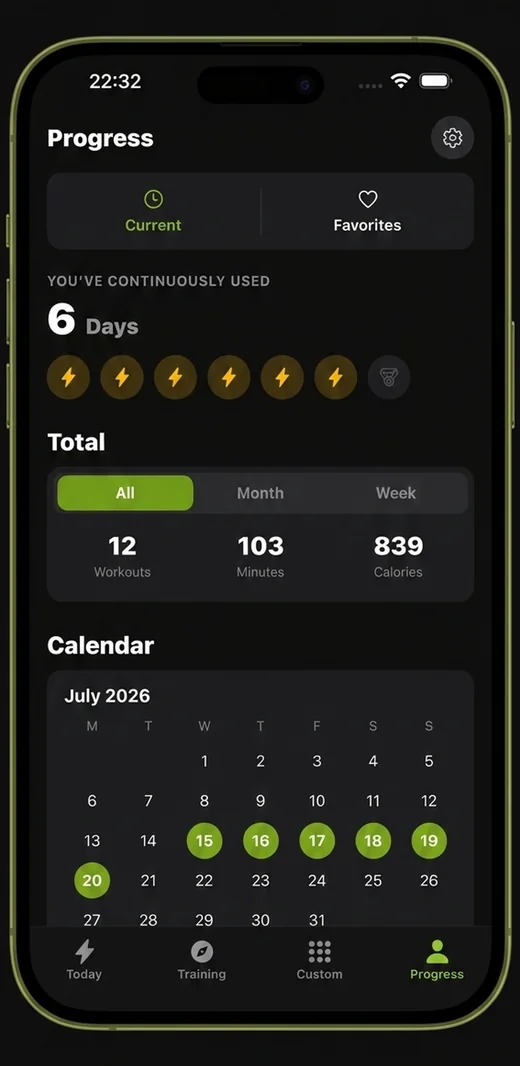
Military Calisthenics Coach builds you a personalized military-style calisthenics plan for iPhone: guided 5–30 minute bodyweight sessions you can run in a barracks, a garage or a hotel room, with timed sets and rests, ranks and streaks.
- A personalized plan that steps up after every 4-week PT test
- Guided timed sessions — no counting, no guessing
- Build your own sessions by time, body zone or focus
 Noted — thanks. We build Android once enough readers ask.
The Army Preparation Drill is the dynamic warm-up that opens Army physical training. It has 10 exercises in a fixed order: Bend and Reach, Rear Lunge, High Jumper, Rower, Squat Bender, Windmill, Forward Lunge, Prone Row, Bent-Leg Body Twist and Push-Up.
Each one is a 4-count exercise done for 5 to 10 repetitions. Eight use a slow cadence (50 counts per minute); the High Jumper and Push-Up use a moderate cadence (80 counts per minute). At 10 repetitions the movements take about 7.5 minutes, plus the time to change positions; the 2010 manual puts preparation at about 15 minutes.
This page gives the current version from ATP 7-22.02 (October 2020, incorporating Change 1, September 2025): count-by-count form for every exercise, the commands, the modified versions and how long the drill takes. Where the 2010 manual, TC 3-22.20, adds useful checkpoints or differs, that is marked.
To see each exercise performed, the Army’s Holistic Health and Fitness channel has a Preparation Drill video playlist.
Doctrine gets revised, so check the current ATP 7-22.02 on the Army Publishing Directorate site if your unit grades the drill.
The 10 exercises at a glance
| # | Exercise | Starting position | Cadence | What it prepares |
|---|---|---|---|---|
| 1 | Bend and Reach | Straddle stance, arms overhead | Slow | Squatting, rolling, climbing |
| 2 | Rear Lunge | Straddle stance, hands on hips | Slow | Hip and leg flexibility, kneeling |
| 3 | High Jumper | Forward leaning stance | Moderate | Jumping, landing, balance |
| 4 | Rower | Supine (on your back), arms overhead | Slow | Abs, getting up from the ground |
| 5 | Squat Bender | Straddle stance, hands on hips | Slow | Lifting technique, low back and thighs |
| 6 | Windmill | Straddle stance, arms out to the sides | Slow | Bending and rotating the trunk safely |
| 7 | Forward Lunge | Straddle stance, hands on hips | Slow | Balance and leg strength |
| 8 | Prone Row | Prone (on your stomach), arms overhead | Slow | Neck, upper back, shoulders |
| 9 | Bent-Leg Body Twist | Supine, hips and knees at 90 degrees | Slow | Trunk rotation control |
| 10 | Push-Up | Front leaning rest | Moderate | Chest, shoulders, arms, trunk |
The 2010 training circular lists the same 10 exercises in the same order and says they are “always performed in the order and at the cadence shown.” ATP 7-22.02 Change 1 (2025) did not change them.
One oddity: the “standard” column of ATP Table 1-1 lists the same exercises in a slightly different order. The chapter that teaches the drill, and every figure in it, uses the order above.
How to remember the order
Group it by position:
- Standing: 1 Bend and Reach, 2 Rear Lunge, 3 High Jumper
- On your back: 4 Rower
- Standing: 5 Squat Bender, 6 Windmill, 7 Forward Lunge
- On the ground to finish: 8 Prone Row (stomach), 9 Bent-Leg Body Twist (back), 10 Push-Up
So it goes stand, ground, stand, ground. Each standing block has three exercises, and the drill ends with three exercises on the ground. You still stand up to the Position of Attention after every exercise.
Positions you need to know
The exercises start from five of the positions defined in ATP 7-22.02, chapter 2:
- Straddle stance: feet pointing ahead, shoulder-width apart.
- Forward leaning stance: feet under the shoulders, bend about 45 degrees at the waist with the knees bent about 45 degrees, back straight from head to hips.
- Supine: lying on your back.
- Prone: lying on your stomach.
- Front leaning rest: the top of a push-up, body in a straight line from head to heels.
Between exercises you return to the Position of Attention (standing at attention). The manual says this resets your posture, prevents overexertion and teaches you to move to and from the ground without using your hands, as you would when carrying a weapon.
Chapter 2 describes two ways to get to the ground. It doesn’t assign them to particular exercises, but they match the starting positions:
- To the supine position (on your back), hands-free (paragraphs 2-8 to 2-10): from the straddle stance, step one foot back and lower until the rear knee touches the ground. Sweep that leg under you and sit back with your hands off the ground, straighten both legs in front, then lie back. If you can’t do it yet, put both hands on the ground on the same side of your body to help. This fits the Rower and Bent-Leg Body Twist. To stand back up, the 2010 manual says to perform the same actions in reverse order.
- To the front leaning rest and prone position (paragraphs 2-2, 2-3 and 2-7): squat and place your hands on the ground between your knees, thrust your feet back into the front leaning rest, then lower to the prone position. Your hands are on the ground for this route. This fits the Push-Up and Prone Row.
How to do each exercise
Every exercise is a 4-count movement. One repetition is one full set of counts 1 to 4. The form below follows ATP 7-22.02, chapter 3, with checkpoints from TC 3-22.20 (2010) where noted.
1. Bend and Reach (slow)
Start in the straddle stance with your arms overhead, elbows straight, palms facing in.
- Drop into a partial squat with your heels on the ground. Round your spine and reach your arms as far as you can between your legs. Tuck your chin and look to the rear.
- Return to the start.
- Repeat count 1.
- Return to the start.
The 2010 manual warns not to bounce into the bottom position, to protect your back.
2. Rear Lunge (slow)
Start in the straddle stance with your hands on your hips.
- Take an exaggerated step back with your left leg and touch down on the ball of the foot, directly behind where it started. Keep the heel up. You should feel a stretch in the front of the left hip and thigh; if not, let your body sink lower.
- Return to the start, feet the same width apart as before.
- Repeat with the right leg.
- Return to the start.
3. High Jumper (moderate)
Start in the forward leaning stance, palms facing in.
- Swing your arms forward until they are parallel to the ground and jump a few inches straight up.
- Land softly on the balls of your feet and return to the start.
- Swing your arms forward and overhead and jump forcefully straight up.
- Land softly and return to the start.
The 2010 manual, TC 3-22.20, has a jump on every count: arms swing backward with a small jump on counts 2 and 4, and the jumps on counts 1, 2 and 4 are only 4–6 inches. The current ATP has you land and return to the start on counts 2 and 4 instead. Either way, land softly with your feet shoulder-width apart and pointing forward.
4. Rower (slow)
Lie on your back with your arms overhead at shoulder width, palms facing in, feet together and pointing up. Hold your head 1–2 inches off the ground.
- Sit up, bending at the hips and knees, and swing your arms forward until they are parallel to the ground. Finish with your feet flat and your knees between your arms.
- Return to the start.
- Repeat count 1.
- Return to the start.
The 2010 manual adds: tighten your abs so your low back does not arch off the ground at the start.
5. Squat Bender (slow)
Start in the straddle stance with your hands on your hips.
- Squat while leaning slightly forward, head up, and bring both arms to the front, parallel to the ground, palms in.
- Return to the start.
- With your knees slightly bent, hinge forward at the waist with your back straight and your head in line with your spine. Reach toward the ground until you feel a stretch in the back of your thighs.
- Return to the start.
6. Windmill (slow)
Start in the straddle stance with your arms straight out to the sides, palms down.
- Bend your hips and knees while rotating your trunk to the left. Touch the outside of your left foot with your right hand and look to the rear. Pull the left arm back so both arms stay in line.
- Return to the start.
- Repeat to the right.
- Return to the start.
7. Forward Lunge (slow)
Start in the straddle stance with your hands on your hips.
- Step forward with your left leg until the left heel is 3–6 inches ahead of the right foot, and lunge forward by bending your hips and knees. Keep your back straight. Don’t look down, and don’t bring your feet closer together.
- Return to the start.
- Repeat with the right leg.
- Return to the start.
The 2010 manual adds that the rear knee bends but does not touch the ground.
8. Prone Row (slow)
Lie on your stomach with your arms overhead, palms down, and lift your arms 1–2 inches off the ground. Toes point to the rear.
- Raise your head and chest slightly while pulling your arms back, making fists as your hands come toward your shoulders. Feet stay together and on the ground.
- Return to the start, arms still off the ground.
- Repeat count 1.
- Return to the start.
The 2010 manual says to look forward, not skyward, and to keep your abs and glutes tight so you do not overarch your back.
9. Bent-Leg Body Twist (slow)
Lie on your back with your hips and knees bent to 90 degrees, knees and feet together, arms straight out to the sides with palms on the ground.
- Rotate your legs to the left, keeping your upper back and arms on the ground. The legs drop together toward the ground.
- Return to the start.
- Repeat to the right.
- Return to the start.
10. Push-Up (moderate)
Start in the front leaning rest: hands directly under your shoulders with fingers spread, feet together, body in a straight line from head to heels. Hold that line throughout.
- Bend your elbows and lower your body until your upper arms are parallel to the ground.
- Push back up to the start.
- Repeat count 1.
- Return to the start.
The 2010 manual adds: elbows point back and stay close to your sides, and they straighten without locking at the top. If you need more push-up strength, see the push-up progression. The AFT tests a different version, the hand-release push-up.
Cadence, reps and how long it takes
Cadence. Slow cadence is 50 counts per minute and moderate is 80. ATP 7-22.02 says the cadence “will always remain the same” so Soldiers can move through their full range of motion. The cadence stays fixed; leaders save time by keeping the gaps between exercises short.
Repetitions. The 2010 manual starts new Soldiers at 5 repetitions of each exercise and builds to 10. ATP 7-22.02 says that after basic combat training, all Soldiers perform 10 repetitions to standard. For recruits in the Future Soldier Program, before they ship to basic training, FM 7-22 caps warm-ups at 10 repetitions of any single 4-count exercise, at no faster than moderate cadence.
Time. Each repetition is four counts, so the numbers work out like this:
| Repetitions | Each slow exercise | Each moderate exercise | All 10 exercises |
|---|---|---|---|
| 5 | 24 seconds | 15 seconds | 3 min 42 s |
| 10 | 48 seconds | 30 seconds | 7 min 24 s |
That is moving time only. Getting into each starting position and back to attention adds more. The 2010 manual says preparation conducted to standard lasts about 15 minutes, and its goal is to pause between exercises only long enough for the leader to name the next one.
That leaves room in a full session. FM 7-22’s example one-hour, hypertrophy-focused session gives 15 minutes to preparation, which can also include stability drills, the Military Movement Drill and other dynamic warm-ups.
Training alone. ATP 7-22.02 encourages Soldiers who train on their own to keep the cadence. The simplest way is a metronome app: set it to 50 beats per minute, one beat per count, and switch to 80 for the High Jumper and Push-Up.
The commands
The 2010 manual spells out how a leader runs each exercise in cadence. Using the Bend and Reach as the example:
- Leader: “THE BEND AND REACH.” Soldiers repeat: “The bend and reach.”
- Leader: “STARTING POSITION, MOVE.” Soldiers take the starting position.
- Leader: “IN CADENCE,” Soldiers repeat “In cadence,” then the leader commands “EXERCISE.” The first count starts on “EXERCISE.”
- Leader counts “One, two, three,” and the Soldiers call out the repetition number on count 4: “One.” Then “One, two, three,” “Two,” and so on.
- On the last repetition, the leader raises the inflection of their voice on the count, and everyone answers “HALT” as they return to the starting position.
ATP 7-22.02 uses “STARTING POSITION, MOVE” to get into each exercise. After the last repetition, the leader brings Soldiers back to attention with “POSITION OF ATTENTION, MOVE” before naming the next exercise.
Modified versions
ATP 7-22.02 gives a modified version of every exercise for Soldiers with physical limitations who are reconditioning back to the full standard. It is also a sensible starting point if you are stiff or out of shape.
The table shows the manual’s example for each exercise, plus some of the other options it lists. If an exercise is restricted completely, the manual says to swap in a similar movement at the same cadence.
| Exercise | Modified version (ATP 7-22.02) |
|---|---|
| Bend and Reach | Hands on hips; partial squat and reach to the ground with a straight back instead of rounding |
| Rear Lunge | Shorter step, wider foot placement for balance, heel may touch down; go deeper over time |
| High Jumper | Slow cadence, reduced squat; rise onto your toes instead of jumping |
| Rower | Arms crossed on your chest, knees bent, head down; sit up and reach to your knees |
| Squat Bender | Smaller squat and forward lean, reaching toward your knees |
| Windmill | One hand stays on your hip, or arms out with trunk rotation only, no hip or knee bend |
| Forward Lunge | Shorter lunge, feet closer together if needed |
| Prone Row | Smaller arm movement, one arm only, or the same arm pull done standing |
| Bent-Leg Body Twist | Feet on the ground, head down, arms at 45 degrees from your body |
| Push-Up | Six-point stance (on your knees), smaller elbow bend if needed, still at moderate cadence |
ATP Table 1-1 also gives “three examples of a modified Preparation Drill”: power-focused, condensed time and special conditioning. The “condensed time” version is six exercises: Push-Up 5 reps, High Jumper 10, Rower 10, Prone Row 5, Rear Lunge 5 and Bent-Leg Body Twist 5.
Does the preparation drill work?
The Army says the drill raises heart rate and body temperature, increases joint and muscle flexibility and makes nerves and muscles more responsive, so you are ready for harder work and less likely to get hurt. Here is what the evidence can and can’t show:
- Warm-ups help performance: supported. A 2010 systematic review of 32 high-quality studies (Fradkin and colleagues) found that warming up improved performance in 79% of the outcomes measured, with little evidence of harm. The review only included warm-ups that went beyond stretching, like this drill.
- Fewer injuries in basic training: supported for the whole program. In a 2003 Army study of about 2,600 recruits, the group on the new Physical Readiness Training program had fewer time-loss overuse injuries than the group on traditional PT. The traditional group’s risk was 1.4 to 1.5 times higher. Traumatic injuries did not differ between the groups.
- The drill’s own share: unknown. The same study found more of the PRT group passed the fitness test on the first try. But it tested an early version of the whole PRT program, so it cannot show how much of the effect, if any, came from the warm-up.
So treat the drill as a sound warm-up that is part of a program with a good track record, not as an injury shield on its own.
Using it outside the Army
The drill needs no equipment, just enough floor to lie down with your arms overhead and out to the sides. It makes a good general warm-up for any bodyweight session:
- Start at 5 repetitions of each exercise, using the modified versions where you need them.
- Move up to 10 once you can do all 10 exercises at the right cadence with full range of motion.
- Finish the session with the Army Recovery Drill, the static stretching routine that closes every Army PT session.
For the main part of the workout, the Army PRT exercises guide covers Conditioning Drill 1 and a weekly schedule. The boot camp workout plan gives you a weekly bodyweight schedule to warm up for. For a warm-up built on general joint mobility rather than Army doctrine, see the calisthenics warm-up routine.
Common mistakes
- Counting too fast. Rushing the cadence cuts the range of motion, which is the point of the drill. Use 50 counts per minute, and 80 for the High Jumper and Push-Up.
- Bouncing in the Bend and Reach. Lower slowly into the squat and reach.
- Narrowing your stance in the lunges. Your feet should stay as wide apart as in the straddle stance on every step.
- Landing hard on the High Jumper. Land on the balls of your feet and absorb it through your knees and hips.
- Arching your back on the Rower and Prone Row. Keep your abs tight; in the Prone Row, look forward, not up.
- Letting your shoulders lift in the Bent-Leg Body Twist. Your upper back and arms stay on the ground; only the legs move.
- Sagging hips in the Push-Up. Keep a straight line from head to heels, or drop to the six-point stance.
- Using your hands to get onto or up from your back. Practice the hands-free half-kneeling route to the supine position above. The route to the front leaning rest and prone position uses your hands.
Frequently asked questions
What are the 10 exercises in the Army Preparation Drill?
In order: Bend and Reach, Rear Lunge, High Jumper, Rower, Squat Bender, Windmill, Forward Lunge, Prone Row, Bent-Leg Body Twist and Push-Up. The list is the same in the 2010 training circular TC 3-22.20 and in the current ATP 7-22.02, including its September 2025 Change 1.
How many reps are in the preparation drill?
Five to 10 repetitions of each exercise, where one repetition is one full 4-count cycle. The 2010 manual starts new Soldiers at 5. ATP 7-22.02 says that after basic combat training, Soldiers perform 10 repetitions to standard, and FM 7-22 caps any single 4-count warm-up exercise at 10 repetitions for recruits in the Future Soldier Program, before they ship to basic training.
What cadence is the preparation drill done at?
Slow cadence, 50 counts per minute, for eight of the 10 exercises. The High Jumper and the Push-Up use moderate cadence, 80 counts per minute. ATP 7-22.02 says the cadence stays the same so Soldiers have time to move through their full range of motion.
How long does the Army preparation drill take?
At 10 repetitions, the exercises themselves take just under 7.5 minutes (7 min 24 s): 48 seconds for each slow exercise and 30 seconds for each moderate one. At 5 repetitions it is under 4 minutes. Moving to the ground and back to the Position of Attention between exercises adds more. The 2010 manual says preparation conducted to standard lasts about 15 minutes.
How do you remember the Army preparation drill?
Group it by position. Exercises 1 to 3 are standing, 4 (Rower) is on your back, 5 to 7 are standing again, and 8 to 10 are done on the ground: Prone Row on your stomach, Bent-Leg Body Twist on your back, and the Push-Up to finish. You still return to the Position of Attention between exercises.
What changed in the preparation drill in 2025?
Nothing in the exercises. Change 1 to ATP 7-22.02 removed the Pose Method running drills, added Four for the Core (chapter 1 lists it among the preparation drills) and replaced the ACFT with the AFT. The Preparation Drill chapter itself only had its test name and video link updated.
Sources
- ATP 7-22.02, Holistic Health and Fitness Drills and Exercises (October 2020, incorporating Change 1, September 2025), chapters 1–3, Army Publishing Directorate
- ATP 7-22.02 Preparation, Recovery and PMCS Drills excerpt, Colorado Army National Guard (archived copy)
- FM 7-22, Holistic Health and Fitness (October 2020), paragraphs 6-22, 6-23 and 14-20, UNC Charlotte Army ROTC copy
- TC 3-22.20, Army Physical Readiness Training (March 2010), chapters 5, 7 and 8, Longwood University Army ROTC copy
- Fradkin AJ, Zazryn TR, Smoliga JM. Effects of warming-up on physical performance: a systematic review with meta-analysis. Journal of Strength and Conditioning Research, 2010
- Knapik JJ et al. Injury and fitness outcomes during implementation of Physical Readiness Training. International Journal of Sports Medicine, 2003