Mastering Upper Body Calisthenics Exercises: A Military Protocol
Build functional strength with this complete guide to upper body calisthenics exercises. Learn the standards, progressions, and a balanced two-day split.

Military Calisthenics Coach
Take the drill with you
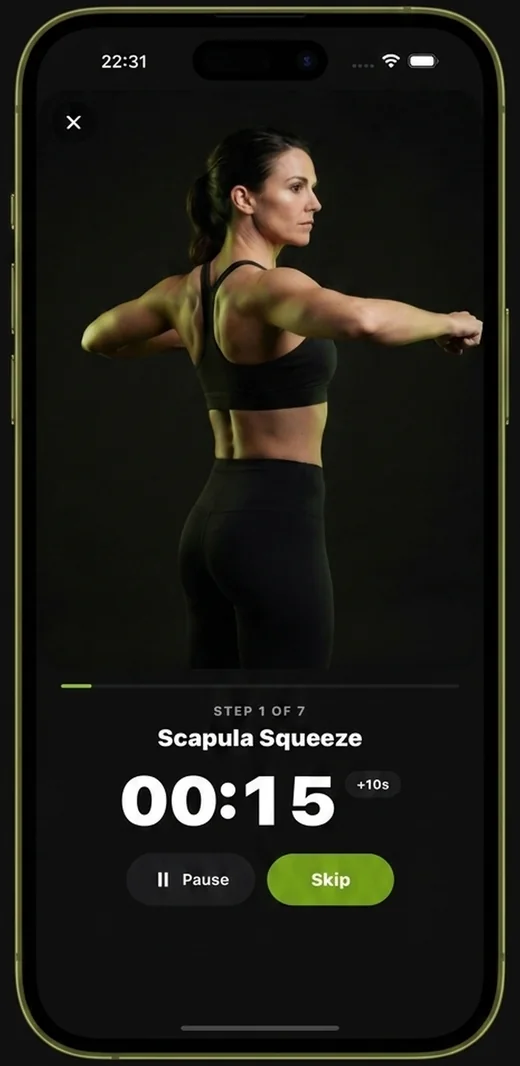
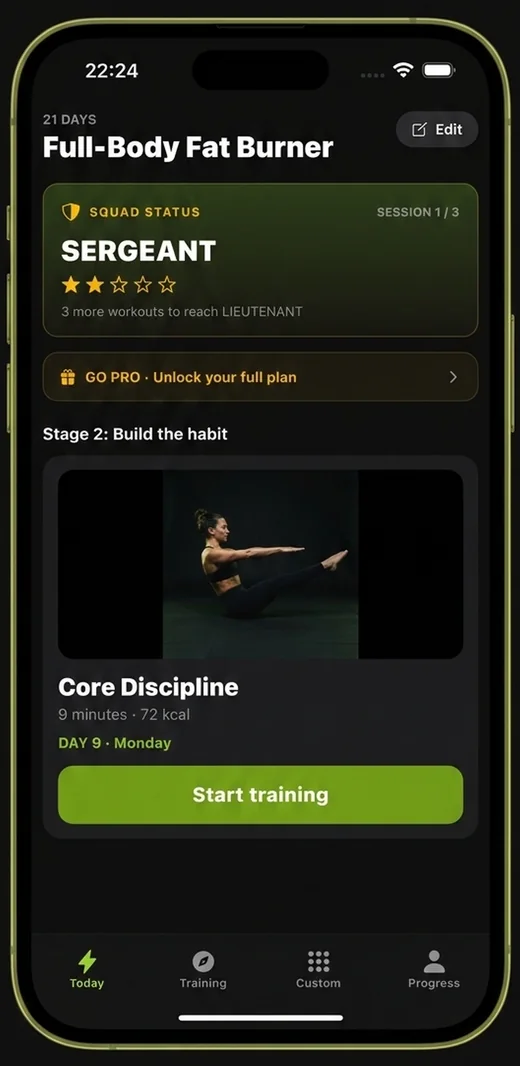
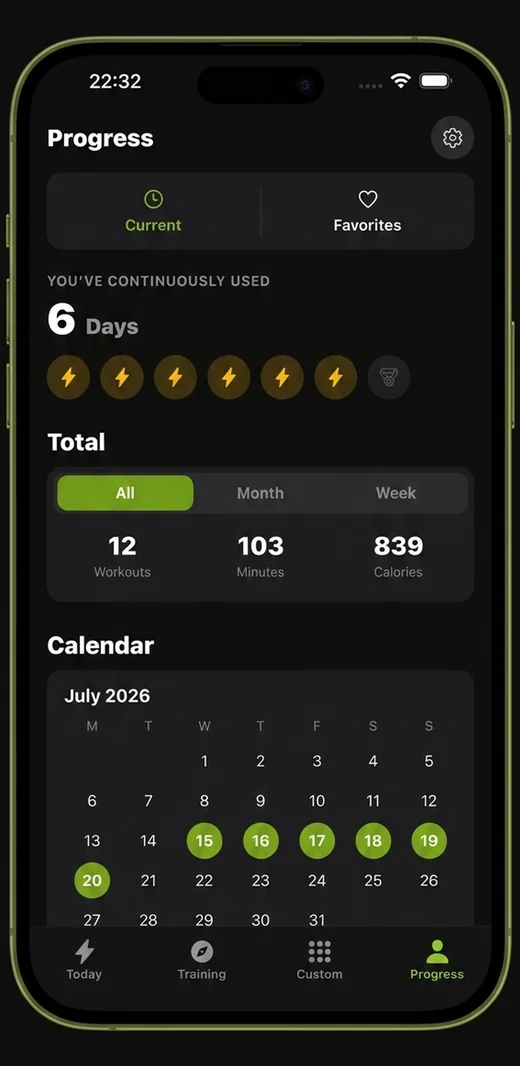
Everything on this site, built into a pocket coach. Military Calisthenics Coach turns the standards into a daily session you can run in a barracks, a garage or a hotel room — timed, tracked and scaled to you.
- A 21-day program that adapts to your level
- Guided timed sessions — no counting, no guessing
- Ranks, streaks and progress you can actually see

Mastering upper body calisthenics exercises is the foundation of military physical readiness, requiring only your body weight to develop raw power, endurance, and structural integrity. In the armed forces, fitness is not about aesthetics; it is about performance under tension. Whether you are prepping for a PFT (Physical Fitness Test) or simply training in your garage, the principle remains the same: move your body through space with perfect form, consistent intensity, and progressive load. This guide organizes these movements into push, pull, and core categories, providing the architecture for a no-nonsense training routine that strips away the fluff.
The Fundamental Movement Patterns
Military-style training focuses on compound movements that recruit multiple muscle groups simultaneously. To build a solid upper body, you must balance horizontal and vertical pushing with horizontal and vertical pulling.
The Push Category
- Push-Ups: The gold standard of military PT. Keep your core tight and your body in a straight line from head to heels. If you cannot hit ten strict reps, begin with incline push-ups by placing your hands on a bench or sturdy surface. For those mastering the movement, review the push up progression to ensure your form aligns with official test standards.
- Dips: The ultimate test of triceps and chest power. Use a set of calisthenics bars or parallel bars. Keep your elbows tucked near your torso to protect your shoulders. If these are too demanding, use a resistance band to assist you while you work through the dip progression.
- Handstand Push-Ups: An advanced movement that builds immense shoulder stability. Start with pike push-ups, elevating your feet on a box to increase the load on your deltoids before attempting the full vertical variation.
The Pull Category
- Pull-Ups: The benchmark for upper body strength in every branch of the military. Your chin must clear the bar, and you must return to a full dead hang. If you are struggling, utilize the dead-hang to strict pull-up progression to build the requisite back and bicep strength.
- Inverted Rows: Often overlooked, these are essential for shoulder health. They balance the anterior pressure of push-ups. Lie underneath a bar, grip it at shoulder width, and pull your chest to the bar while keeping your body rigid.
The Upper Body Training Split
Consistency is the hallmark of military training. We prioritize frequency over singular, exhaustive sessions. This two-day split allows you to recover while maintaining a high rate of muscle stimulation. If you are entirely new to this training style, first understand what military calisthenics is to grasp the importance of strict standards.
Day 1: Strength Focus (Push/Pull Emphasis)
Focus on explosive movement and strict adherence to form. Rest periods should be 90 to 120 seconds between sets to ensure quality.
| Exercise | Sets | Reps | Note |
|---|---|---|---|
| Pull-Ups | 4 | Max minus 2 | Leave 2 in the tank |
| Dips | 4 | 8-12 | Deep range of motion |
| Inverted Rows | 3 | 10-15 | Keep spine neutral |
| Push-Ups | 3 | 20-30 | Full lockout at top |
Day 2: Hypertrophy & Endurance (Volume Focus)
Rest periods are reduced to 60 seconds to increase metabolic demand. This mimics the intensity found in the 20-minute no-gear barracks workout.
| Exercise | Sets | Reps | Note |
|---|---|---|---|
| Push-Ups | 5 | 15-20 | Focus on tempo |
| Inverted Rows | 4 | 12-15 | Controlled eccentric |
| Pike Push-Ups | 3 | 8-12 | Shoulders engaged |
| Plank Holds | 3 | 60 sec | Squeeze glutes tight |
Establishing Standards and Progression
Military standards are non-negotiable. If you cannot perform a movement with full range of motion, you have not performed the movement. For push-ups, this means your chest touches the deck or a fist-sized marker. For pull-ups, full extension at the bottom is mandatory. If you are finding that progress has stalled, do not add more exercises. Instead, manipulate your tempo. Perform the lowering phase (the eccentric) over a three-second count to increase time under tension. Every four weeks, test your “Max Effort” sets to gauge progress. If you are struggling to build a basic base, calisthenics for beginners provides the necessary foundational work to get you off the ground.
Integration and Maintenance
Upper body strength is only one component of a complete soldier’s profile. Your legs and core must keep pace. Ensure you are not neglecting calisthenics core workout routines, as a strong core is the bridge between your upper body and lower body power. If you are training at home, ensure your calisthenics equipment is secure before beginning. If you choose to train at a local facility, find a calisthenics park that offers multiple bar heights to accommodate different row and pull-up progressions.
Frequently asked questions
How many upper body calisthenics exercises should I do in one session?
Aim for four to five compound movements per session. By focusing on multi-joint patterns like push-ups, pull-ups, dips, and rows, you cover all major muscle groups without the diminishing returns of excessive isolation exercises.
How long should I rest between sets for maximum strength?
Rest for 90 to 120 seconds for strength-focused movements like pull-ups or dips. For endurance-based work like high-rep push-ups, keep rest periods to 60 seconds to maintain metabolic stress.
Can I do these exercises if I am a complete beginner?
Yes, but you must scale the movements. Use incline push-ups and assisted pull-ups with resistance bands to match your current strength level, ensuring you always maintain perfect form rather than chasing high rep counts with poor technique.
What is the best way to track my progress?
Keep a dedicated logbook and record your sets, reps, and the date of every workout. Tracking your “Max Effort” test results every four weeks is the most effective way to identify if your program is yielding results or if you need to adjust your volume.