The Special Forces Workout: Build Functional Conditioning
A special forces workout focuses on work capacity and mental grit. Use our scalable calisthenics framework to build military-grade conditioning at home.

Military Calisthenics Coach
Take the drill with you
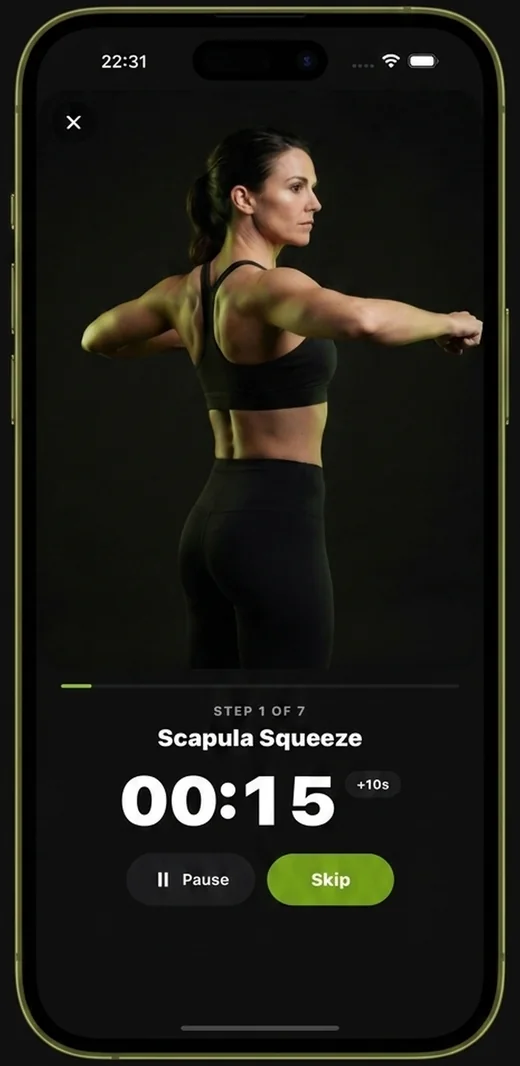
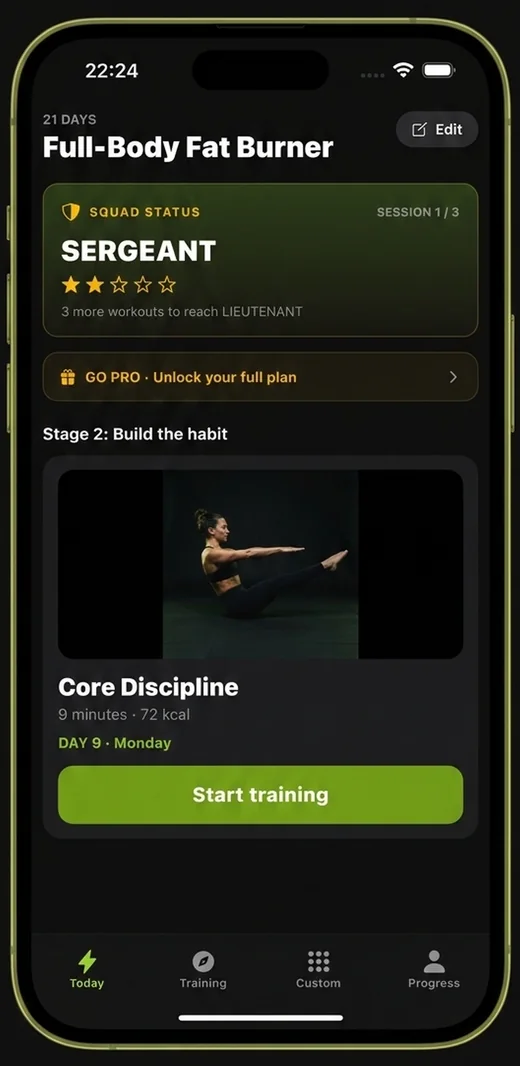
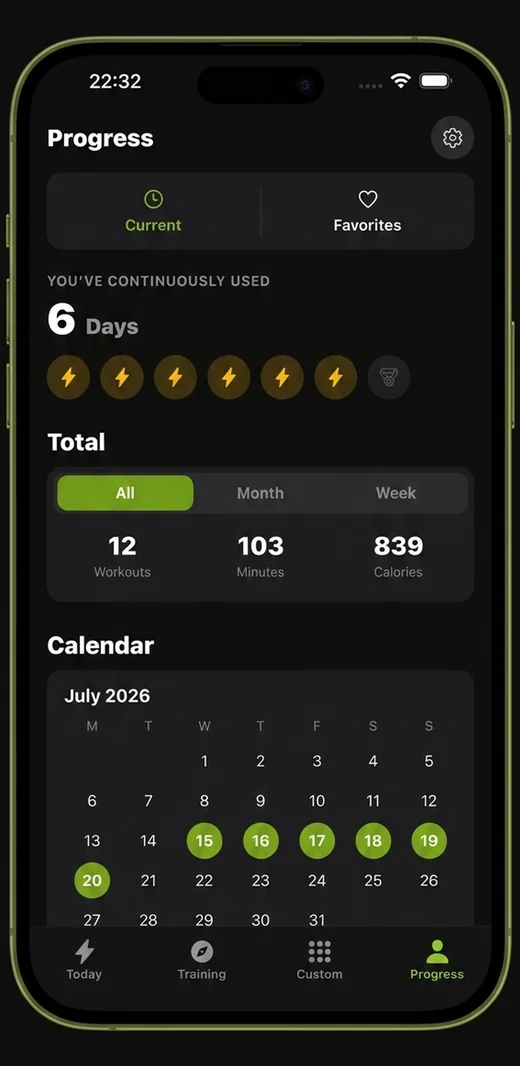
Everything on this site, built into a pocket coach. Military Calisthenics Coach turns the standards into a daily session you can run in a barracks, a garage or a hotel room — timed, tracked and scaled to you.
- A 21-day program that adapts to your level
- Guided timed sessions — no counting, no guessing
- Ranks, streaks and progress you can actually see

A proper special forces workout is defined not by fancy equipment, but by the relentless pursuit of work capacity, movement integrity, and mental endurance. In military selection contexts, the objective is to determine whether an individual can maintain physical output under extreme fatigue while performing basic, fundamental bodyweight movements. To replicate this style of training, you must move away from ‘hypertrophy-focused’ sets and toward volume-based, high-density training that prioritizes movement efficiency under pressure. If you are preparing for something as intense as an army combat fitness test or simply want to understand what military calisthenics is, the goal remains the same: move your body effectively when you would rather stop.
The Philosophy of Military Work Capacity
Military physical training (PT) programs, such as those outlined in historical field manuals, rely on the concept of ‘progressive loading’. This means your volume must increase over time to force the body to adapt to the load. In a standard special-forces-style conditioning session, you aren’t looking for a ‘pump’; you are looking for the point of diminishing returns, then pushing through two or three extra sets. This tests the psychological barrier that often mimics the demands seen in a boot camp workout plan.
Core Training Standards
To train like the military trains, you must treat your body as the primary tool. Before attempting high-volume circuits, ensure you can meet the baseline standards for the following movements. If you cannot maintain perfect form, you have not earned the right to add more volume:
- Push-ups: Chest to within a fist’s width of the floor. Full lockout at the top. See our push up progression if you cannot hit 20 clean repetitions.
- Pull-ups: Strict dead hang, chin over the bar. No kipping. Follow the dead hang method to build initial lat engagement.
- Squats: Hip crease below the knee. Keep the heels flat. Do not rush the eccentric (lowering) phase.
The Special Forces Conditioning Circuit
This circuit is designed to be scalable. If you are a beginner, reduce the total rounds. If you are advanced, reduce the rest time between exercises. The protocol is to perform the movements as a continuous block before taking a strictly timed rest. If you are building a home base, check our guide on calisthenics at home to ensure you have the right setup.
| Exercise | Reps (Beginner) | Reps (Advanced) | Tempo |
|---|---|---|---|
| Burpees | 5 | 15 | Explosive |
| Pull-ups | 3 | 10 | 2-0-1-0 |
| Air Squats | 15 | 40 | 1-0-1-0 |
| Push-ups | 10 | 25 | 1-0-1-0 |
| Plank | 30 seconds | 90 seconds | Static |
Protocol: Perform 4 rounds for beginners, 8 rounds for advanced trainees. Rest exactly 90 seconds between rounds. If you struggle with pull-ups, use pull up alternatives to ensure you are maintaining the total volume required for the session.
Load Carriage and Work Density
True special operations conditioning often incorporates load carriage. You do not need a ruck to start; you need to understand how to maintain work density. When you add a weight vest or a loaded pack, the movement mechanics change. Your center of gravity shifts, and your core must work significantly harder to stabilize the torso. Start by practicing ruck-ready conditioning with a light pack (10-15 lbs) before attempting higher volumes. The key is consistency; even if you cannot train for an hour, a 20-minute no-gear barracks workout will keep your baseline high.
The Mental Pacing Element
Selection courses are not won by sprinting the first mile. They are won by maintaining a steady, ‘all-day’ pace. In this workout, avoid burning out in the first two rounds. Aim to finish every round in the exact same amount of time. If your Round 1 takes four minutes and your Round 4 takes eight minutes, you are failing to pace properly. Control the breathing, keep the heart rate from redlining, and treat each rep as an individual, high-quality event.
Progression and Standards
Progress is not linear; it is cumulative. To see the results you want, you must track your performance. If you cannot perform the full volume, subtract two reps from each movement and complete the scheduled number of rounds. Once you can complete the full volume for three sessions in a row, add one round to your circuit or reduce your rest period by 10 seconds. For a more structured approach, you might follow the 8-week military calisthenics workout plan, which automates these progressions for you.
Frequently asked questions
How many times a week should I perform this special forces workout?
Perform this workout 3 to 4 times per week, ensuring you have at least one full rest day between sessions to allow for central nervous system recovery. High-volume bodyweight training can quickly lead to overuse injuries if you do not prioritize recovery. Use your off-days for light mobility or walking to maintain movement quality.
How long should I rest between individual exercises within the circuit?
In a true military-style circuit, you should transition between exercises with zero rest. The rest period occurs only after completing one full round of all listed exercises. This keeps the intensity high and mimics the work-rest ratios found in typical field training events.
Can I add weight to this calisthenics routine?
Yes, but only once you have mastered the bodyweight version of the exercises with perfect form and full range of motion. Using a weight vest or a backpack is an excellent way to increase the stimulus, but do not sacrifice your range of motion to add weight. If your push-up form breaks down or your squats become shallow, remove the weight immediately.
What is the best way to track my progress in this workout?
Use a simple logbook to record the time taken for each round and the total time to complete the full session. The goal is to finish the entire workout faster while maintaining the exact same movement standards. If you can perform the full circuit in less time with better form than your previous session, you are seeing real improvement in work capacity.