Optimizing Calisthenics Rest Days for Military-Grade Results
Understand how calisthenics rest days impact performance. Learn how to manage calisthenics recovery to ensure progress without burnout or stalled gains.

Military Calisthenics Coach
Take the drill with you
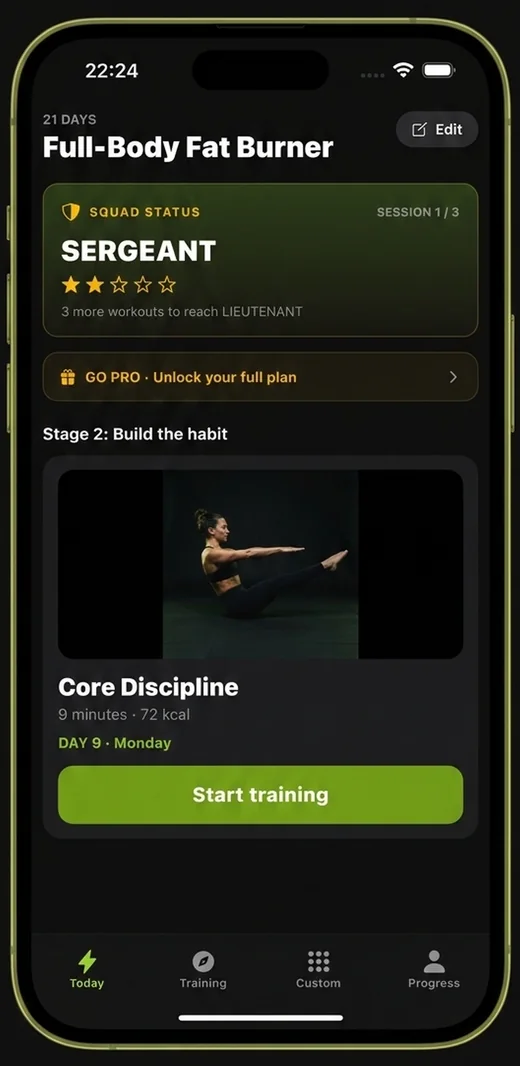
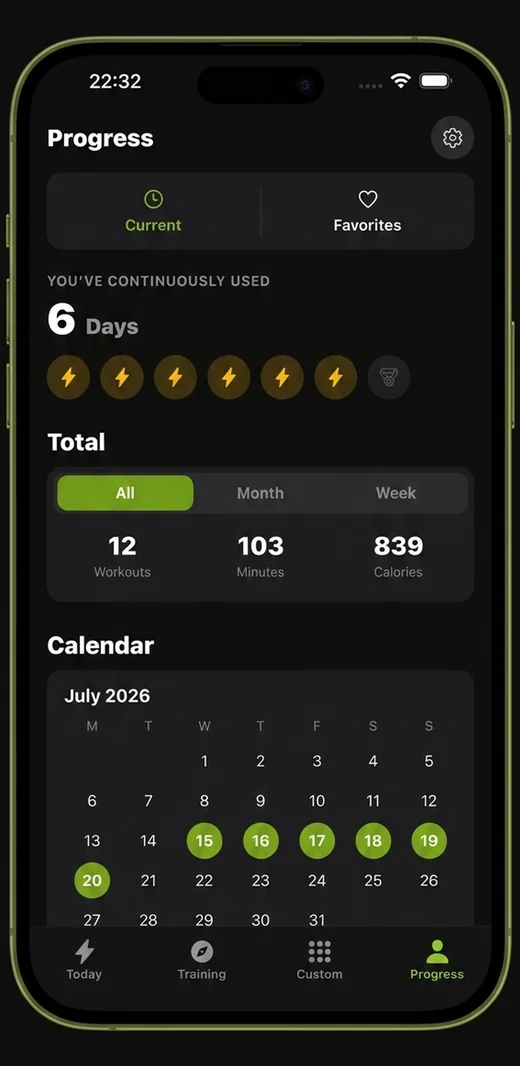
Everything on this site, built into a pocket coach. Military Calisthenics Coach turns the standards into a daily session you can run in a barracks, a garage or a hotel room — timed, tracked and scaled to you.
- A 21-day program that adapts to your level
- Guided timed sessions — no counting, no guessing
- Ranks, streaks and progress you can actually see


Effective training requires managing calisthenics rest days with the same precision applied to your actual work sets. While high-frequency training is a hallmark of military-style conditioning, failing to schedule adequate recovery leads to degraded performance on standards-based drills like the army combat fitness test. If you treat every day as a maximum-effort session, you will quickly encounter stalled reps, nagging joint inflammation, and sleep disruption. This is not about doing less; it is about doing enough to trigger adaptation while providing your central nervous system and connective tissues the time required to repair.
Why Bodyweight Training Tolerates More Frequency
Unlike training with heavy barbells, which places immense localized load on specific muscle groups, bodyweight movements often involve more natural movement patterns that distribute force across the kinetic chain. When you follow the 8-week military calisthenics workout plan, you are frequently engaging in submaximal effort. You are not pushing to failure on every set. This is a crucial distinction. In the military, recruits often perform high-volume PT daily, but these sessions are built on the principle of distributed fatigue. A session of moderate-intensity push-ups followed by air squats creates a different metabolic demand than a 1RM back squat. You can train more often because the absolute load is capped by your own body mass.
The Frequency Standard
For most trainees, a 4-day-on, 2-day-off or a 3-day-on, 1-day-off cadence is the gold standard for long-term consistency. If you are a beginner, do not attempt a six-day split. Your connective tissue—tendons and ligaments—remodels much slower than your muscle fibers. You might feel ready to train, but your elbows and shoulders will eventually send a warning if you skip your rest days. When planning your week, use this framework to balance intensity and recovery:
| Training Status | Training Frequency | Rest Days per Week |
|---|---|---|
| Beginner | 3 Days On / 4 Days Off | 4 Days |
| Intermediate | 4 Days On / 3 Days Off | 3 Days |
| Advanced / Test Prep | 5 Days On / 2 Days Off | 2 Days |
Identifying Under-Recovery
If you are training hard, you need to track your metrics. If your numbers are dropping, you are likely failing to recover. The most common sign of inadequate calisthenics recovery is a sudden decrease in repetition capacity. If you could hit 15 strict pull-ups last week but struggle to complete 10 today, do not force the extra reps. Your central nervous system is likely fatigued.
The Recovery Checklist
- Repression Baseline: Track your total volume in a logbook. If total reps drop by 20% or more across two consecutive sessions, trigger an immediate rest day.
- Joint Integrity: Use the “two-second rule.” If you feel localized sharp pain in your joints—specifically elbows or shoulders—during movement, back off immediately. This is not muscle soreness; it is an injury warning.
- Sleep Quality: Persistent restlessness or a high resting heart rate upon waking indicates your body is stuck in a sympathetic (fight-or-flight) state and is not recovering properly.
Implementing Active Recovery
Active recovery does not mean “do another workout.” It means light activity that promotes blood flow to the muscles without adding mechanical stress. On your off days, incorporate mobility work or low-intensity aerobic conditioning. This is the perfect time to focus on what military calisthenics for women and men prioritize: range of motion and functional capacity. You might walk, swim, or spend 15 minutes on a dedicated calisthenics warm up routine to grease the joints without straining the muscle fibers. The goal is to move enough to flush metabolic byproducts out of the tissue without causing further damage.
Scaling for Your Current Capacity
If you find yourself perpetually exhausted, your intensity is likely too high for your current work capacity. Scaling is a tool, not a weakness. If you are struggling with standard movements, utilize regressions such as the push up progression or move to a less demanding variation of a pull up bar workout. Scaling allows you to maintain the training frequency required to build endurance while keeping the intensity within a recoverable range. Remember, the goal is to improve your performance on the military fitness test standards, not to destroy your body in a single session.
Frequently asked questions
How many rest days should I take per week?
Most beginners should take at least three to four rest days per week to allow connective tissues to adapt. As your work capacity increases through consistent training, you can gradually reduce this to two rest days, provided your recovery metrics remain stable.
Can I do active recovery on my rest days?
Yes, light movement such as walking, light cycling, or dedicated mobility work is encouraged on rest days. Avoid any high-intensity or high-impact training that adds additional mechanical stress to the muscles and joints you worked during your training sessions.
What are the signs I need an extra rest day?
Key signs include a noticeable drop in repetition performance, localized joint pain that lingers after your warm-up, and persistent sleep disturbances. If you experience these symptoms, take an unplanned rest day to allow your central nervous system to reset.
How does diet influence my recovery speed?
Recovery is physically demanding and requires adequate fuel. Focus on consistent protein intake to support muscle repair and sufficient carbohydrates to replenish glycogen stores used during your training. Poor nutrition will significantly increase the number of days you need for full recovery between sessions.