Mastering the Gymnastic Rings Workout for Military Fitness
A complete guide to the gymnastic rings workout. Learn why calisthenics rings build functional strength, stability, and control for any fitness level.

Now on iPhone
Military Calisthenics Coach
Take the drill with you
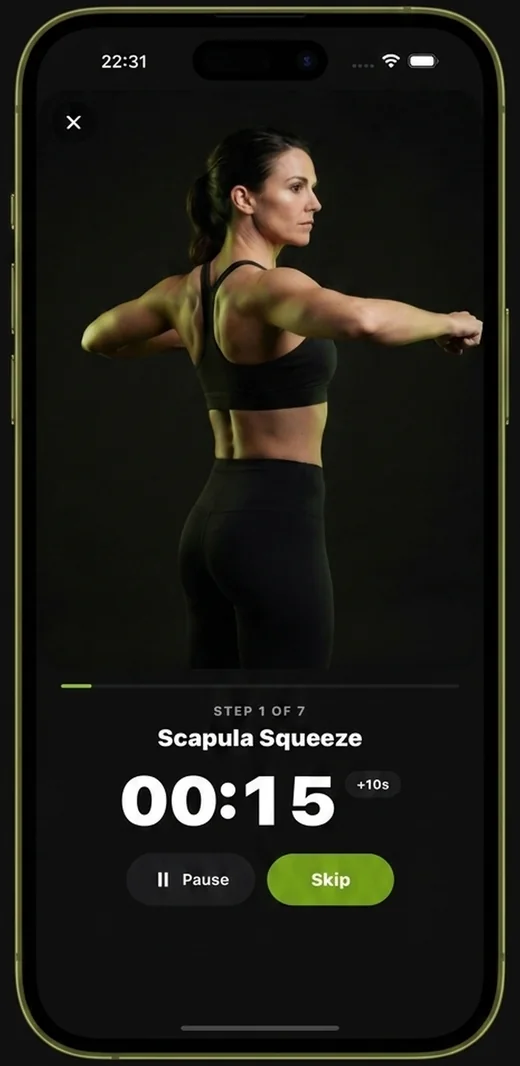
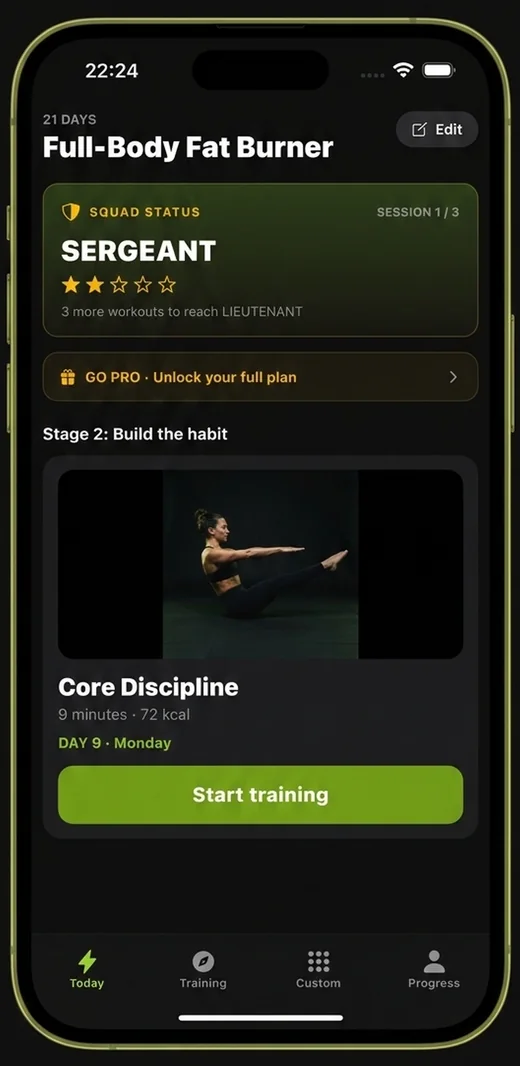
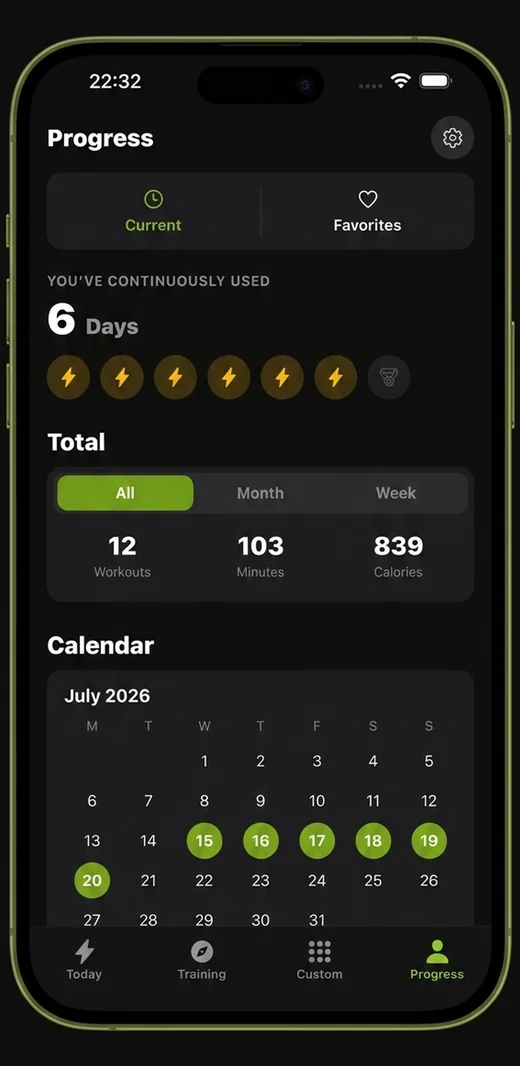
Everything on this site, built into a pocket coach. Military Calisthenics Coach turns the standards into a daily session you can run in a barracks, a garage or a hotel room — timed, tracked and scaled to you.
- A 21-day program that adapts to your level
- Guided timed sessions — no counting, no guessing
- Ranks, streaks and progress you can actually see

A gymnastic rings workout forces the body to stabilize in three dimensions, making it significantly more demanding than fixed-bar training. Unlike static bars, rings move freely, requiring your deep stabilizer muscles to constantly fire to keep the equipment from shaking. This is the cornerstone of what what military calisthenics is; it prioritizes total body control over isolated muscle growth. Whether you are prepping for the army combat fitness test or training calisthenics at home, rings expose every weakness in your overhead, pulling, and pushing strength. If you want to build a chassis that handles unpredictable loads, you must master the instability of the rings.
Why Rings Outperform Fixed Bars
The primary difference is the requirement for ‘ring turnout.’ On a pull-up bar, your wrists are locked in a fixed position. On rings, you can rotate your hands, which allows you to clear your shoulders during dips and pull-ups. This natural movement pattern is safer for long-term joint health. Furthermore, the instability of the rings requires intense neural activation. When you push, you must squeeze the rings together; when you pull, you must control the outward drift. This forces you to engage your lats, pectorals, and core more aggressively than you would on a stable surface.
Setting Up Your Equipment
To begin, ensure your calisthenics equipment is hung securely. For most movements, you need an anchor point at least eight feet high. If you are training indoors, use a solid ceiling joist or a door-mounted pull-up bar. If you are at a calisthenics park, use the underside of a high bar. Ensure your straps are of equal length; even a half-inch discrepancy will make your push-ups feel uneven. For beginners, start with the rings at chest height for rows and push-ups, then adjust them higher for dips and pull-ups.
The Core Movement Standards
Before jumping into a high-intensity session, you must establish a baseline. If you lack the base strength, follow the 8-week military calisthenics workout plan to build your foundation. The following movements are the pillars of ring training:
- Ring Rows: Maintain a straight line from heels to head. Pull your hands toward your ribcage, not your shoulders. Retract your scapula.
- Ring Push-ups: Keep the rings tight to your body. As you press up, rotate your palms to face each other at the top. Squeeze your glutes to maintain a rigid plank.
- Ring Dips: The most common failure point is depth. Lower until your shoulders are below your elbows. Keep the rings tucked close to your torso.
- Ring Chin-ups: Begin from a dead hang. Pull until your chest hits the rings. Focus on pulling the elbows down, not just lifting the chin.
The 4-Week Progression Ladder
Use this volume progression to adapt to the inherent instability of the rings. Perform these sessions two to three times per week.
| Week | Ring Rows (Sets x Reps) | Ring Push-ups (Sets x Reps) | Ring Dips (Sets x Reps) | Rest Interval |
|---|---|---|---|---|
| 1 | 3 x 8 | 3 x 6 | 3 x 3 | 120s |
| 2 | 3 x 10 | 3 x 8 | 3 x 5 | 90s |
| 3 | 4 x 8 | 4 x 6 | 4 x 5 | 90s |
| 4 | 4 x 10 | 4 x 8 | 4 x 6 | 60s |
Executing the False Grip
The false grip is the technique used to secure your wrist over the top of the ring, effectively shortening the lever of the arm. This is a non-negotiable skill for advanced moves like the muscle-up. To practice this, place the fleshy part of your palm, just below the thumb, over the ring. Wrap your fingers around the top. It will feel uncomfortable at first, but it creates a rigid connection that eliminates the slack usually found at the start of a pull. If you struggle with grip strength, refer to the dead-hang to strict pull-up progression to build the forearm capacity required.
Integrating Rings into Your Routine
Do not treat this equipment as a separate entity from your broader fitness program. If you are working toward the navy seal workout or general conditioning, integrate ring work at the start of your training session while your central nervous system is fresh. The rings are excellent for upper body calisthenics, but they can be taxing on the rotator cuff if volume is increased too quickly. Keep your repetitions strict. If your form breaks—if your hips sag during a row or your rings drift apart during a push-up—the set is over.
Frequently asked questions
How many days a week should I train on rings?
Begin with two to three sessions per week to allow for adequate recovery. Because ring training requires high levels of stabilizer recruitment, your joints and connective tissues will need more time to adapt than they would with traditional weight training.
Can I use gymnastic rings for core training?
Yes, rings are exceptional for core development. Exercises like the ‘L-sit’ or ‘ring plank’ require intense anti-extension and rotational stability. Incorporating these into your calisthenics core workout will build functional midsection strength faster than standard floor crunches.
How long should the straps be for a standard workout?
For most users, straps should be adjustable between 2 and 6 feet. You want enough length to set them at chin-height for rows and high enough for dips or pull-ups. Always check that the locking buckles are fully engaged before applying your body weight.
What is the biggest mistake beginners make on rings?
The most common error is failing to maintain ‘ring turnout’ or ‘ring tension.’ Beginners often let the rings drift apart, which places unnecessary strain on the shoulders and negates the core-strengthening benefits of the equipment. Keep the rings tight to your body throughout every repetition.