Mastering the Human Flag Progression: A Tactical Approach
Master the human flag progression with our no-nonsense guide. Learn the mechanics, grip, and specific training drills to hold your body horizontally.

Now on iPhone
Military Calisthenics Coach
Take the drill with you
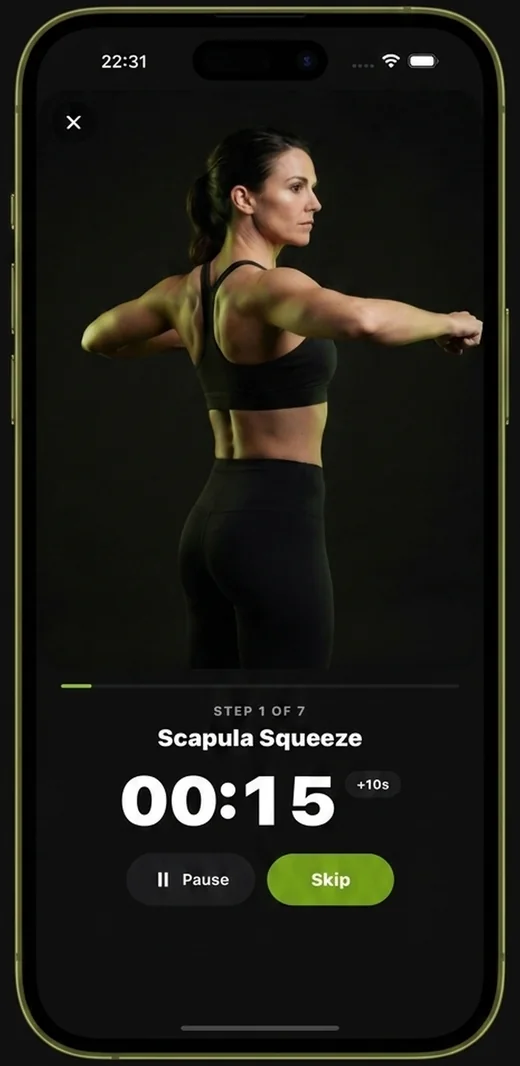
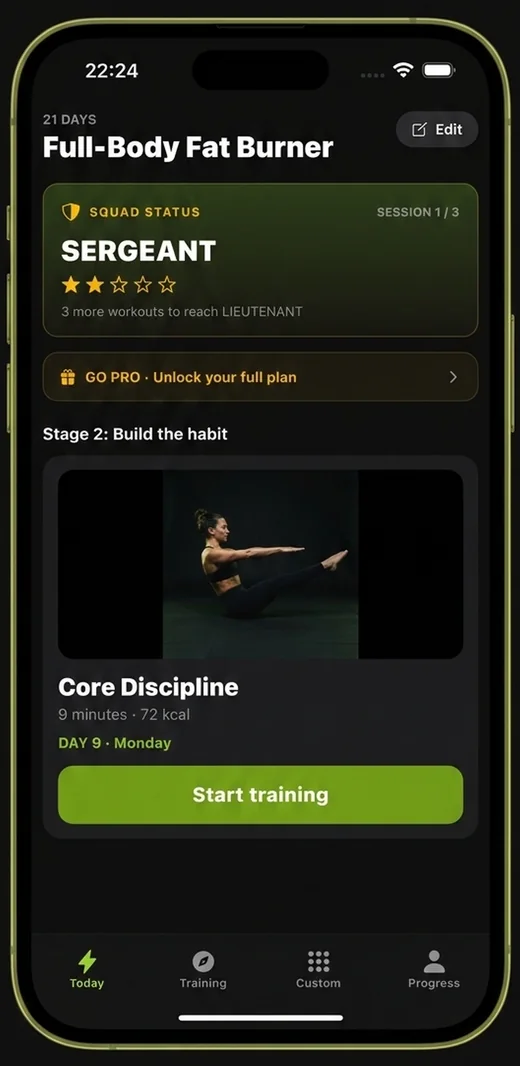
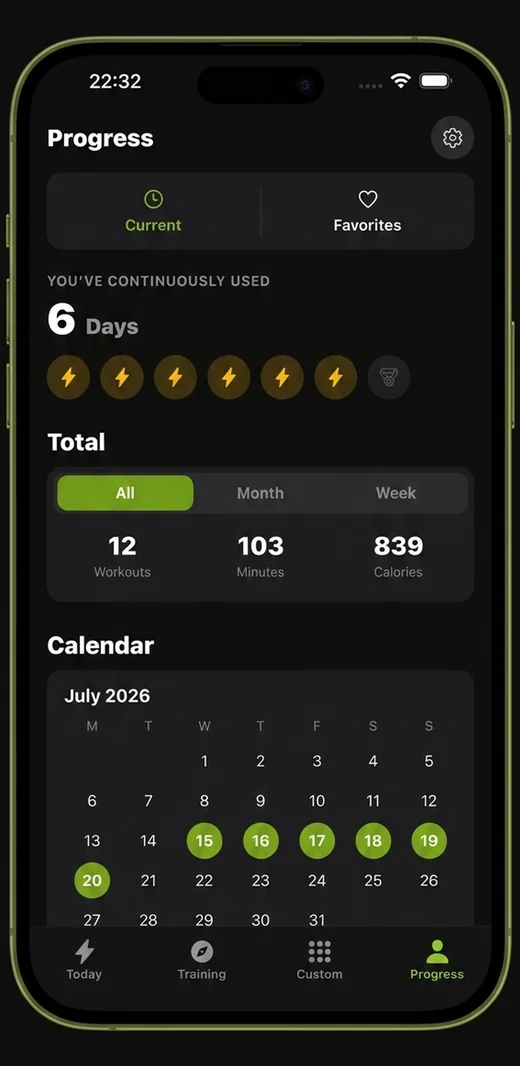
Everything on this site, built into a pocket coach. Military Calisthenics Coach turns the standards into a daily session you can run in a barracks, a garage or a hotel room — timed, tracked and scaled to you.
- A 21-day program that adapts to your level
- Guided timed sessions — no counting, no guessing
- Ranks, streaks and progress you can actually see

The human flag progression is a rigorous test of static strength, requiring precise coordination between your lats, obliques, and shoulder stabilizers. Unlike standard gym training, this movement demands a rigid, tension-filled torso capable of bridging the gap between your grip point and your feet. Much like the army prt exercises designed to build functional core stability, the human flag requires you to master isolated isometric holds before attempting the full horizontal extension. If you treat this like a skill-based drill rather than a random feat, you will achieve the standard far faster than by simply flailing at a pole.
Establishing the Foundation: Grip and Physics
Before you hang, you must understand the mechanics. One hand acts as the top anchor (pulling), while the other acts as the bottom base (pushing). If you place your hands too close together, you lack the leverage to hold your weight horizontally. If you place them too far, the shear force on your shoulders becomes unmanageable.
- Top Hand: Use a pronated grip (palms facing away). Pull downward, keeping the arm locked or near-locked.
- Bottom Hand: Use a supinated grip (palms facing up) or a suicide grip, depending on the thickness of the bar or pole. Push outward, creating a solid frame against the support.
- The Pole vs. The Bar: A vertical pole is standard for the flag because it allows for an optimal hand-to-pole distance. A pull-up bar is acceptable, but you must ensure it is firmly mounted. If your bar slips during a failed rep, you risk injury. Always check your calisthenics equipment for structural integrity before attempting static holds.
The Core Pillars of Strength
Successful flag execution relies on three specific muscular zones: the lats for the pulling arm, the deltoids for the pushing arm, and the obliques for the structural rigidity of the torso. Beginners often make the mistake of attempting the flag without first building a solid foundation in calisthenics core workout routines or mastering the l sit progression.
Essential Drills for Initial Adaptation
- Vertical Flag Holds: Start with your body as vertical as possible, holding the bar/pole. The goal is to get used to the push-pull tension without the leverage penalty of a horizontal body.
- Tuck Flag: With knees pulled into your chest, attempt to kick your feet toward the horizontal position. The closer your knees are to your body, the less leverage you have to fight.
- One-Leg Tuck: Extend one leg while keeping the other tucked. This creates an uneven load that forces your obliques to fire to keep you level.
| Progression Level | Goal | Frequency |
|---|---|---|
| Vertical Hold | 3 sets of 20 seconds | 3x per week |
| Tuck Flag Hold | 3 sets of 15 seconds | 3x per week |
| Straddle Flag | 3 sets of 10 seconds | 2x per week |
| Full Human Flag | 1 set to maximum hold | 1x per week |
Safety and Failure Protocols
In any military-style training, you must know how to fail safely. If you lose your grip or tension, your body will naturally gravitate toward the ground. Do not fight to stay attached once your lats have fatigued; that is how shoulder impingements occur. Practice letting go and landing on your feet. If you are training at a calisthenics park, ensure the ground is clear of debris.
If you find yourself plateauing, return to the basics. Just as you would review your pull-up progression when you cannot reach your rep goals, you must regress the flag intensity if your form breaks. A bent-armed flag is not a flag; it is a sloppy pull-up. Keep your elbows locked and your body straight.
Integrating Flag Training
Do not attempt to perform the flag on days when you are already exhausted from a heavy calisthenics full body workout. Static strength training is neurologically taxing. Integrate your flag drills at the start of your session after a standard calisthenics warm up routine. Treat these holds as “skill practice” rather than high-repetition volume work. If you are also following the 8-week military calisthenics workout plan, perform your flag holds on the days scheduled for core or recovery to ensure your central nervous system is fresh.
Frequently asked questions
How many times a week should I practice the human flag?
Practice the human flag progression 2 to 3 times per week. Because these holds place significant stress on the shoulders and tendons, you must allow for at least 48 hours of recovery between sessions to avoid overtraining.
How long does it take to learn the human flag?
For an average trainee with a solid foundation in pull-ups and core strength, it typically takes 3 to 6 months of consistent, focused practice. This timeline varies based on your current body weight, lever length, and consistency with calisthenics at home drills.
Can I learn the flag without a vertical pole?
Yes, you can learn it on a vertical corner of a wall or a sturdy, fixed pull-up bar. However, a vertical pole provides the most ergonomic grip setup and is considered the gold standard for progressing from the tuck to the full horizontal hold.
What is the most common reason people fail at the human flag?
Most people fail because they lack the necessary oblique strength or the ability to maintain “push-pull” tension between the arms. Often, beginners also try to rush into the full version without first mastering the tuck and straddle variations, which leads to poor form and increased injury risk.