A Realistic Planche Progression for Bodyweight Strength
Master the planche progression with this step-by-step guide. Learn the mechanics, scaling, and essential drills to build elite-level straight-arm strength.

Now on iPhone
Military Calisthenics Coach
Take the drill with you
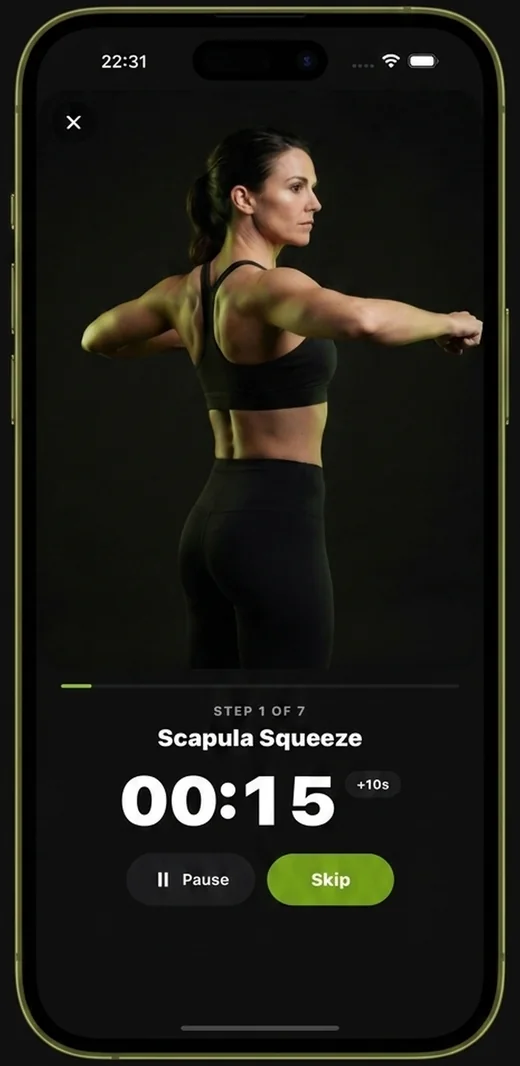
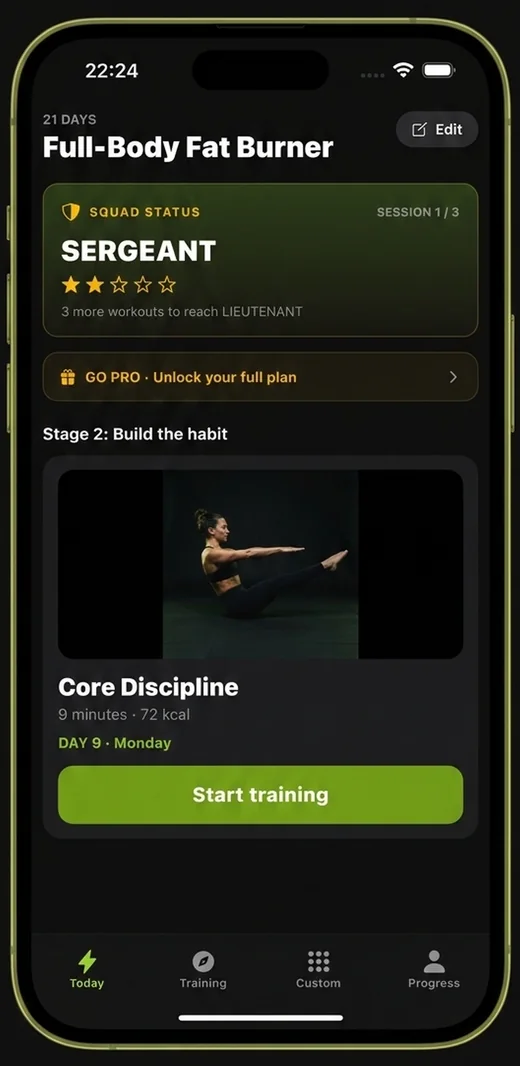
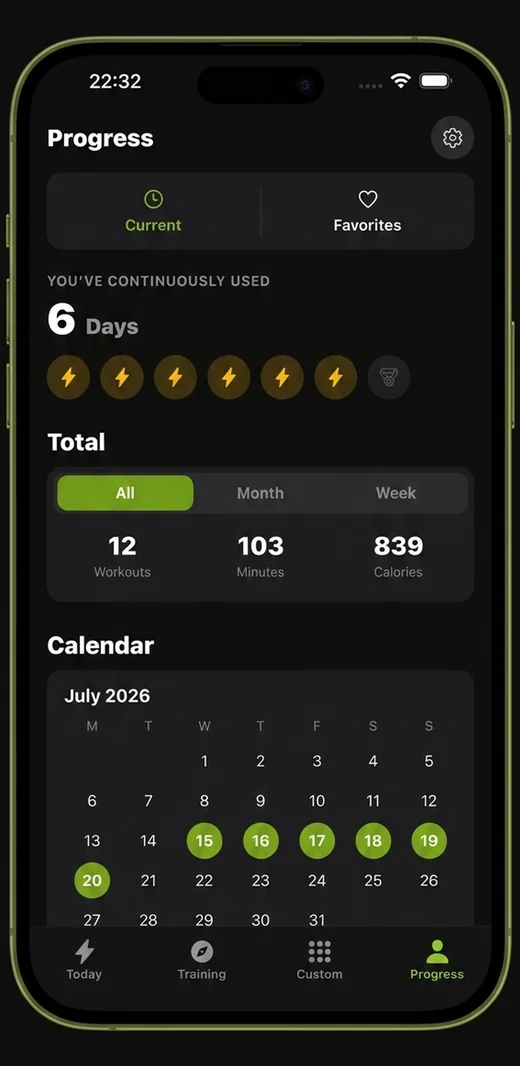
Everything on this site, built into a pocket coach. Military Calisthenics Coach turns the standards into a daily session you can run in a barracks, a garage or a hotel room — timed, tracked and scaled to you.
- A 21-day program that adapts to your level
- Guided timed sessions — no counting, no guessing
- Ranks, streaks and progress you can actually see

The planche progression is arguably the most demanding skill in bodyweight training, requiring exceptional tendon strength and structural alignment. To achieve a full planche, you must move beyond basic strength and build the connective tissue resilience required to support your entire body weight with locked-out elbows. This is a multi-year project for most people, demanding the same level of discipline found in an army combat fitness test. If you want to understand the foundational movements before diving into advanced levers, read our guide on what military calisthenics is to ground your training in basic physical culture.
Establishing the Foundation
Before you attempt a single tuck planche, you must prepare your wrists and scapula. In the military, we emphasize injury prevention because an injured trainee is a non-asset. Your wrists will bear significant weight at unusual angles, and your scapula must be capable of protracted stabilization.
Wrist and Scapular Prep
Perform these drills daily to ensure your joints can handle the loading protocol:
- Wrist Rocks: Get into a quadruped position. Gently rock forward and backward, then side-to-side, keeping your palms flat and fingers spread. Perform 3 sets of 30 seconds.
- Scapular Push-Ups: Maintain a strict plank position. Without bending your elbows, retract your shoulder blades together and then drive them apart, rounding your upper back. This teaches you the ‘protraction’ required for the planche. Perform 4 sets of 15 repetitions.
The Planche Progression Ladder
Progressing through the planche is non-linear. You should spend several months at each stage. Do not rush to the next level until you can hold the current position with perfect form for at least 15 seconds. If you find these movements too difficult initially, focus on your foundational pushing strength by following our push up progression.
| Level | Movement | Focus Point |
|---|---|---|
| 1 | Planche Lean | Lean forward until shoulders are past hands |
| 2 | Frog Stand | Knees on elbows, feet off the ground |
| 3 | Tuck Planche | Knees tucked to chest, back rounded |
| 4 | Advanced Tuck | Knees at 90 degrees, back flat |
| 5 | Straddle Planche | Legs wide to reduce lever length |
| 6 | Full Planche | Straight body, feet together |
Planche Leans and Pseudo-Planche Push-Ups
The planche lean is the most underrated exercise in this progression. It bridges the gap between basic push-ups and the full hold. To execute, set up in a push-up position, turn your hands outward (or backward if your wrists allow), and lean your body forward until your shoulders are significantly ahead of your wrists. Keep your arms locked and your back rounded. For the pseudo-planche push-up, perform the same lean, then lower yourself until your chest touches the floor, maintaining that lean throughout the entire range of motion.
Use these for volume:
- Planche Leans: 5 sets of 20 seconds. Focus on pushing the floor away.
- Pseudo-Planche Push-Ups: 4 sets of 8-12 repetitions. If these feel too easy, lean further forward.
If you find your upper body strength lacking, supplement this with upper body calisthenics to build the necessary density in your chest, shoulders, and triceps.
Managing Expectations and Training Volume
Most trainees fail because they treat this like a sprint rather than a career. Like preparing for an air force pt test, consistency outweighs intensity. Do not attempt planche work every day. Your tendons require longer recovery periods than your muscles. Limit dedicated planche training to three sessions per week. On non-planche days, prioritize calisthenics mobility exercises to ensure your range of motion remains optimal.
If your sessions feel stale, integrate the free calisthenics workout plan to maintain your overall cardiovascular and muscular endurance while keeping your specialized skill work isolated to the beginning of the workout when you are fresh.
Scaling for All Levels
Whether you are a master of bodyweight or just starting your journey, the principles of progression remain identical. If you cannot hold a tuck planche, you must regress to the frog stand. If you are struggling with the balance, use a resistance band around your hips attached to a pull-up bar for a spotter-assisted tuck planche. Always prioritize form over duration. A 5-second hold with locked elbows and a rounded upper back is significantly more valuable than a 20-second hold with bent elbows and a sagging lower back.
Keep training
Build on this session with these guides:
- What military calisthenics is
- The 8-week military calisthenics workout plan
- The dead-hang to strict pull-up progression
- The 20-minute no-gear barracks workout
Frequently asked questions
How long does it take to learn a planche?
For an average trainee with no prior gymnastics background, a planche can take anywhere from two to five years of consistent, specialized training. It is a high-level skill that demands significant adaptation of your connective tissues, which recover much slower than muscle tissue.
Can I train planche every day?
No, training the planche daily will lead to tendonitis and potential injury. Because this movement places immense stress on the distal bicep tendon and the wrists, you should limit these sessions to three times per week with at least 48 hours of recovery between bouts.
What is the most important cue for a planche?
The most critical cue is ‘scapular protraction,’ which means pushing your shoulder blades as far apart as possible. You must keep your arms perfectly locked; if your elbows bend even slightly, you are performing a different exercise that fails to build the necessary straight-arm strength.
How many planche leans should I do per session?
Aim for 5 sets of 15 to 20 seconds for planche leans, ensuring your shoulders remain significantly ahead of your hands for the duration of the hold. If you can maintain this without your elbows unlocking or your hips sagging, you are ready to begin experimenting with the tuck planche progression.