Does Calisthenics Build Muscle? A No-Nonsense Guide
Does calisthenics build muscle? Learn the mechanics of bodyweight hypertrophy, progressive overload, and how to program for measurable strength results.

Military Calisthenics Coach
Take the drill with you
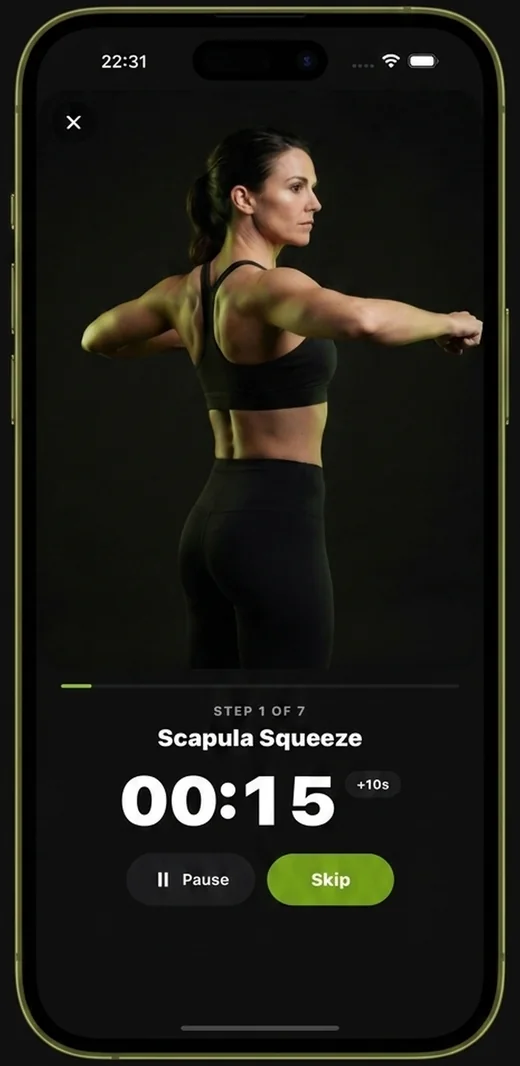
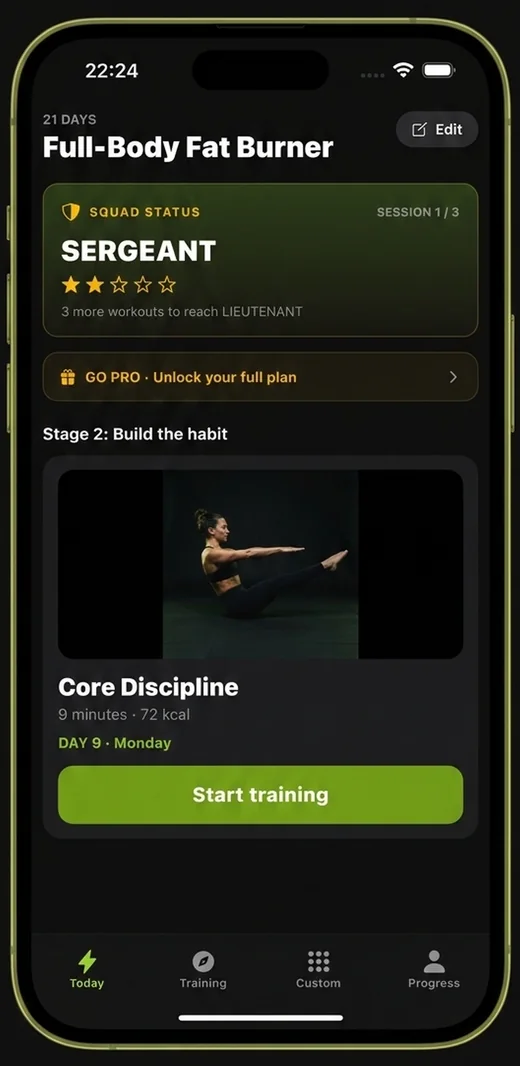
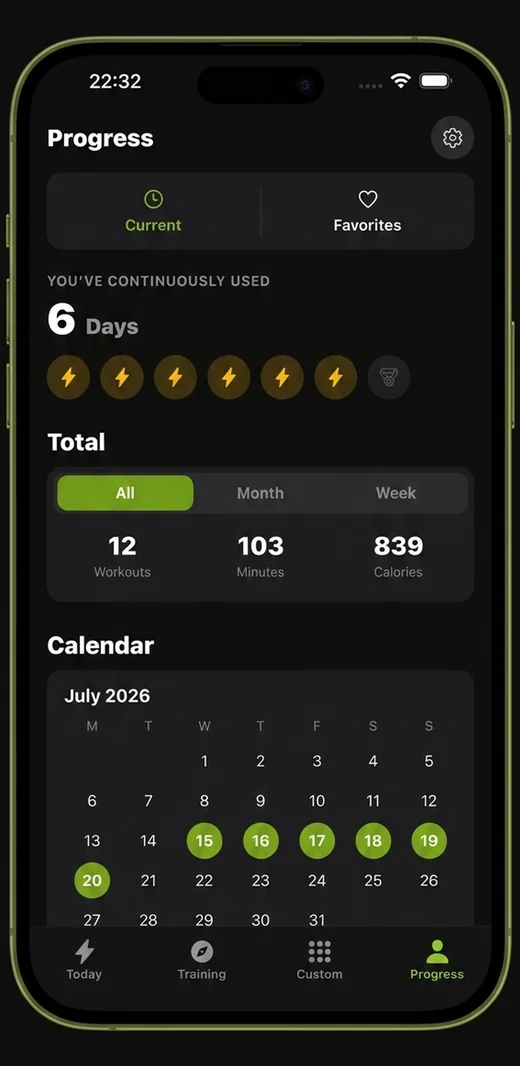
Everything on this site, built into a pocket coach. Military Calisthenics Coach turns the standards into a daily session you can run in a barracks, a garage or a hotel room — timed, tracked and scaled to you.
- A 21-day program that adapts to your level
- Guided timed sessions — no counting, no guessing
- Ranks, streaks and progress you can actually see

The short answer is yes: calisthenics builds muscle effectively because your tissues respond to mechanical tension, regardless of whether that tension originates from a barbell or your own body weight. To understand what military calisthenics is and how it applies to hypertrophy, you must move past the myth that bodyweight training is purely for endurance. Muscle growth occurs when you provide a stimulus that challenges your current capacity and forces the body to adapt through protein synthesis. In the military, recruits build significant mass without a single dumbbell by utilizing high-volume, high-frequency, and high-intensity bodyweight movements. If you are struggling to build size, the issue is rarely the method; it is almost always a failure to apply the principles of progressive overload.
The Mechanics of Bodyweight Hypertrophy
Hypertrophy requires three things: mechanical tension, metabolic stress, and muscle damage. When you perform a push-up or a pull-up, you create mechanical tension by forcing your fibers to produce force against a load. Because you cannot add plates to your body, you must manipulate variables to increase intensity. This is the cornerstone of calisthenics for beginners. If a standard push-up becomes easy, you increase tension not by adding reps, but by slowing the tempo to 3 seconds down and 1 second up. You can also manipulate leverage, such as moving from a standard push-up to a diamond push-up or an archer push-up to shift the load onto a smaller cross-section of muscle fibers. Consistency is the primary factor in physical adaptation; follow the 8-week military calisthenics workout plan to ensure you are hitting the necessary volume thresholds.
Practical Cues for Hypertrophy
- Tempo: Count 3 seconds on the eccentric (lowering) phase. This increases time under tension, which is a major driver of muscle growth.
- Range of Motion: Full extension and full contraction are mandatory. In the military, a rep that doesn’t reach the standard is a rep that doesn’t count. If you fail to lock out your elbows, you are cheating yourself out of growth.
- Volume Tracking: Keep a notebook. If you hit 10 reps today, you must hit 11 next week, or reduce rest periods by 5 seconds to maintain density.
Scaling for Growth: The Progressive Overload Principle
Progression is binary in a military context: you either meet the standard, or you improve until you do. When you start calisthenics at home, you might be unable to perform a strict pull-up. This does not mean you cannot build back muscle; it means you need a regression that mimics the movement pattern. Start with horizontal rows or negatives. Once you master the standard, you move up the ladder. Strength and size are inextricably linked in the early phases of training. As you get stronger at basic movements, you naturally move more weight (your body) over a greater distance, which increases the total work volume. Refer to the dead-hang to strict pull-up progression to ensure you are moving from easier variants to harder ones, which is the only way to sustain muscle growth long-term.
Progression Ladder for Chest and Back
| Level | Exercise | Focus |
|---|---|---|
| 1 | Incline Push-up | Form foundation |
| 2 | Standard Push-up | Volume accumulation |
| 3 | Diamond Push-up | Triceps and inner chest |
| 4 | Pseudo Planche Push-up | Front delt and pec intensity |
| 5 | Archer Push-up | Unilateral loading |
The Role of Intensity and Recovery
Many trainees ask, “Does calisthenics build muscle as fast as weights?” The answer depends on your ability to reach muscular failure. In calisthenics vs weights, the main difference is that bodyweight training requires more creativity to reach failure. If you are doing 50 reps of push-ups and still feel fine, you are training endurance, not hypertrophy. To build muscle, you must push your sets to within 1-2 reps of technical failure—the point where your form begins to degrade despite your best efforts. For those limited by space, the 20-minute no-gear barracks workout provides the high-intensity stimulus needed to trigger growth without requiring a massive time investment. Always prioritize recovery. Muscles grow while you sleep, not while you train. If you are sore for days, adjust your frequency to ensure you are recovered for your next session.
Nutrition: The Fuel for Tissue Synthesis
Training provides the signal; nutrition provides the building blocks. You cannot build muscle out of thin air. Even if you are utilizing military calisthenics for women or any other gender-inclusive program, the physiological requirement for protein remains constant. Aim for approximately 1.6 to 2.2 grams of protein per kilogram of body weight. If you are eating in a significant caloric deficit, your body will prioritize survival over muscle tissue expansion. While calisthenics can aid in fat loss, do not expect maximum hypertrophy if you are chronically under-eating. Keep your protein intake high and maintain a slight caloric surplus if your primary goal is to add mass to your frame.
Training Efficiency and Programming
Training like the military means focusing on compound movements that recruit the maximum number of muscle fibers simultaneously. You do not need twenty different exercises to build a physique. You need a vertical push (handstand push-ups or overhead variants), a horizontal push (push-ups), a vertical pull (pull-ups), and a horizontal pull (rows). Supplement these with squats and lunges. By focusing on these five patterns, you cover the entire body. Follow the free calisthenics workout plan to structure your weekly routine. Focus on 3-4 sets of 8-12 reps per movement. If you can consistently do more than 15, switch to a harder variation of the movement. If you struggle to hit 5, perform more sets of fewer reps to accumulate volume without sacrificing form.
Frequently asked questions
How many days a week should I train to build muscle?
Most trainees will see the best results training 3 to 5 days per week. This frequency allows for enough volume to stimulate growth while providing adequate rest days for muscle fibers to repair and adapt to the mechanical stress.
Can I build big legs with just bodyweight exercises?
Yes, but you must progress beyond basic air squats to movements like Bulgarian split squats, lunges, and pistol squats. These unilateral exercises provide the intense mechanical tension necessary to challenge the large muscle groups in the legs.
How long does it take to see muscle growth?
With consistent training and a proper diet, you can expect to see initial strength gains within 4-6 weeks, with visible hypertrophy usually becoming apparent to others after 12-16 weeks. Focus on measuring your performance in the gym rather than staring at the mirror daily.
What should I do if I plateau and stop seeing progress?
If your progress stalls, look at your mechanical intensity and recovery first. Increase the difficulty of your exercise variations, improve your tempo, or ensure you are hitting your protein intake targets before assuming you need more volume.