A Results-Driven Calisthenics Workout for Women
Build functional strength and athletic performance with this no-nonsense calisthenics workout for women. Master bodyweight training with measurable standards.

Military Calisthenics Coach
Take the drill with you
Everything on this site, built into a pocket coach. Military Calisthenics Coach turns the standards into a daily session you can run in a barracks, a garage or a hotel room — timed, tracked and scaled to you.
- A 21-day program that adapts to your level
- Guided timed sessions — no counting, no guessing
- Ranks, streaks and progress you can actually see

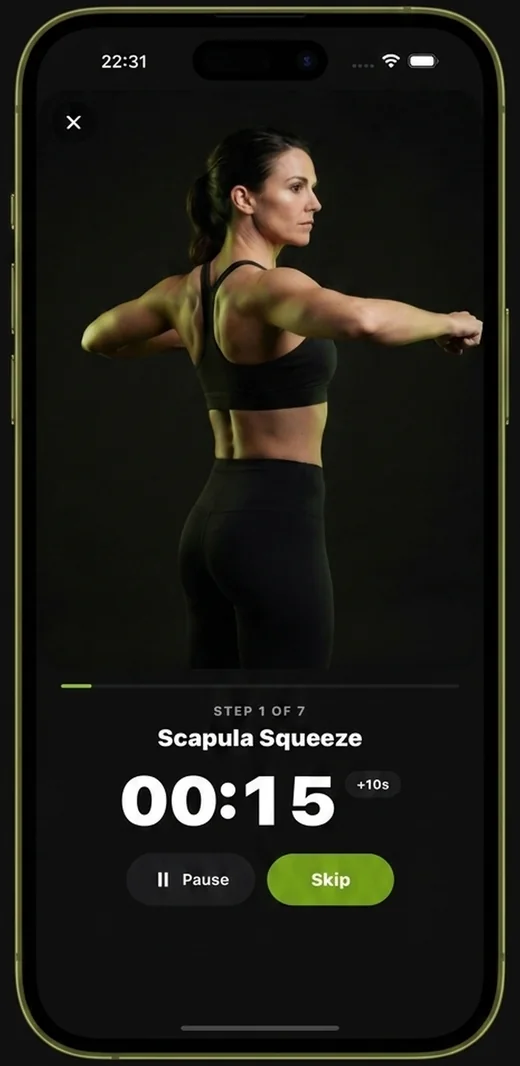
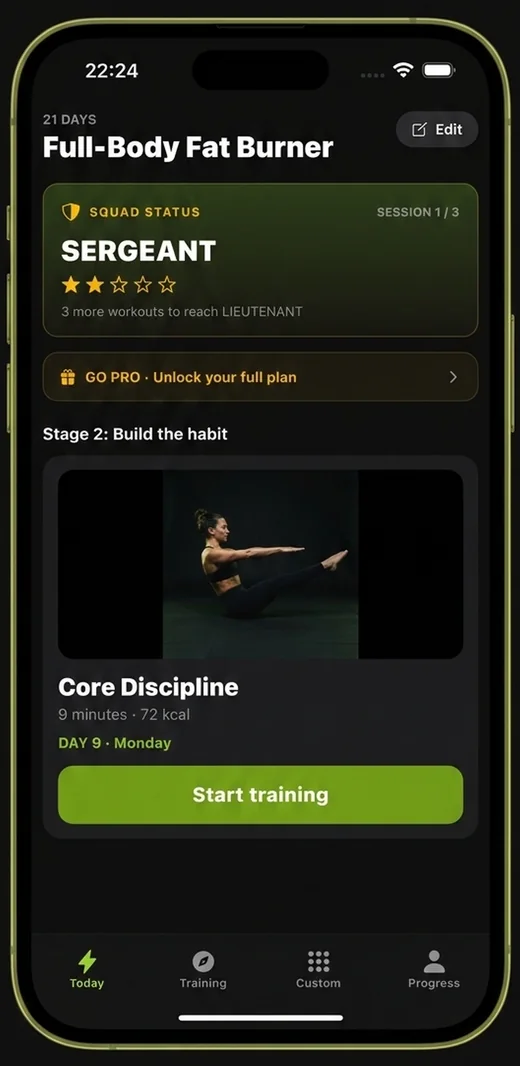
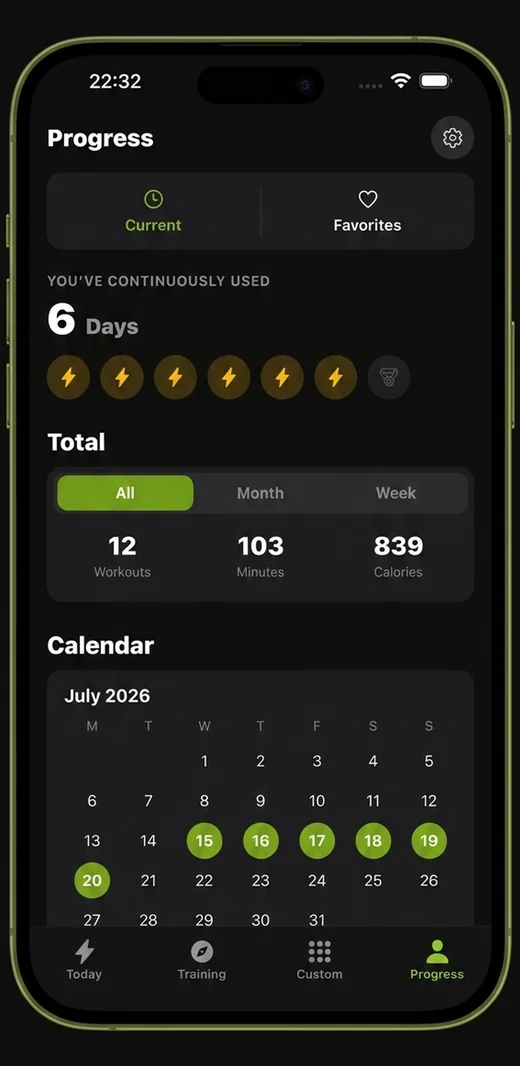
A effective calisthenics workout for women prioritizes functional movement patterns, measurable progress, and consistent training frequency over complex equipment. Many beginners start with a misconception that bodyweight training requires a baseline of upper-body strength that they do not possess; in reality, calisthenics is a system of regression and progression. By scaling movements to your current capability, you provide your muscles with the necessary stimulus to adapt, grow, and build genuine power. Whether you are training at home or at a local calisthenics park, the goal remains the same: execute the movement with perfect form, track your volume, and beat your previous numbers. Understanding what military calisthenics is provides a useful foundation for this approach, as it emphasizes the utility of simple movements like push-ups, squats, and pull-ups to build total-body resilience.
Establishing Your Baseline Standards
Before launching into a high-volume routine, you must establish where you stand. In military fitness, we do not guess; we measure. Perform a simple assessment to determine your starting point. Do not worry if your numbers are low; every athlete began with zero.
The Entry-Level Assessment
- Push-ups: Max reps with perfect form (chest to within 2 inches of the floor, full lockout at top).
- Pull-ups: Max dead-hang reps or time spent in a dead-hang position.
- Squats: Max reps in 60 seconds (thighs parallel to the ground).
- Plank: Max hold time (maintaining a flat back, engaged core).
Record these numbers. This serves as your benchmark. If you cannot perform a single strict push-up, utilize a bench or a sturdy piece of furniture to perform incline push-ups. If you lack pull-up strength, refer to the dead-hang to strict pull-up progression to begin building the necessary tendons and back engagement.
Debunking Strength Myths
A common barrier to entry is the fear of “getting too bulky.” In reality, building significant muscle hypertrophy through bodyweight training alone requires extreme volume and a specific nutritional surplus. Most individuals will find that calisthenics tones muscle, increases endurance, and improves body composition significantly. Furthermore, there is a myth that women have a lower ceiling for upper-body development. While the physiological distribution of mass differs, the mechanism for strength adaptation is identical. If you provide a stimulus, your muscles adapt. Do not shy away from a calisthenics chest workout or overhead pressing variations out of fear; consistent training is the only way to achieve real-world physical competence.
The Weekly Training Framework
Consistency is the bedrock of success. For beginners, a three-day-a-week full-body split is optimal, allowing 48 hours for recovery between sessions. This volume ensures you get enough practice to learn the motor patterns while avoiding systemic burnout. If you are looking for a more structured path, you may consider the 8-week military calisthenics workout plan for a systematic approach to your fitness.
| Day | Focus | Intensity | Rest |
|---|---|---|---|
| Monday | Push & Squat | Moderate | 60-90s |
| Wednesday | Pull & Core | Moderate | 60-90s |
| Friday | Full Body | High | 90s |
Daily Execution Cues
- Tempo: Perform every repetition with a 2-second eccentric (lowering) phase. This builds superior control.
- Depth: Every squat must reach parallel. Every push-up must reach the deck.
- Mindset: Treat your training like a drill. Move with intent and precision, not just to complete reps.
Progression Through Scaling
If you find a movement too easy, change the angle or the leverage to increase the intensity. If you find a movement too difficult, regress it. For example, if you are struggling with standard push-ups, follow the push-up progression to maintain quality reps. If your core is a weak point, incorporate calisthenics core workout movements like the hollow body hold, which is a gold-standard exercise for stability. If you feel like your legs need more focus, utilize calisthenics leg workout protocols like Bulgarian split squats to challenge your balance and unilateral strength.
Nutrition and Recovery
While this guide focuses on movement, physical performance is capped by nutrition. Aim for adequate protein intake to support muscle tissue repair. Sleep is your most important recovery tool; lack of rest will stifle your progress regardless of how hard you train. If you are feeling physically drained after a session, prioritize hydration and increase your complex carbohydrate intake. If you need a quick, low-intensity session on your off days, try the 20-minute no-gear barracks workout to keep your heart rate up without adding excessive stress to your central nervous system.
Frequently asked questions
How many push-ups should I aim for as a beginner?
Most beginners should aim for a baseline of 5 to 10 strict, form-perfect push-ups. If you cannot reach this, use the incline method to reach a total of 3 sets of 10 reps, gradually lowering the height of your support surface over several weeks.
How long until I see results from this workout?
With strict adherence to a 3-day-a-week schedule, you will typically notice improved muscular endurance and movement confidence within 4 to 6 weeks. Significant changes in body composition and strength usually become apparent after 12 weeks of consistent, progressive training.
Can I do this workout if I have no experience?
Absolutely, provided you follow the prescribed regressions. You do not need to be fit to start; you only need to be willing to perform the movements at a difficulty level that allows you to maintain perfect form. Never train to failure on your first week; focus on mastering the movement path instead.
What is the most important piece of gear to buy?
While you can perform most movements with no equipment, a high-quality pull-up bar is the best investment for long-term progress. It allows you to perform vertical pulling movements, which are essential for back development and cannot be replicated effectively on the floor. For more specific needs, review our guide to calisthenics equipment.