The Ultimate Calisthenics Workout Chart for Measurable Gains
Master your bodyweight with our printable calisthenics workout chart. Get clear standards, movement patterns, and a proven structure for consistent results.

Military Calisthenics Coach
Take the drill with you
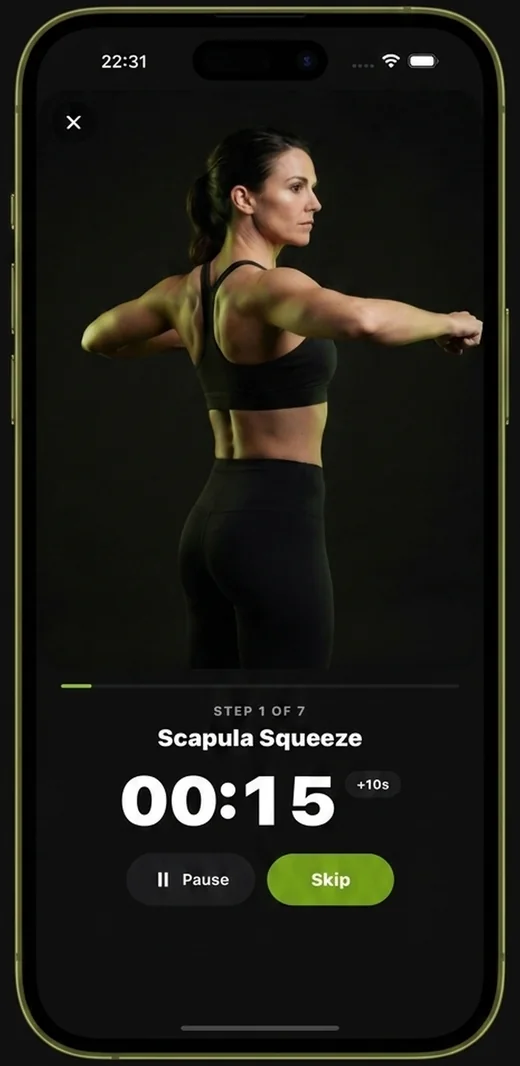
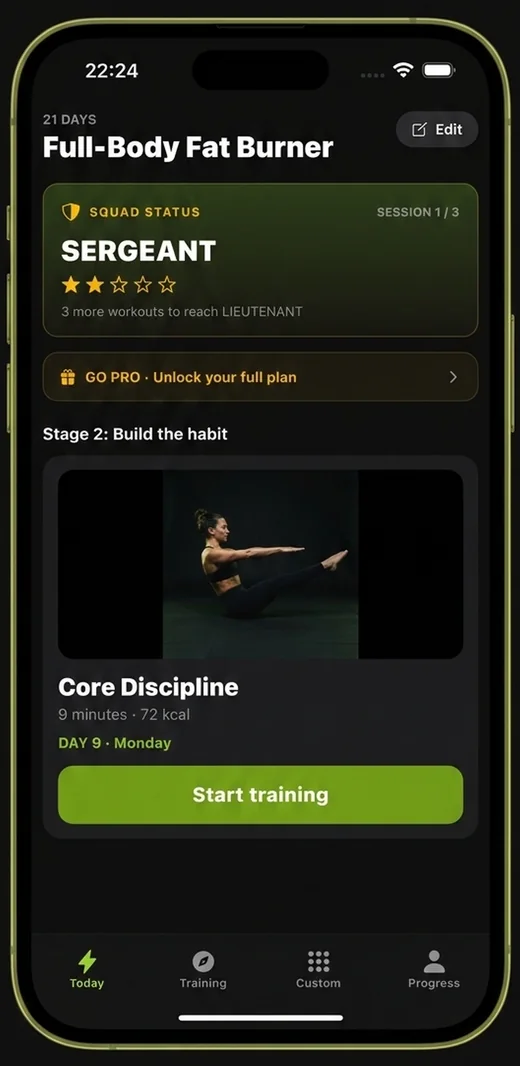
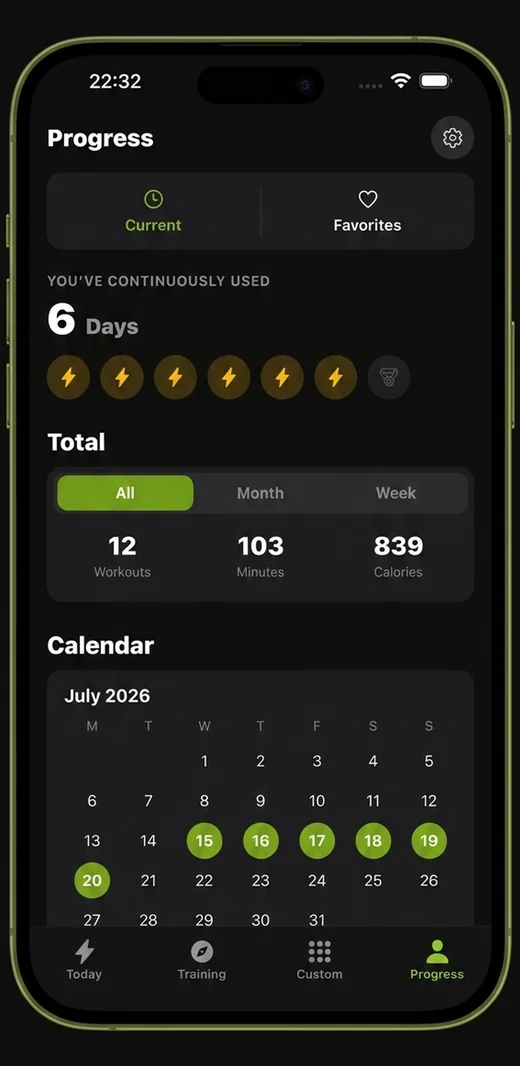
Everything on this site, built into a pocket coach. Military Calisthenics Coach turns the standards into a daily session you can run in a barracks, a garage or a hotel room — timed, tracked and scaled to you.
- A 21-day program that adapts to your level
- Guided timed sessions — no counting, no guessing
- Ranks, streaks and progress you can actually see

A structured calisthenics workout chart is the foundation of military physical readiness, transforming abstract effort into measurable performance. By organizing your movements into consistent patterns, you remove the guesswork from your training and ensure that every session contributes directly to your strength goals. Whether you are training in a calisthenics park or mastering calisthenics at home, having a standardized reference allows you to track progress, correct weaknesses, and apply the same rigor found in professional PT programs.
The Movement Pattern Framework
Military standards prioritize functional capacity over aesthetic muscle isolation. To build a balanced physique, every training week must include movements from each primary plane of motion. You can view this calisthenics exercises chart as a checklist for your weekly volume. If you are missing one of these categories, you have a gap in your physical foundation.
| Movement Pattern | Primary Muscles | Beginner Movement | Intermediate Movement | Advanced Movement |
|---|---|---|---|---|
| Vertical Push | Shoulders/Triceps | Pike Push-up | Decline Pike Push-up | Handstand Push-up |
| Vertical Pull | Lats/Biceps | Australian Pull-up | Strict Pull-up | Muscle-up |
| Horizontal Push | Chest/Triceps | Knee Push-up | Standard Push-up | Archer Push-up |
| Horizontal Pull | Upper Back/Rear Delts | Inverted Row | Wide-Grip Row | Tuck Front Lever Row |
| Knee-Dominant | Quads/Glutes | Bodyweight Squat | Bulgarian Split Squat | Pistol Squat |
| Hip-Dominant | Hamstrings/Glutes | Glute Bridge | Nordic Curl | Single-leg Deadlift |
| Core | Rectus Abdominis | Plank | Hanging Knee Raise | Toes-to-bar |
Save this table as a PDF for your training log. When you perform these movements, ensure you maintain a rigid spine—a common failure point in group training is the collapse of the lumbar region during high-repetition sets.
Standards-Based Progression
Progression is not about how much you sweat; it is about how much you improve under load. Use this calisthenics exercises list to dictate your transitions between difficulty levels. A common military benchmark is the ability to complete 30-50 push-ups and 5-10 pull-ups consecutively without failure. If you cannot meet these numbers, focus your efforts on the ‘Beginner’ or ‘Intermediate’ columns before attempting more complex variations.
If you find yourself plateauing, refer to the dead-hang to strict pull-up progression or push up progression to break through specific strength barriers. Never jump to an advanced movement just because it looks impressive; master the strict form of the previous step first to ensure your tendons and ligaments adapt alongside your muscles.
Integrating the Chart into a Weekly Program
To translate this chart into a functional routine, you must balance volume with recovery. For most, a four-day split works best to mimic the intensity of a free calisthenics workout plan.
Sample Weekly Structure
- Monday: Vertical Push + Vertical Pull (Upper Body Focus)
- Tuesday: Knee-Dominant + Core (Lower Body/Abs)
- Wednesday: Active Recovery (Low-intensity walking or mobility)
- Thursday: Horizontal Push + Horizontal Pull (Upper Body Focus)
- Friday: Full Body Circuit (Incorporate the 20-minute no-gear barracks workout)
- Saturday/Sunday: Rest or active recovery.
For each session, perform 3 to 4 sets of 8 to 12 repetitions. Rest periods should remain strictly between 60 and 90 seconds. If you can perform all prescribed sets at the top end of the rep range with perfect form, move to the next difficulty variation listed in the chart above.
Form Cues for Military Precision
Execution is the difference between a waste of time and an effective training session. When executing these movements, keep these cues in mind:
- Push-ups: Lock your core. Imagine someone is going to punch you in the stomach; hold that tension for the duration of the set.
- Squats: Keep your heels planted. If your heels rise, you are losing power and putting unnecessary stress on your knee joints.
- Rows: Retract your scapula before pulling your body toward the bar. Many trainees pull with their arms rather than their back.
- Core: Focus on the ‘hollow body’ position. This is the gold standard for all core work in military calisthenics, ensuring maximum engagement without back strain.
For those specifically interested in specialized movements, what military calisthenics is provides a deep dive into the methodology behind these standards.
Tracking for Long-Term Readiness
Consistency is the only variable that matters over time. Record your training data in a physical notebook or digital tracker. Note the date, the specific exercise variation, the number of sets, and the reps performed in each. If you fail to hit the required volume, do not ‘cheat’ the reps by compromising form. Instead, record the failure as your current baseline and work toward improving that specific number by one or two reps the following week.
This methodical approach is how you prepare for the 8-week military calisthenics workout plan or any physical challenge you encounter. By treating your body like a system to be optimized rather than a burden to be exhausted, you ensure steady, injury-free progress.
Frequently asked questions
How many times per week should I use this calisthenics workout chart?
For most beginners, training 3 to 4 times per week is ideal to allow for adequate muscle recovery. Consistency is more important than total weekly volume; sticking to a 3-day full-body routine is superior to erratic, high-frequency training sessions.
How long should each training session last?
If you are maintaining a strict tempo with 60-90 seconds of rest between sets, a full-body calisthenics workout should take between 45 and 60 minutes. If your sessions are dragging beyond an hour, you are likely resting too long or performing too many junk volume sets.
Can I customize the calisthenics exercises list to fit my goals?
Yes, you can swap movements based on your current physical environment or specific weaknesses. Ensure that you maintain the core movement patterns—pushing, pulling, and leg-focused movements—to keep your training balanced and functional.
What is the best way to progress once I master the advanced movements?
Once you can complete the advanced movements in the chart for high volume, focus on manipulating your tempo to increase time under tension. You can also introduce weighted vests or pause at the point of maximum mechanical disadvantage, such as the bottom of a pull-up or the lowest point of a squat.