Mastering Calisthenics Hamstring Exercises for Real Strength
Build a bulletproof posterior chain with these essential calisthenics hamstring exercises. Follow our no-nonsense guide to training like the military.

Military Calisthenics Coach
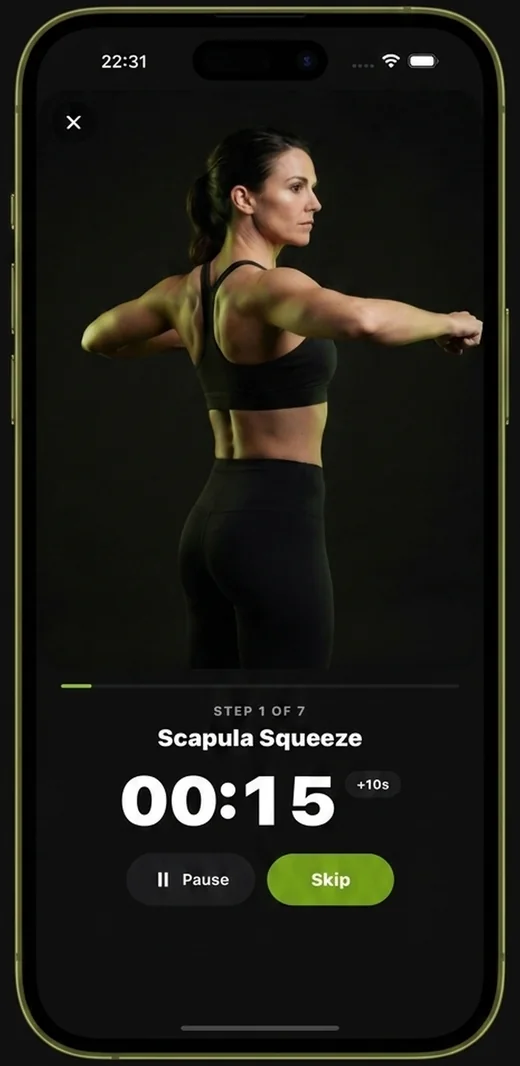
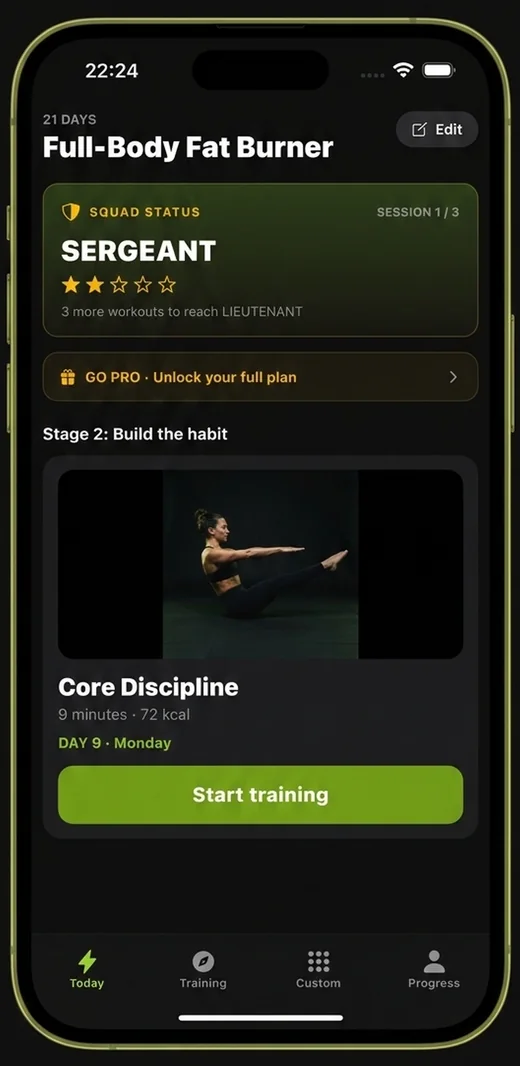
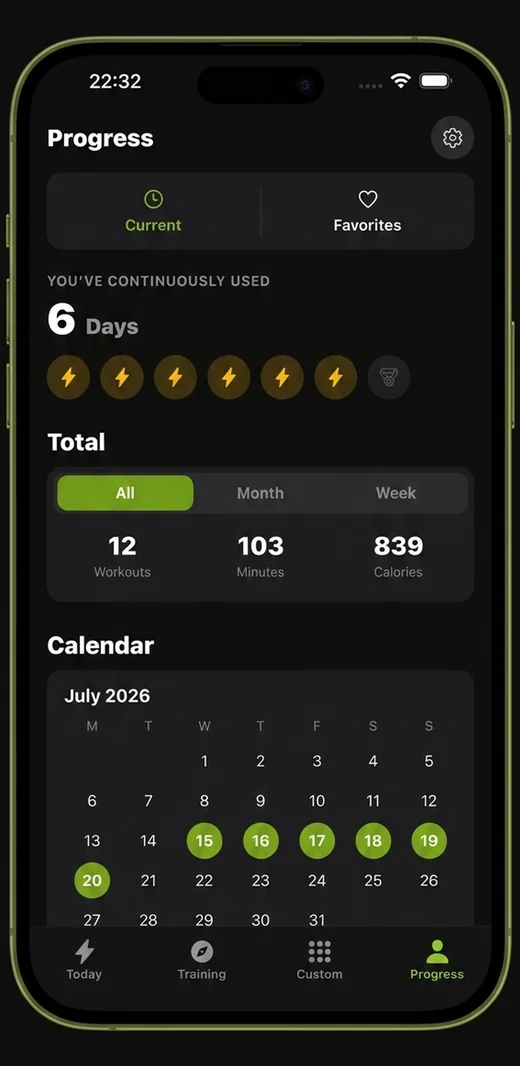
Take the drill with you
Everything on this site, built into a pocket coach. Military Calisthenics Coach turns the standards into a daily session you can run in a barracks, a garage or a hotel room — timed, tracked and scaled to you.
- A 21-day program that adapts to your level
- Guided timed sessions — no counting, no guessing
- Ranks, streaks and progress you can actually see

Effective calisthenics hamstring exercises are the most overlooked component in the average trainee’s routine, often causing an imbalance between strong quadriceps and weak, injury-prone hamstrings. While many people focus on high-rep squats or lunges, the military approach demands a balanced physique capable of handling heavy rucks and long-distance marches, which require a resilient posterior chain. To build real, functional strength, you must isolate the hamstrings through knee flexion and hip extension patterns, ensuring your legs are as durable as they are powerful. If you have been ignoring this muscle group, your risk of knee and lower back issues is significantly higher, as the hamstrings act as the primary stabilizer for your joints during high-intensity movement.
The Anatomy of a Functional Posterior Chain
In standard military fitness doctrine, physical readiness is not just about the number of push-ups you can perform; it is about the structural integrity of your body. The hamstrings cross both the knee and the hip joints, meaning they perform two distinct functions: bending the knee and extending the hip. Most bodyweight leg training, such as the basic air squat, primarily emphasizes the quads and glutes. To achieve a well-rounded physique, you must integrate movements that specifically target these two functions. Before starting any intense session, ensure you are following a proper calisthenics warm up routine to prime your joints for the eccentric load.
The Hip Hinge Pattern
The hip hinge is the foundation of posterior chain health. Unlike a squat, which involves a significant knee bend, a hinge movement keeps the shins vertical and pushes the hips backward. The Single-Leg Glute Bridge is the standard starting point. Lie on your back, knees bent, and drive through one heel to lift your hips toward the ceiling. Hold the peak contraction for two seconds. This move is excellent for beginners who struggle with stability. For those ready for more, transition to the Single-Leg Romanian Deadlift. Focus on a slow, controlled descent; do not rush the movement. If you find your balance lacking, touch your non-working toe lightly to the floor for support until your stabilizer muscles catch up to your strength.
Essential Movements for Hamstring Development
If you want to train like the military, you need to master movements that do not require complex gym equipment. The following exercises are the gold standard for developing the posterior chain using only your bodyweight. You can incorporate these as part of a calisthenics leg workout to ensure you are not leaving gains on the table.
| Exercise | Sets | Reps | Focus Cue |
|---|---|---|---|
| Single-Leg Glute Bridge | 3 | 12-15 | Squeeze glutes at the top |
| Sliding Leg Curls | 3 | 8-12 | Keep hips elevated throughout |
| Nordic Curl Progression | 3 | 5-8 | Control the descent phase |
| Single-Leg RDL | 3 | 10-12 | Keep back flat, hinge at hip |
Sliding Leg Curls: The Practical Alternative
You do not need a specialized machine to isolate the hamstrings. If you are training at home, find a smooth surface and use two towels or sliding discs under your heels. Lie on your back, lift your hips into a bridge position, and slowly slide your feet toward your glutes, keeping your hips off the floor. This is a brutal test of hamstring endurance and requires immense core control to keep your lower back from sagging. If this feels too difficult, perform the movement with both legs simultaneously before moving to the single-leg variation.
Nordic Curl Progressions
The Nordic curl is the king of bodyweight hamstring work, but it is also the movement where most people fail due to poor scaling. To perform this, anchor your ankles under a sturdy object like a heavy sofa or a piece of calisthenics equipment. Keep your body in a straight line from your knees to your head. Lower your torso toward the floor as slowly as possible. Use your hands to push yourself back up only when you can no longer hold the eccentric phase. Many beginners start by performing ‘fall-downs’ where they simply focus on resisting the lowering phase for as long as possible. This eccentric-only training is highly effective for building muscle density and injury resistance.
Building a Twice-Weekly Posterior Routine
Consistency is the hallmark of military-grade physical conditioning. You do not need to train hamstrings every day; in fact, doing so will impede your recovery. Dedicate two sessions per week to the posterior chain, ideally separated by at least 48 hours to allow for muscle repair. This volume fits perfectly into the 8-week military calisthenics workout plan, ensuring you don’t neglect your legs while building upper body pushing and pulling strength.
Focus on quality over quantity. If your hamstrings cramp during a session, you are likely rushing the tempo or failing to breathe correctly. Maintain a tempo of 3-0-1-0 (three seconds down, zero rest at the bottom, one second up). This control prevents momentum from doing the work for you, forcing the hamstrings to handle the full load of your body weight.
Scaling for Every Ability Level
One common error in group training is assuming every trainee possesses the same range of motion. If you are a beginner, do not attempt a full-range Nordic curl on day one. Instead, use a resistance band attached to a bar in a calisthenics park or a sturdy anchor point to assist your movement. The band should provide just enough tension to help you return to the upright position without taking over the work. As you grow stronger, use a thinner band until you can perform the movement with your own body weight. This is the same principle of incremental overload used in our push up progression.
Always monitor your form. If your lower back arches during a glute bridge, your core is not engaged sufficiently. If your hips drop during a sliding curl, you have reached technical failure. Stop the set immediately, rest for 90 seconds, and prioritize better form on the next attempt. We value performance standards over ego. If you can perform these moves with perfect form, your injury risk will drop and your athletic output in other areas, like running or jumping, will increase.
Frequently asked questions
How many reps should I do for hamstring growth?
Aim for the 8-12 rep range for most exercises. If you can easily complete 15 repetitions with perfect form, you need to choose a more difficult variation, such as transitioning from bilateral to unilateral movements, to increase the intensity.
Can I train my hamstrings every day?
No, you should not train your hamstrings every day. Your muscles need time to recover from the intense eccentric loads associated with movements like the Nordic curl, so limit your dedicated posterior work to two sessions per week for optimal results.
What is the best way to progress if I am a beginner?
Start with isometric holds like the bridge to build foundational strength. Once you can hold a bridge for 60 seconds without discomfort, transition into the eccentric-focused movements like the sliding leg curl or assisted Nordic curls.
How long will it take to see results in my hamstring strength?
With a consistent twice-weekly schedule, you will typically notice improvements in muscle activation and movement control within 4 to 6 weeks. Real physical changes, such as increased muscle thickness and improved performance in exercises like the lunge, usually become apparent after 8 to 12 weeks of structured training.